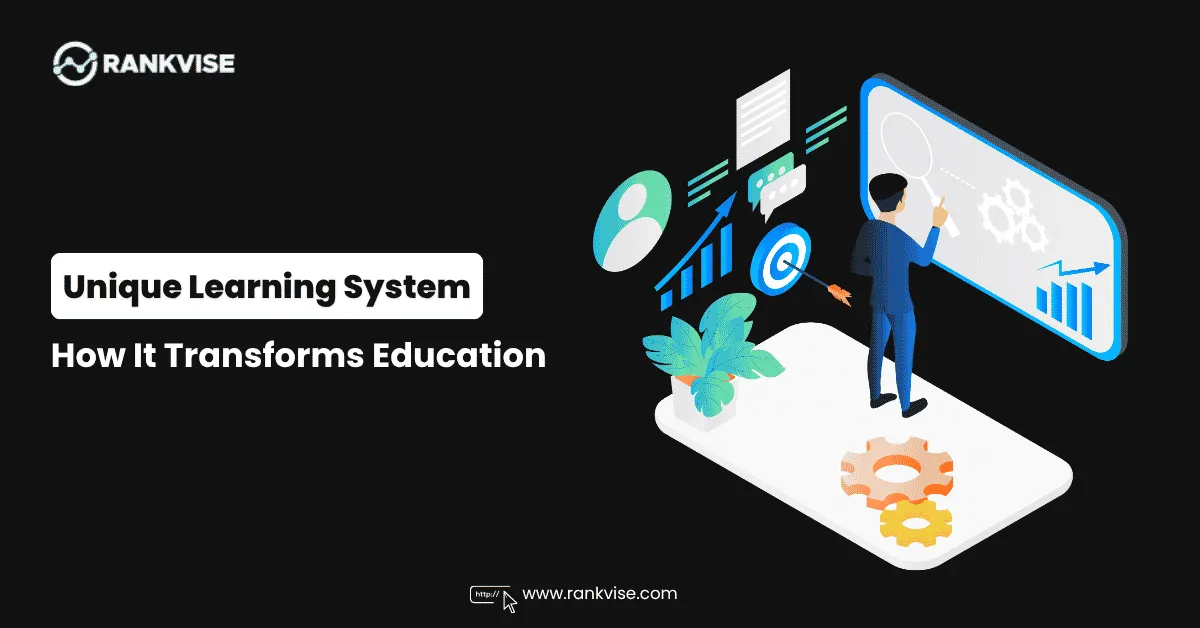
A unique learning system is an educational framework designed to adapt to individual learner needs. It moves beyond one-size-fits-all instruction. Instead, it tailors content, pacing, and assessment to each person’s strengths and gaps.
- Adaptive learning pathways adjust lessons in real time, branching to remediation or acceleration so learners receive appropriate challenge and support.
- Competency-based progression measures mastery through demonstrated skills, not time, enabling test-outs and aligning outcomes with real-world performance.
- Continuous assessment with immediate feedback reveals gaps early, accelerates learning, and generates data to improve content and prioritize effective exercises.
- AI, analytics, and microlearning power personalization, predicting needs, tracking engagement, and using spaced repetition for sustained retention and practical transfer.
Traditional education delivers the same material to every student simultaneously. A unique learning system rejects that approach entirely. It recognizes that people absorb information differently based on their background, goals, and cognitive preferences.
These systems appear in schools, corporate training programs, and online education platforms. They share one common trait. They put the learner at the center of every design decision.
Why Traditional Learning Models Fall Short
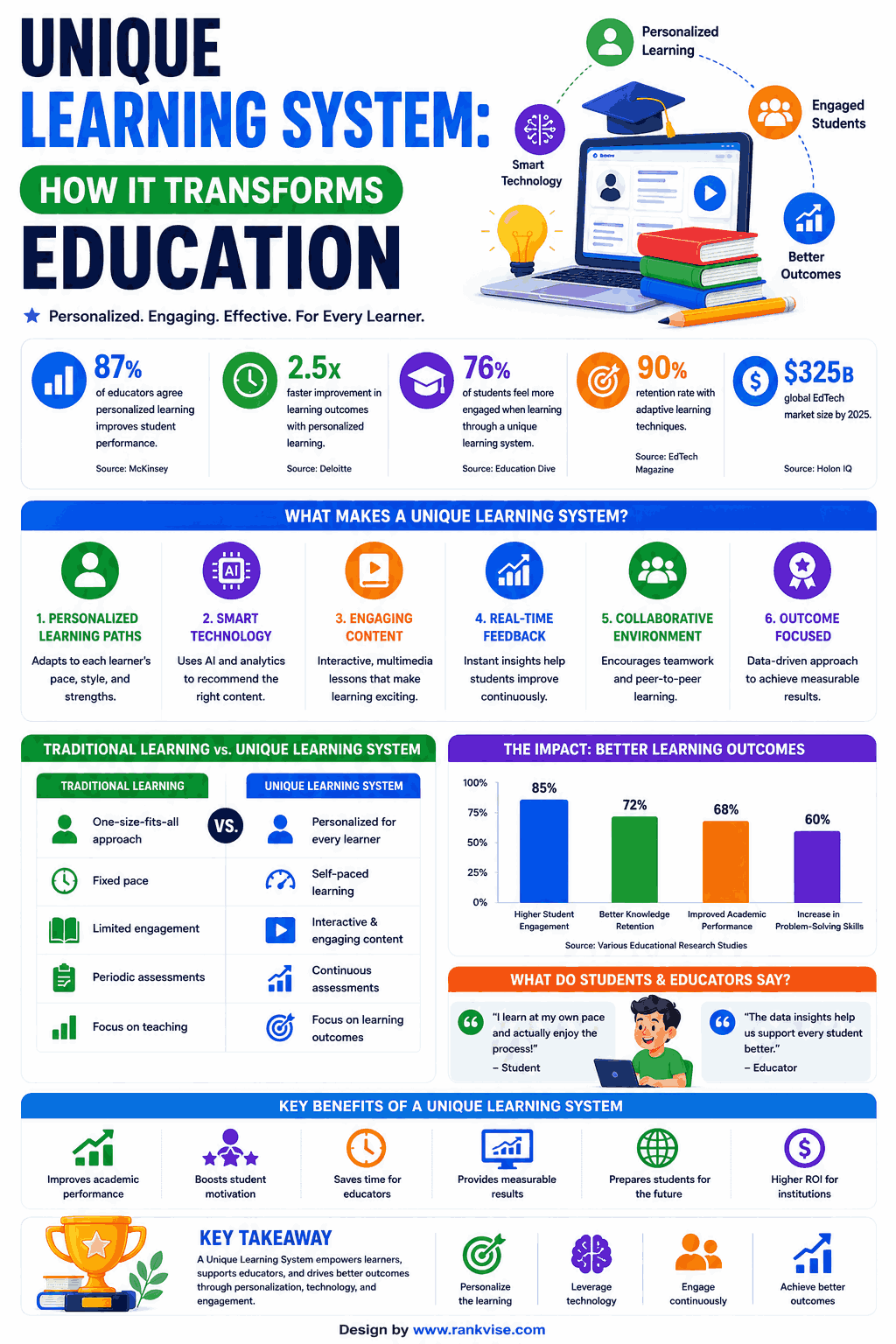
Conventional classrooms and training programs follow rigid structures. Everyone gets the same lecture, the same timeline, and the same test. This approach ignores fundamental differences between learners.
Some people grasp concepts quickly but need practice applying them. Others need more time with foundational material before advancing. Fixed-pace instruction fails both groups equally.
Research consistently shows that passive learning produces poor retention. Sitting through lectures without interaction leads to forgetting most content within days. Traditional models rely heavily on this passive approach.
Organizations waste significant resources on training that does not stick. Employees attend workshops, complete compliance modules, and forget everything within weeks. The problem is not motivation. The problem is system design.
Core Components of a Unique Learning System
Adaptive Learning Pathways
Adaptive learning pathways adjust content delivery based on real-time learner performance. When someone struggles with a concept, the system provides additional resources. When they demonstrate mastery, it moves them forward.
This personalized education approach eliminates wasted time. Learners never sit through material they already understand. They never get pushed ahead before they are ready.
Effective adaptive pathways use branching logic. Each response or assessment result determines what comes next. The learning journey becomes genuinely individual rather than merely self-paced.
Competency-Based Progression
A unique learning system often measures progress through demonstrated competency rather than time spent. Completing a module means proving you understand it, not just clicking through slides.
This approach respects experienced learners. Someone with prior knowledge can test out of introductory material immediately. A complete beginner gets all the scaffolding they need without pressure.
Competency-based progression aligns learning outcomes with real-world performance. Learners prove they can do something, not just recognize information on a multiple-choice test.
Multi-Modal Content Delivery
People process information through different channels. Some learn best through visual content. Others prefer reading, listening, or hands-on practice. A well-designed individualized learning approach offers multiple formats.
Effective systems include:
- Video demonstrations for visual and auditory learners
- Written guides and articles for readers
- Interactive simulations for kinesthetic learners
- Audio content for on-the-go consumption
- Peer discussion forums for social learners
- Practice exercises with immediate feedback
The best systems let learners choose their preferred format. They also suggest alternatives when one approach is not producing results.
Continuous Assessment and Feedback
Assessment in a unique learning system happens constantly, not just at the end. Frequent low-stakes checks reveal understanding gaps before they compound into larger problems.
Immediate feedback accelerates learning dramatically. Waiting days or weeks for test results kills momentum. Real-time correction helps learners adjust their understanding on the spot.
These assessments also generate data. Patterns emerge across learners that help improve the system itself. Content that consistently confuses people gets revised. Effective exercises get prioritized.
How Technology Powers Personalized Education
Artificial Intelligence and Machine Learning
AI drives modern adaptive learning technology. Algorithms analyze learner behavior patterns and predict what each person needs next. They identify struggling learners before failure occurs.
Machine learning improves recommendations over time. The more data the system collects, the better it predicts which content will help specific learner profiles. Each interaction makes the system smarter.
AI also automates content curation. Instead of manually building every learning path, intelligent systems assemble personalized sequences from content libraries dynamically.
Learning Management Systems and Data Analytics
Modern learning management systems track every interaction. They measure time spent, completion rates, assessment scores, and engagement patterns. This data fuels continuous improvement.
Analytics dashboards give instructors and administrators visibility into learner progress. They spot trends, identify at-risk individuals, and measure program effectiveness without guesswork.
Data-driven decision making replaces intuition in curriculum design. Organizations see exactly which content works and which wastes everyone’s time.
Microlearning and Spaced Repetition
A unique learning system often delivers content in small, focused chunks. Microlearning sessions of five to fifteen minutes fit into busy schedules. They reduce cognitive overload and improve retention.
Spaced repetition algorithms schedule review sessions at optimal intervals. They present material just before you would forget it. This technique dramatically improves long-term memory retention.
Together, these approaches make learning sustainable. People can build knowledge gradually without marathon study sessions that lead to burnout.
Building a Unique Learning System for Your Organization
Step 1: Define Clear Learning Outcomes
Start with what learners need to accomplish. Not what content you want to deliver. Define specific, measurable competencies that connect directly to job performance or educational goals.
Vague objectives like “understand marketing” produce vague results. Specific outcomes like “create a campaign brief that meets these five criteria” give the system clear targets.
Step 2: Assess Your Learner Population
Understand who your learners are before designing anything. Survey their existing knowledge levels, preferred learning styles, available time, and technology access.
| Learner Factor | Why It Matters | How to Assess |
|---|---|---|
| Prior knowledge | Determines starting point | Pre-assessment quizzes |
| Available time | Shapes content length | Schedule surveys |
| Tech comfort | Influences platform choice | Self-reported ratings |
| Learning goals | Drives motivation | Goal-setting interviews |
| Preferred format | Guides content creation | Style questionnaires |
This data shapes every subsequent design decision. Skip this step and you build a system for imaginary learners.
Step 3: Design Adaptive Pathways
Map out how learners will move through your content based on their performance. Create branching points where the system makes decisions about what comes next.
Plan for multiple routes to the same destination. Some learners will take direct paths. Others will need detours through prerequisite material or additional practice opportunities.
Step 4: Create Multi-Format Content
Develop content in multiple formats for each key concept. This requires more upfront investment but dramatically improves learner outcomes and engagement over time.
Prioritize quality over quantity. Ten excellent learning assets outperform one hundred mediocre ones. Focus your best content creation efforts on the most critical competencies.
Step 5: Implement Feedback Loops
Build mechanisms for continuous improvement. Collect learner feedback actively. Monitor completion and performance data regularly. Update content based on what the numbers reveal.
No learning system launches perfectly. The unique advantage of a well-designed system is its ability to improve continuously based on real usage data.
Unique Learning Systems in Corporate Training
Corporate learning and development teams face particular challenges. Employees have limited time. Compliance requirements demand documentation. Business results must justify training investment.
A customized training program built on unique learning system principles addresses all three challenges simultaneously. Adaptive pathways respect employees’ time. Built-in assessments satisfy compliance documentation. Performance data connects training to business outcomes.
Companies implementing personalized corporate training report higher completion rates. Employees engage more when content feels relevant to their specific role and skill level. Generic training modules gather dust.
The return on investment becomes measurable. Instead of hoping training helped, organizations can track whether specific competencies improved and whether that improvement affected performance metrics.
Unique Learning Systems in K-12 and Higher Education
Schools adopting student-centered learning approaches see improved engagement and outcomes. Students who learn at their own pace develop stronger foundational skills and greater confidence.
Teachers shift from lecturing to coaching. They spend less time delivering content to the whole class. They spend more time working individually with students who need specific support.
Higher education institutions use unique learning systems to accommodate diverse student populations. Adult learners, international students, and working professionals all benefit from flexible, adaptive approaches.
The classroom does not disappear. It transforms. In-person time focuses on discussion, application, and collaboration rather than information transfer that technology handles more effectively.
Measuring the Effectiveness of Your Learning System
Track these metrics to evaluate whether your unique learning system delivers results:
- Completion rates: Are more learners finishing programs?
- Time to competency: Are learners reaching proficiency faster?
- Knowledge retention: Do learners remember material weeks later?
- Performance transfer: Does learning change behavior on the job or in practice?
- Learner satisfaction: Do participants rate the experience positively?
- Cost per outcome: Is the system more efficient than previous approaches?
Compare these metrics against your baseline. Measure before implementing changes and after. Without comparison data, you cannot prove improvement.
The Future of Personalized Learning in 2026 and Beyond
Learning systems will become increasingly intelligent. AI will predict learner needs with greater accuracy. Content will adapt in real time based on emotional cues, not just quiz scores.
Virtual and augmented reality will expand experiential learning opportunities. Learners will practice complex skills in simulated environments before applying them in reality. The gap between learning and doing will shrink.
Interoperability between systems will improve. Learner profiles will follow individuals across platforms, institutions, and employers. Starting from scratch at every new organization will become unnecessary.
The organizations that invest in unique learning systems now build competitive advantages. Their people learn faster, perform better, and stay engaged longer. Waiting costs more than starting imperfectly.
FAQs
A unique learning system is an educational approach that adapts content, pace, and methods to fit each individual learner’s needs, goals, and abilities rather than using one fixed curriculum for everyone.
Traditional education delivers identical content to all students at the same pace. A unique learning system personalizes the journey, adjusting difficulty, format, and progression based on individual performance and preferences.
Yes. Many affordable platforms offer adaptive learning features out of the box. Small businesses can start with simple tools and scale as their training needs grow without enterprise-level budgets.
At minimum, you need a learning management system with adaptive pathway capabilities, assessment tools, and basic analytics. AI-powered platforms add sophistication but are not required to start.
Most organizations see measurable improvements in learner engagement within the first month. Competency gains and performance transfer typically become visible within one to three months of implementation.