The creator economy has crossed 250 billion USD globally. Competition is fierce. Audiences expect fresh, high-quality content daily across multiple platforms. Meeting that demand manually is nearly impossible.
- Use AI to automate repetitive tasks like editing, scheduling, and captions so you can focus on authentic connection.
- Choose tools that match your content format and top workflow bottlenecks, for example writing, video, design, scheduling, and CRM.
- Always edit AI drafts to preserve your voice, add perspective, and avoid over automating your content.
- Use AI analytics and scheduling to optimize timing, hashtags, and content formats based on engagement insights.
- Start small, test integrations, and master a few platforms rather than chasing every new tool.
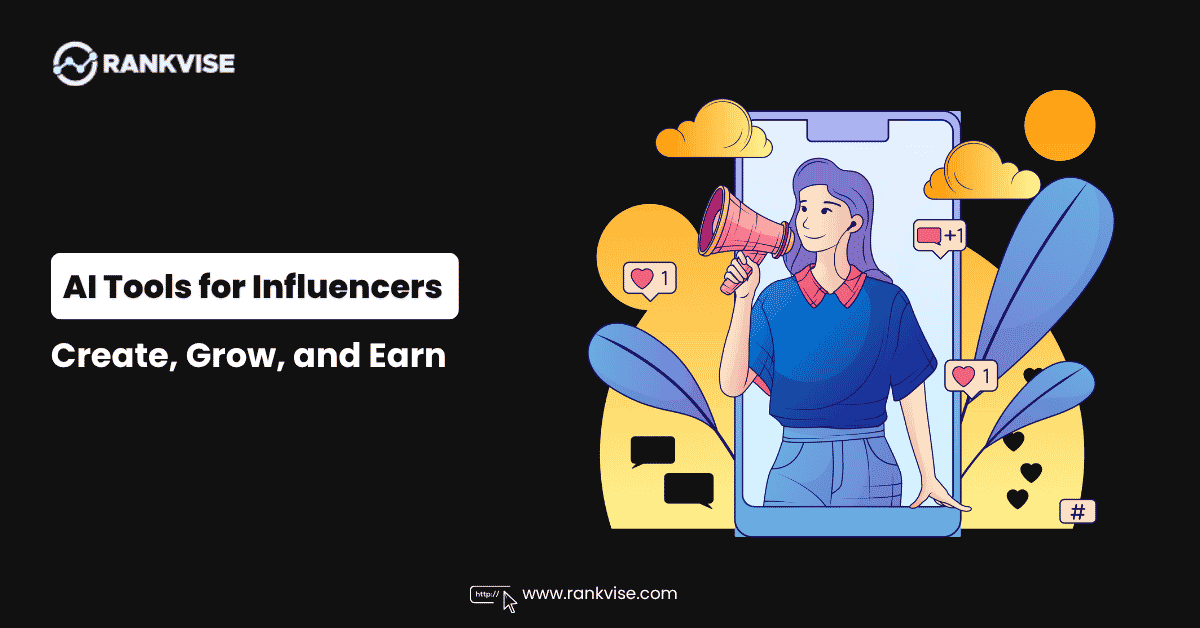
AI tools for influencers solve this problem directly. They automate repetitive work like editing, scheduling, and caption writing. They analyze audience behavior in real time. They help creators focus on what matters most — building authentic connections.
Whether you manage a personal brand or run campaigns for clients, artificial intelligence now handles the heavy lifting. The influencers who adopt these tools early gain a serious competitive advantage over those still doing everything by hand.
What Exactly Are AI Tools for Influencers?
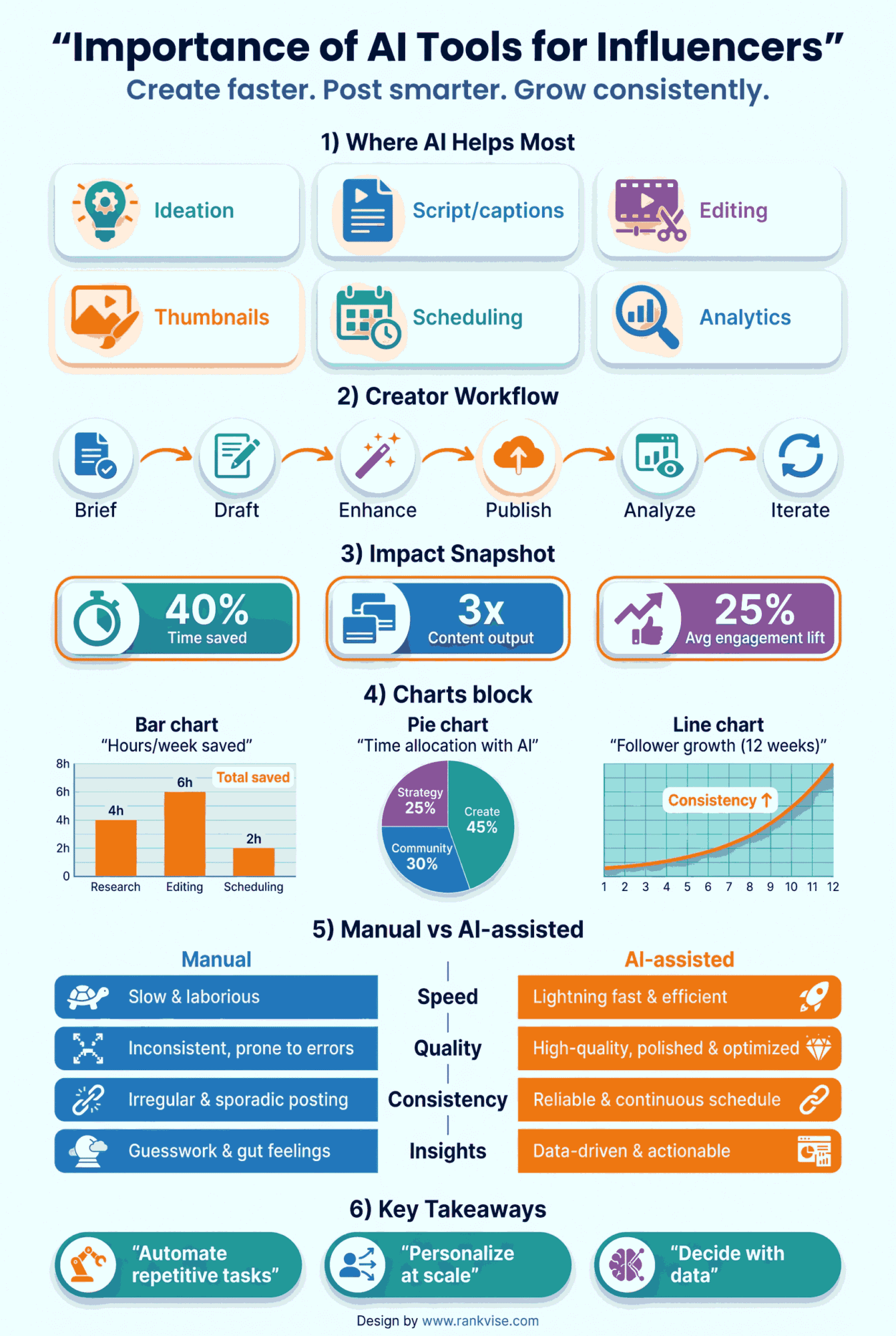
These are software platforms powered by machine learning and natural language processing. They assist content creators with tasks across the entire workflow — from ideation to publishing to monetization.
Think of them as digital assistants trained on massive datasets. They understand trends, predict what performs well, and generate assets like images, captions, and video clips. Some tools focus on one task. Others offer end-to-end creator suites.
The best ones learn your style over time. They adapt recommendations based on your niche, audience demographics, and engagement patterns. This personalization separates useful creator tools from generic marketing software.
Top AI Tools Every Influencer Should Know
Choosing the right platform depends on your content format, budget, and goals. Here is a breakdown of the most impactful categories and leading tools in each.
Content Creation and Writing Assistants
Writing captions, scripts, newsletters, and blog posts consumes hours every week. AI writing assistants cut that time dramatically.
| Tool | Best For | Key Strength |
|---|---|---|
| Jasper | Long-form and ad copy | Brand voice training |
| Copy.ai | Social captions and emails | Speed and template variety |
| ChatGPT | Brainstorming and scripting | Versatile conversational output |
| Notion AI | Content planning and drafts | Integrated workspace |
These platforms generate first drafts in seconds. You then refine the output to match your voice. The result is faster content production without sacrificing authenticity.
AI Video Editing and Repurposing Tools
Video dominates every major platform. Short-form content on TikTok, Reels, and Shorts drives the most organic reach. AI video tools help influencers produce more clips from less raw footage.
Leading options include:
- Opus Clip — Automatically identifies viral moments in long videos and creates short clips with captions.
- Descript — Lets you edit video by editing text. Remove filler words, silences, and mistakes instantly.
- CapCut — Offers AI-powered effects, auto-captions, and templates designed for social platforms.
- Synthesia — Creates professional talking-head videos using AI avatars, ideal for educational creators.
These tools eliminate the need for expensive editors on routine content. Creators repurpose one podcast episode into dozens of social clips within minutes.
Image Generation and Graphic Design
Visual branding matters enormously for influencer marketing success. AI design tools make professional-quality graphics accessible to everyone.
Canva’s Magic Studio uses artificial intelligence to resize, restyle, and generate images from text prompts. Adobe Firefly integrates directly into Photoshop for advanced editing. Midjourney produces stunning custom visuals for mood boards, thumbnails, and promotional materials.
These platforms help creators maintain consistent visual identity without hiring a full-time designer. Templates adapt to platform-specific dimensions automatically.
Social Media Scheduling and Analytics
Posting at the right time with the right hashtags changes everything. AI-powered scheduling tools optimize both timing and targeting.
- Metricool — Combines scheduling with competitor analysis and detailed performance dashboards.
- Later — Uses AI to recommend optimal posting times based on historical engagement data.
- Hootsuite — Offers AI-generated caption suggestions and sentiment analysis across platforms.
- Buffer — Provides clean analytics with AI-driven recommendations for content strategy adjustments.
These platforms remove guesswork from your publishing calendar. They track what resonates and suggest data-backed improvements weekly.
AI-Powered Influencer CRM and Brand Deal Tools
Monetization remains the ultimate goal for most creators. AI tools now streamline how influencers find, pitch, and manage brand partnerships.
| Tool | Function | Benefit |
|---|---|---|
| Aspire | Campaign management | Matches creators with relevant brands |
| Grin | Relationship management | Tracks deliverables and payments |
| Klear | Analytics and discovery | Provides audience authenticity scores |
| Upfluence | Outreach automation | Identifies partnership opportunities |
These platforms give influencers professional-grade deal management. Brands increasingly prefer working with creators who use structured systems for collaboration.
How AI Improves Engagement and Audience Growth
Growing a loyal following requires more than posting frequently. You need to understand what your audience wants and deliver it consistently. AI analytics tools decode engagement patterns that humans miss.
They identify which content formats generate the most saves and shares. They reveal optimal caption lengths for your specific niche. They flag when follower growth stalls and suggest corrective strategies.
Sentiment analysis tools scan comments and messages to gauge audience mood. This helps influencers adjust tone and topics before engagement drops. Predictive analytics take this further by forecasting which upcoming trends align with your brand.
Personalization at Scale Using AI
Audiences crave personal connection. AI helps influencers deliver personalized experiences without manually responding to every message.
Chatbots handle common DM inquiries about product recommendations or collaboration requests. Email tools like Mailchimp and ConvertKit use machine learning to segment subscribers and personalize newsletters. Dynamic content tools adjust landing pages based on visitor behavior.
This level of personalization was previously available only to large media companies. Now individual creators access the same technology through affordable subscriptions.
Common Mistakes Influencers Make with AI Tools
Adopting artificial intelligence without a clear strategy leads to wasted time and money. Avoid these frequent missteps.
- Over-automating your voice. Audiences follow you for your personality. Let AI draft, but always add your personal touch before publishing.
- Ignoring analytics outputs. Many creators invest in tools but never review the data. Consistent analysis drives real growth.
- Chasing every new tool. Focus on three to five platforms that solve your biggest bottlenecks. Tool fatigue kills productivity.
- Skipping the learning curve. Spend time mastering each platform’s features. Surface-level usage delivers surface-level results.
- Publishing AI content without editing. Raw AI output often sounds generic. Review, rewrite, and infuse your unique perspective.
The most successful influencers treat these tools as collaborators, not replacements. Human creativity combined with machine efficiency produces the best outcomes.
How to Choose the Right AI Tools for Your Niche
Not every tool suits every creator. A fashion influencer needs different capabilities than a B2B thought leader. Start by identifying your top three workflow bottlenecks.
Ask yourself these questions:
- Where do I spend the most time each week?
- Which content formats drive my best engagement?
- What tasks drain my energy without generating revenue?
Match tools to those specific pain points. Most platforms offer free trials or starter plans. Test before committing to annual subscriptions. Prioritize tools that integrate with platforms you already use daily.
The Future of AI in Influencer Marketing
The influencer marketing industry will exceed 30 billion USD by 2027. AI adoption among creators accelerates every quarter. Expect deeper integration between content creation tools and monetization platforms.
Real-time content optimization will become standard. AI will suggest edits while you record, not after. Voice cloning and personalized video messages will scale direct fan engagement. Predictive trend tools will identify viral opportunities days before they peak.
Creators who build AI-assisted workflows now will dominate their niches in the next two years. The technology gap between early adopters and holdouts will only widen.
FAQs
Top picks include Jasper for writing, Opus Clip for video repurposing, Canva Magic Studio for design, and Later for scheduling and analytics.
AI handles scheduling, analytics, and drafting efficiently. However, strategy, brand voice refinement, and relationship building still require human oversight.
Most offer free tiers or plans under 30 USD per month. Premium suites range from 50 to 200 USD monthly depending on features and usage volume.
They analyze audience behavior patterns, optimize posting times, personalize responses at scale, and identify trending topics before competitors do.
Yes, when edited properly. Always review AI outputs for accuracy and tone. Add your personal perspective to maintain authenticity and audience trust.