Business cards remain one of the most powerful networking tools available. A well-designed card creates an instant connection that a LinkedIn request simply cannot replicate. It is a physical reminder of who you are and what you offer.
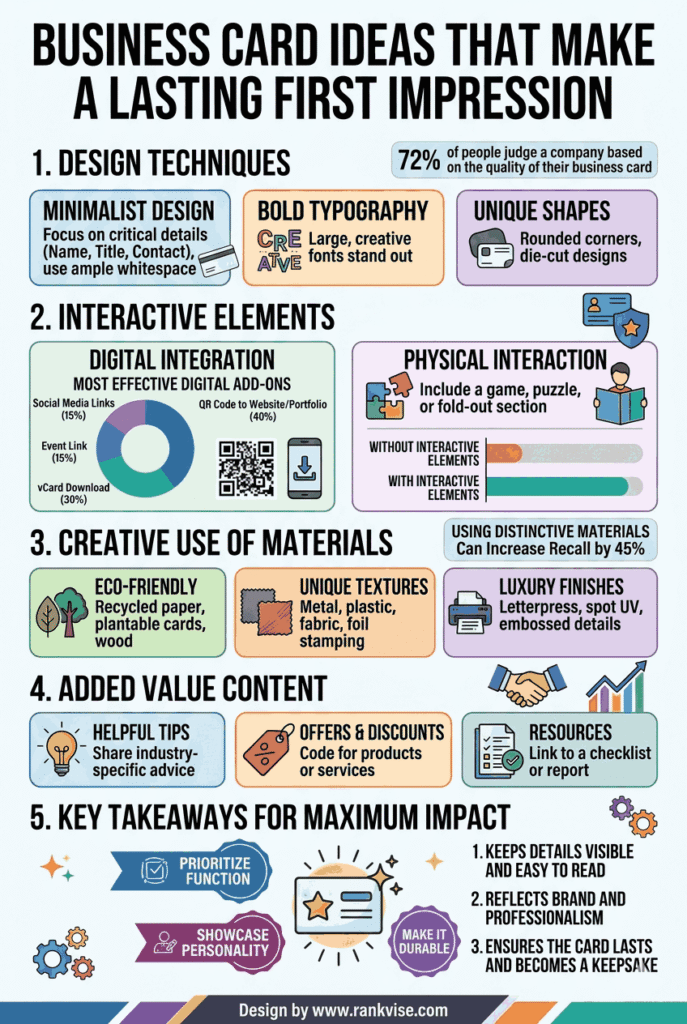
- Include full name, title, company logo, phone, email, website, social handle, and a QR code for quick access.
- Use clean layout, generous white space, readable fonts, and one or two accent colors to create a premium, uncluttered impression.
- Match design and material to your brand and industry; consider metal, wood, cotton, or recycled stock for a memorable tactile experience.
- Use style and tech thoughtfully: minimalist, bold typography, custom artwork, QR codes, NFC, or AR to reflect personality and add utility.
- Prioritize quality over quantity, include useful elements, keep contact info current, and order small test batches before printing in bulk.
People form first impressions within seconds. Your business card communicates professionalism, creativity, and attention to detail before you say a word. Despite the rise of digital networking, 72% of professionals still judge a company based on the quality of its business card. Investing in a standout design pays dividends at every meeting, conference, and client interaction.
Essential Elements Every Business Card Needs
Before exploring creative business card ideas, you need to cover the fundamentals. Missing a key detail undermines even the most stunning design.
Every effective business card should include:
- Your full name and job title for immediate identification.
- Company name and logo to reinforce brand recognition.
- Phone number and email address as primary contact methods.
- Website URL to direct people toward your online presence.
- Social media handle if relevant to your industry or role.
- QR code linking to your portfolio, booking page, or digital profile.
Keep the layout clean and uncluttered. White space improves readability and gives your card a premium feel. Cramming too much information onto a small card overwhelms the reader and dilutes your message.
Creative Business Card Ideas by Design Style
Design style sets the tone for how people perceive your brand. These creative business card ideas span multiple aesthetics to match different industries and personalities.
Minimalist Business Card Designs
Minimalism communicates confidence and clarity. A simple card with a single font, your name, and one contact detail can be more striking than a busy design. Brands like Apple and Muji have proven that less truly is more.
Use generous white space and a single accent color. Choose a clean sans-serif font for modern appeal. Minimalist business card designs work especially well for consultants, architects, and creative professionals who want elegance without excess.
Bold and Colorful Typography Cards
Typography-driven designs make your name the centerpiece. Oversized letters, unique typefaces, and vibrant color combinations grab attention immediately. This approach works well when your personal brand is your primary asset.
Pair a bold headline font with a simpler body font for balance. Use color strategically — one or two strong hues create impact without visual chaos. Graphic designers, marketing professionals, and speakers benefit from this high-energy style.
Illustration and Custom Artwork Cards
Hand-drawn illustrations add a personal touch that digital templates cannot replicate. A custom illustration of your workspace, product, or mascot tells a story instantly. These unique business card designs become keepsakes rather than throwaway items.
Commission a local artist or create your own illustrations digitally. The investment signals that you value craftsmanship and originality. Illustrators, boutique owners, and creative agencies make this approach feel natural and authentic.
Unique Business Card Ideas Using Special Materials
The material you choose says as much about your brand as the design itself. Moving beyond standard card stock creates a tactile experience that people remember.
| Material | Best For | Impression It Creates |
|---|---|---|
| Thick cotton stock | Luxury brands, executives | Premium, substantial, trustworthy |
| Kraft paper | Eco-friendly businesses, artisans | Natural, sustainable, approachable |
| Transparent plastic | Tech companies, modern brands | Innovative, forward-thinking |
| Metal cards | High-end services, finance | Exclusive, durable, unforgettable |
| Wood veneer | Outdoor brands, woodworkers | Earthy, unique, craftsmanship-focused |
| Recycled paper | Nonprofits, green businesses | Environmentally responsible |
Metal business cards cost more per unit but generate conversations every time you hand one out. A stainless steel card with laser-etched details feels like receiving a gift rather than a contact detail. Choose your material based on the story you want your brand to tell.
Professional Business Card Ideas by Industry
Different industries demand different design approaches. These professional business card ideas align with sector-specific expectations and audience preferences.
Business Cards for Real Estate Agents
Real estate professionals benefit from cards that feature a professional headshot. Including a photo builds trust and helps clients remember you after open houses. Add your license number and brokerage details for compliance and credibility.
Use a high-quality matte or soft-touch finish to stand out from competitors. Consider a foldable card format that includes a brief list of your service areas on the inside panel.
Business Cards for Photographers and Creatives
Photographers should let their work speak. Print one of your best images as the card’s background. The back of the card can feature your contact details against a clean, contrasting background.
Use a glossy or satin finish to make images pop. A square card format breaks the traditional mold and mirrors the popular photo aspect ratio used on social media platforms.
Business Cards for Tech Professionals and Startups
Tech industry cards lean toward clean, modern designs with digital integration. Embed a QR code that links directly to your app, demo, or GitHub profile. NFC-enabled business cards allow contacts to tap and save your details instantly.
This approach positions you as innovative and tech-savvy. Matte black cards with white or neon-colored text create a sleek, contemporary look that resonates with the startup culture.
Small Business Card Ideas on a Budget
You do not need a large budget to create impressive business cards. Smart design choices deliver professional results without premium pricing.
Use Free and Low-Cost Design Tools
Platforms like Canva, Adobe Express, and Vista Create offer hundreds of business card templates. Customize colors, fonts, and layouts to match your branding. These tools require zero graphic design experience and produce print-ready files.
Start with a template that matches your industry. Swap in your brand colors and logo. Export the file as a high-resolution PDF for the sharpest print quality.
Order Smart With Online Printers
Online print services like Vistaprint, Moo, and GotPrint provide affordable options with fast turnaround. Many offer sample packs so you can test different paper stocks before committing to a large order. Ordering in bulk reduces the cost per card significantly.
Compare pricing across three or four providers before ordering. Factor in shipping costs and production timelines, especially if you need cards for an upcoming event.
Modern Business Card Trends to Watch
Business card design continues to evolve alongside branding and technology trends. Staying current keeps your card feeling fresh and relevant.
- NFC-enabled cards: Tap-to-share technology replaces manual data entry entirely.
- Augmented reality cards: Scanning the card with a phone reveals a 3D animation or video introduction.
- Vertical orientation: Portrait-style layouts feel distinctive and break visual monotony.
- Rounded corners: Soft edges create a modern, friendly aesthetic that stands out in a card stack.
- Spot UV and foil stamping: Selective gloss or metallic accents on logos and text add depth without overwhelming the design.
- Dual-purpose cards: Cards that double as loyalty punch cards, appointment reminders, or discount vouchers add practical value.
These trends blend functionality with design innovation. Choose one or two that align with your brand personality rather than chasing every new idea at once.
Tips for Designing a Business Card That Gets Kept
A great business card only works if people keep it. Design choices that increase retention rates directly impact your networking return on investment.
- Prioritize quality over quantity. Fifty premium cards outperform five hundred flimsy ones.
- Add a useful element. A tip chart, conversion table, or QR code to a free resource gives people a reason to hold onto your card.
- Make it feel different. Textured paper, unusual shapes, or embossed lettering create a sensory experience.
- Keep contact details current. Outdated information makes your card useless and your brand look careless.
- Test before printing in bulk. Order a small batch first to check color accuracy, alignment, and overall feel.
The goal is simple. Make your card too interesting to throw away. When someone reaches into their wallet or card holder weeks later, your card should be the one they notice first.
FAQs
Minimalist designs on quality card stock with a QR code linking to your website work well. Use free tools like Canva to create professional layouts without hiring a designer.
The standard business card size in the United States is 3.5 x 2 inches. In Europe and most international markets, the standard measures 3.346 x 2.165 inches.
Order 250 to 500 cards as a starting batch. This quantity covers several months of networking while allowing you to update your design without wasting large unused volumes.
Both serve different purposes. Digital business cards offer convenience and easy updates, while printed cards create a tangible, personal impression that strengthens face-to-face connections.
Choose a weight between 14pt and 16pt card stock for a sturdy, professional feel. Thicker cards around 32pt create a luxury impression but cost significantly more per unit.