Modern businesses operate in a world where speed, data, and adaptability are everything. The systems that once supported growth are now expected to drive it. From internal processes to customer-facing platforms, organizations are under increasing pressure to ensure their infrastructure is not just functional, but intelligent, scalable, and future-ready. Building smarter systems is no longer a luxury; it is a necessity for staying competitive.
- Design systems for connectivity, adaptability, and insight so technology actively informs decisions and supports integrated workflows.
- Turn accessible data into real-time insights with analytics and machine learning to improve customer experiences and operational performance.
- Prioritize scalable, secure architectures, partner selection, and continuous optimization to ensure resilience, compliance, and long term business alignment.
What Defines a “Smarter” System?
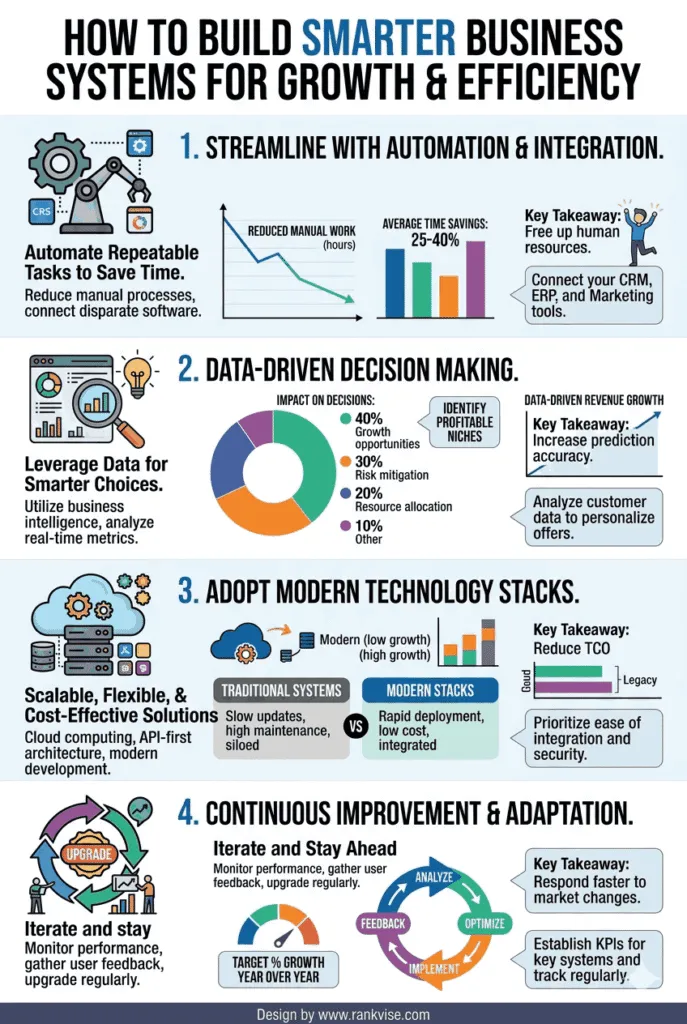
A smarter system goes beyond automation. While automation focuses on reducing manual effort, intelligent systems aim to improve decision-making, enhance efficiency, and create seamless experiences across all touchpoints. These systems are typically built around three core principles: connectivity, adaptability, and insight.
Connectivity ensures that different parts of the business, whether departments, tools, or data sources, work together harmoniously. Adaptability allows systems to evolve alongside changing business needs. Insight, perhaps the most valuable element, enables organizations to extract meaningful data that informs strategy and drives innovation.
Together, these principles form the foundation of a modern system that does more than support operations—it actively contributes to business growth.
The Shift from Legacy Systems to Intelligent Infrastructure
Many businesses still rely on legacy systems that were designed for a different era. While these systems may still function, they often lack the flexibility and integration capabilities required in today’s fast-paced environment. This can lead to inefficiencies, data silos, and missed opportunities.
Transitioning to smarter systems involves rethinking how technology is used across the organization. Instead of isolated tools, businesses are moving toward integrated ecosystems where applications communicate seamlessly. Cloud-based platforms, APIs, and modular architectures are playing a significant role in this transformation, allowing companies to scale and adapt with ease.
The shift is not just technical; it is strategic. Businesses must align their systems with long-term goals, ensuring that every investment contributes to a more agile and resilient operation.
The Role of Data in Smarter Systems
Data is at the heart of every intelligent system. However, simply collecting data is not enough. The real value lies in how that data is processed, analyzed, and applied.
Smarter systems leverage advanced analytics, machine learning, and real-time processing to turn raw data into actionable insights. This allows businesses to identify trends, predict outcomes, and make informed decisions with confidence.
Whether it is understanding customer behavior, optimizing supply chains, or improving internal workflows, data-driven systems provide a significant competitive advantage.
Equally important is data accessibility. Teams across the organization should be able to access the information they need without unnecessary barriers. This promotes collaboration, speeds up decision-making, and ensures that everyone is working with the same accurate, up-to-date information.
Enhancing Efficiency Through Automation and Integration
Efficiency is one of the most immediate benefits of building smarter systems. By automating repetitive tasks and integrating different processes, businesses can significantly reduce operational friction.
For example, integrating customer relationship management (CRM) systems with marketing platforms allows for more targeted campaigns and better customer engagement. Similarly, connecting inventory management systems with sales platforms ensures accurate stock levels and smoother order fulfillment.
Automation also frees up valuable time for employees, allowing them to focus on more strategic and creative tasks. This not only improves productivity but also enhances job satisfaction, as teams are able to contribute more meaningfully to the organization’s success.
Improving Customer Experience with Intelligent Systems
Customer expectations have never been higher. People expect fast, personalized, and seamless interactions at every stage of their journey. Smarter systems play a crucial role in meeting, and exceeding, these expectations.
By leveraging data and analytics, businesses can gain a deeper understanding of their customers’ needs and preferences. This enables more personalized experiences, from tailored product recommendations to proactive customer support.
Intelligent systems also ensure consistency across different channels. Whether a customer interacts with a business online, in-store, or through a support team, the experience should feel cohesive and connected. This level of consistency builds trust and strengthens customer relationships over time.
Scalability: Preparing for Growth
One of the key advantages of smarter systems is their ability to scale alongside the business. Traditional systems often struggle to keep up with growth, leading to performance issues and increased complexity.
Modern systems, particularly those built on cloud-based infrastructure, are designed with scalability in mind. They can handle increased demand without compromising performance, allowing businesses to expand confidently.
Scalability also extends to functionality. As new technologies emerge and business needs evolve, smarter systems can be updated or expanded without requiring a complete overhaul. This flexibility ensures that businesses remain agile and ready to seize new opportunities.
Security and Reliability in Modern Systems
As systems become more interconnected, security becomes a top priority. Smarter systems must be designed with robust security measures to protect sensitive data and ensure business continuity.
This includes implementing strong access controls, encryption, and regular monitoring to detect and respond to potential threats. Businesses must also ensure compliance with relevant regulations, particularly when handling customer data.
Reliability is equally important. Downtime can have significant financial and reputational consequences, making it essential for systems to be resilient and dependable. This often involves building redundancy into the system, as well as having clear processes in place for disaster recovery.
The Human Element: Empowering Teams
While technology is at the core of smarter systems, the human element should not be overlooked. The success of any system ultimately depends on how it is used by the people within the organization.
Training and support are essential to ensure that employees can effectively leverage new tools and technologies. This includes not only technical training but also fostering a culture of innovation and continuous improvement.
Smarter systems should empower teams, not overwhelm them. By providing intuitive interfaces, clear workflows, and accessible data, businesses can ensure that their employees are equipped to make the most of the technology at their disposal.
Choosing the Right Technology Partner
Building smarter systems is a complex process that often requires external expertise. Choosing the right technology partner can make a significant difference in the success of the project.
A reliable partner will not only provide technical solutions but also offer strategic guidance, helping businesses align their systems with their goals. Working with a trusted London-based IT solution provider can help organizations navigate the complexities of modern infrastructure while ensuring that every component is designed with performance, security, and scalability in mind.
The right partner will take a collaborative approach, working closely with the business to understand its unique challenges and opportunities. This ensures that the final system is not just technically sound but also tailored to the organization’s specific needs.
Future-Proofing Your Business
Technology is constantly evolving, and businesses must be prepared to adapt. Building smarter systems is not a one-time project—it is an ongoing process of refinement and improvement.
Future-proofing involves staying informed about emerging trends and technologies, from artificial intelligence to edge computing. It also means designing systems that are flexible enough to incorporate new innovations as they arise.
Regular reviews and updates are essential to ensure that systems continue to meet the needs of the business. By taking a proactive approach, organizations can avoid falling behind and maintain a strong competitive position.
The Strategic Advantage of Smarter Systems
Ultimately, smarter systems provide a strategic advantage. They enable businesses to operate more efficiently, make better decisions, and deliver exceptional experiences to their customers.
In a competitive landscape where agility and innovation are key, having the right systems in place can be the difference between success and stagnation. Businesses that invest in intelligent infrastructure are better positioned to respond to challenges, capitalize on opportunities, and achieve sustainable growth.
Driving Innovation Through Continuous Optimization
Building smarter systems is not a one-and-done process; it requires ongoing refinement to stay effective. Continuous optimization ensures that systems evolve alongside business needs, market demands, and technological advancements. By regularly reviewing system performance, businesses can identify inefficiencies, uncover new opportunities, and implement improvements that keep operations running at peak performance.
This process often involves monitoring key performance indicators, gathering user feedback, and analyzing system data to pinpoint areas for enhancement. Small, incremental updates can have a significant impact over time, helping businesses avoid the disruption of large-scale overhauls while still maintaining a competitive edge.
Aligning Technology with Business Strategy
For systems to truly be “smart,” they must align closely with overall business objectives. Technology should not exist in isolation; it should actively support strategic goals such as growth, customer retention, and operational efficiency. This alignment ensures that every investment in technology delivers measurable value.
By involving key stakeholders in system planning and development, businesses can create solutions that address real challenges and support long-term vision. When technology and strategy work hand in hand, organizations are better equipped to adapt to change, innovate with confidence, and maintain a clear direction in an increasingly complex digital landscape.
Bringing It All Together
Building smarter systems is about more than just technology—it is about creating a foundation for long-term success. By focusing on connectivity, adaptability, and insight, businesses can develop systems that not only support their operations but also drive their growth.
From improving efficiency and customer experience to ensuring scalability and security, the benefits of smarter systems are far-reaching. With the right strategy, tools, and partners, organizations can transform the way they operate and unlock new levels of performance.
As the business landscape continues to evolve, one thing is clear: smarter systems are no longer optional. They are the key to thriving in a world where change is constant and expectations are always rising.