Writing a sympathy note can feel harder than expected. You want to offer comfort, but you may worry about saying the wrong thing. That hesitation is normal.
- Acknowledge the loss clearly, express sincere sympathy, and name the person or loss to make the message personal.
- Keep the note short, honest, and tone-appropriate; include a brief memory or quality only if you knew the deceased.
- Offer specific, realistic help rather than vague promises, close with warmth, and avoid clichés, comparisons, explanations, or unsolicited advice.
The good news is this: a condolence message does not need to be perfect. It only needs to be sincere, respectful, and kind. In most cases, a few honest lines mean more than a long, polished message.
If you are wondering how to write a condolence message, this guide will help. You will learn what to say, what to avoid, and how to write a message that feels human and supportive.
Why condolence messages matter?
A condolence message does not remove grief. But it can remind someone they are not alone. That matters more than many people realize.
When someone loses a loved one, everyday tasks can feel heavy. A short sympathy message can offer comfort, presence, and emotional support during a painful time. It shows that you noticed their loss and care enough to reach out.
That is why even a brief bereavement message can have lasting value. It becomes a small act of kindness in a difficult season.
What is a condolence message?
A condolence message is a short note of sympathy sent after someone experiences a loss. People send them in cards, text messages, emails, flowers, and social posts. Some are formal. Others are more personal and conversational.
The goal is simple. Acknowledge the loss, express sympathy, and offer support if appropriate. You are not trying to fix grief. You are simply showing care.
That mindset makes the writing process much easier.
How to write a condolence message step by step?
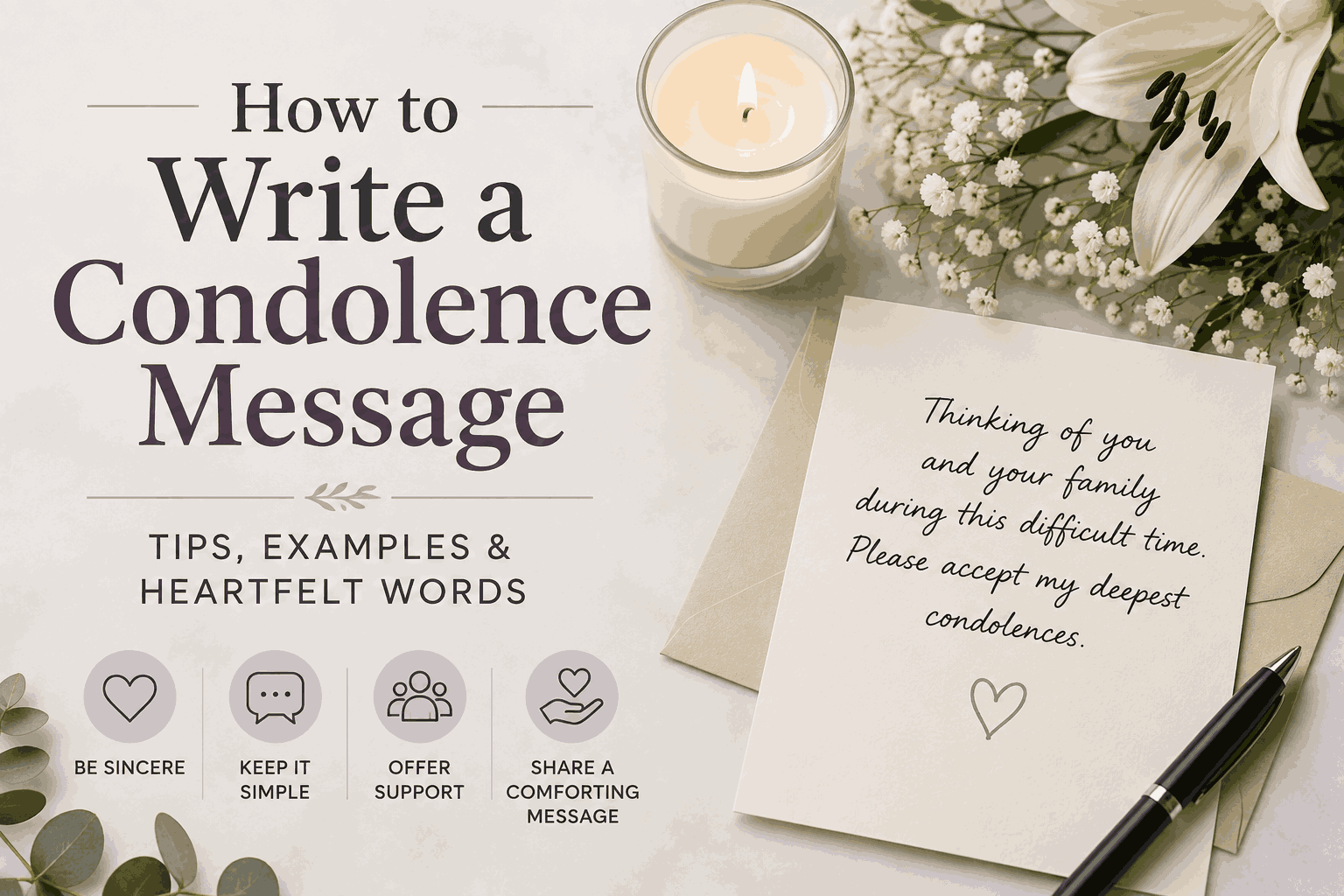
If you are unsure where to begin, use a simple structure. Most good sympathy messages follow the same basic flow.
1. Acknowledge the loss
Start by naming what happened in a gentle way. This shows clarity and care. It also avoids sounding vague or distant.
You can say:
- I was so sorry to hear about your mother.
- I am deeply sorry for your loss.
- I was saddened to hear about David’s passing.
This first line sets the tone. Keep it warm and direct.
2. Express sympathy
Next, share your feelings in a respectful way. This is the emotional heart of the message.
Examples include:
- My heart goes out to you and your family.
- Please accept my sincere condolences.
- I am thinking of you during this difficult time.
You do not need dramatic language. Simple words often feel more comforting.
3. Share a memory or kind quality if appropriate
If you knew the person who passed away, mention a memory or a quality you admired. This makes your condolence note feel more personal and meaningful.
For example, you might write that their father was always generous, calm, or welcoming. Even one honest sentence can bring comfort because it honors the person’s life.
If you did not know the deceased, skip this part. Do not force it.
4. Offer support carefully
If you want to help, offer something real and specific. Avoid broad statements you may not be able to follow through on.
Instead of saying, “Let me know if you need anything,” try:
- I can bring dinner over this week if that would help.
- I am here if you want to talk.
- I can help with errands or school pickup if needed.
Specific support feels more genuine and useful.
5. Close with warmth
End with a kind closing that matches your relationship. Keep it simple.
You can say:
- With sympathy
- Thinking of you
- Sending love
- Keeping you in my thoughts
A soft closing helps the message feel complete without sounding stiff.
Dos of writing a condolence message
When learning how to write a condolence message, it helps to know what works well in real life.
Keep it short and sincere
A condolence card does not need a long speech. In fact, shorter messages often feel more natural. Aim for honesty over length.
Use the person’s name and, if fitting, the deceased’s name
Names make the message feel personal. They show attention and respect.
For example, “I am so sorry, Maria” feels warmer than a generic sentence with no name.
Match the tone to the relationship
A message to a close friend can be more personal and emotional. A note to a colleague should usually be more formal and concise. The tone should fit the connection.
Be supportive, not performative
Your role is to comfort the grieving person, not to showcase your own feelings. Keep the focus on them and their loss.
Write sooner rather than later
A message sent promptly can provide comfort early in the grieving process. Still, late is better than never. Even if weeks have passed, a thoughtful note is still welcome.
Don’ts of writing a condolence message
Knowing what to avoid is just as important.
Do not try to explain the loss
Phrases like “Everything happens for a reason” can feel painful, even if well meant. Grief rarely responds well to easy explanations.
Do not compare losses
Avoid saying things like, “I know exactly how you feel,” or turning the message into your own story. Even if you have experienced grief, this moment is about them.
Do not use clichés too heavily
Some common phrases are fine, but too many can make the message sound empty. Try to write like a real person, not a greeting card machine.
Do not give advice unless asked
Grieving people usually need comfort, not instruction. Avoid telling them how to heal, what to do next, or how to stay strong.
Do not make promises you cannot keep
If you offer support, make sure it is realistic. Empty offers can feel disappointing later.
What to say in different situations
The best condolence message depends on the context. Here are a few common situations.
How to write a condolence message for a close friend
For a close friend, you can be more personal and emotionally open. Your message can reflect your relationship and shared history.
Example:
I am so sorry for your loss, Emily. Your mom was always so kind to me, and I know how deeply you loved her. I am here for you in any way you need, and I can come by this week if you want company.
This works because it is warm, personal, and supportive.
How to write a condolence message for a colleague
A workplace sympathy message should be respectful and clear. You do not need to go too deep unless you are personally close.
Example:
I was very sorry to hear about your loss. Please accept my sincere condolences during this difficult time. Wishing you and your family peace and strength in the days ahead.
This is appropriate for email, a card, or a team message.
How to write a condolence message if you did not know the deceased
You can still send a thoughtful message even if you never met the person who passed away.
Example:
I was so sorry to hear about your loss. Please know that I am thinking of you and your family during this painful time. Sending my heartfelt sympathy.
This keeps the focus on the grieving person without pretending personal knowledge.
How to write a condolence text message
A text message can be brief but caring. It is often the fastest and most natural way to reach out.
Example:
I just heard the news. I am so sorry for your loss. Thinking of you today and sending love.
Texts work best when they sound human and direct. Do not overcomplicate them.
How to write a condolence message for flowers
Flower card messages need to be especially short. Focus on sympathy and support.
Examples:
- With deepest sympathy and caring thoughts.
- Sending love and heartfelt condolences.
- Thinking of you and your family with sympathy.
- In loving memory and with sincere condolences.
A flower note should be gentle, simple, and respectful.
Condolence message examples you can use
Here are several ready-to-use examples for different needs.
Short condolence messages
- I am deeply sorry for your loss.
- Thinking of you and your family with sympathy.
- Sending love and heartfelt condolences.
- My heart is with you during this difficult time.
- Wishing you comfort and peace in the days ahead.
Personal condolence messages
- I am so sorry, James. Your sister had such a warm spirit, and I know how much she meant to you.
- My heart breaks for you and your family. I hope you feel surrounded by love right now.
- I was deeply saddened to hear about your father. He was a wonderful man, and I will remember his kindness.
Formal sympathy messages
- Please accept my sincere condolences on your recent loss.
- I am sorry to hear of your loss and extend my deepest sympathy.
- Our thoughts are with you and your family during this difficult time.
- Wishing you strength and comfort as you grieve.
Religious condolence messages
If you know the person shares your faith, a faith-based message may feel comforting.
- Keeping you in my prayers during this difficult time.
- May God give you peace, comfort, and strength.
- Praying for you and your family as you mourn this loss.
Only use religious language if you know it will be welcome.
A simple condolence message template
If you want a formula you can adapt quickly, use this:
I was so sorry to hear about [name or loss].
Please accept my heartfelt condolences.
[Optional memory or kind quality.]
I am thinking of you and your family during this difficult time.
Example:
I was so sorry to hear about your grandmother. Please accept my heartfelt condolences. She always made everyone feel welcome. I am thinking of you and your family during this difficult time.
How long should a condolence message be?
Most condolence messages should be between two and six sentences. That is enough to express sympathy without overwhelming the grieving person.
If you are writing to a close friend or family member, you can write more. If you are sending a work message or flower card, shorter is usually better.
Length matters less than tone. A brief, sincere message works far better than a long, awkward one.
Final thoughts on writing with care
If you are still unsure how to write a condolence message, remember this: kind and simple is enough. You do not need perfect words. You only need honest ones.
A thoughtful sympathy message acknowledges pain without trying to control it. It offers support without pressure. And it reminds the grieving person that they are seen, remembered, and cared for.
That is what makes a condolence note meaningful.
FAQs
What is the best short condolence message?
A good short message is: “I am so sorry for your loss. Thinking of you and your family.”
How do you write a heartfelt condolence message?
Acknowledge the loss, express sympathy, and add a personal memory or kind offer of support.
What should you not say in a condolence message?
Avoid clichés, advice, comparisons, or phrases that try to explain the loss.
Can a condolence message be sent by text?
Yes. A short, sincere text message is appropriate and often appreciated right away.
How do you end a condolence message?
Close with a warm phrase such as “With sympathy,” “Thinking of you,” or “Sending love.”