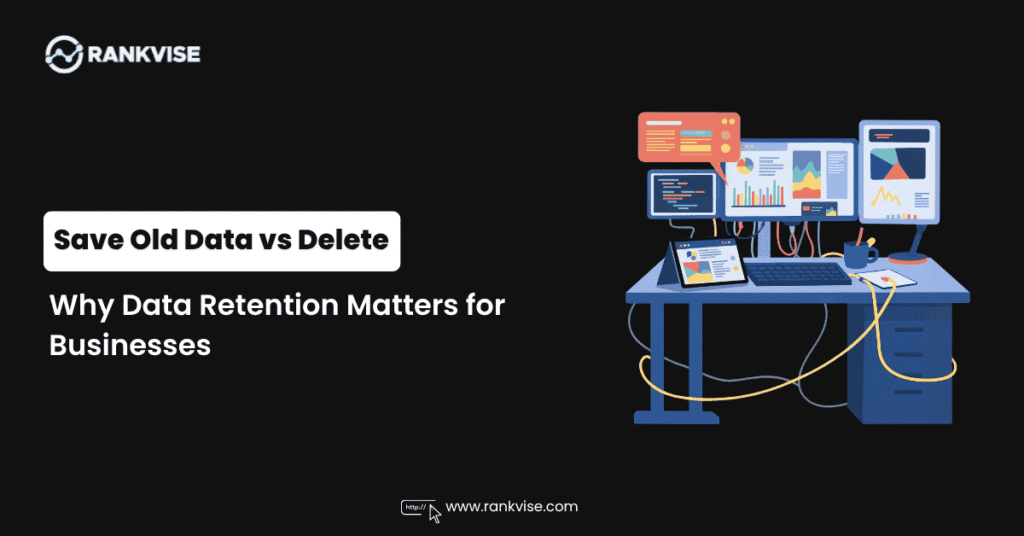
The contemporary business environments produce an immense amount of digital data on a daily basis, such as customer data, transactional records, communication history, and documentation. With the growth of storage systems and the availability of cloud platforms, organizations have to decide whether to delete older data or keep it in reserve.
- Archived data preserves historical insights for analytics, forecasting, and institutional memory that guide better strategic decisions.
- Secure archiving supports compliance, audits, and legal requirements, reducing fines and reputational risk.
- Moving inactive records to archival storage improves active system performance and lowers long term storage costs.
- Retained archives enable faster recovery after failures or attacks and maintain continuity during reorganizations or leadership changes.
Although deletion might seem to ease storage control, it can bring a long term risk to the security, compliance, and even continuity of operations. Secure archiving is another organized alternative that helps maintain the integrity of data and systems remain efficient.
Knowledge of the importance of archiving old data rather than permanently removing it is crucial to developing a resilient digital infrastructure within any organization.
Benefits Of Retention Of Old Business Data
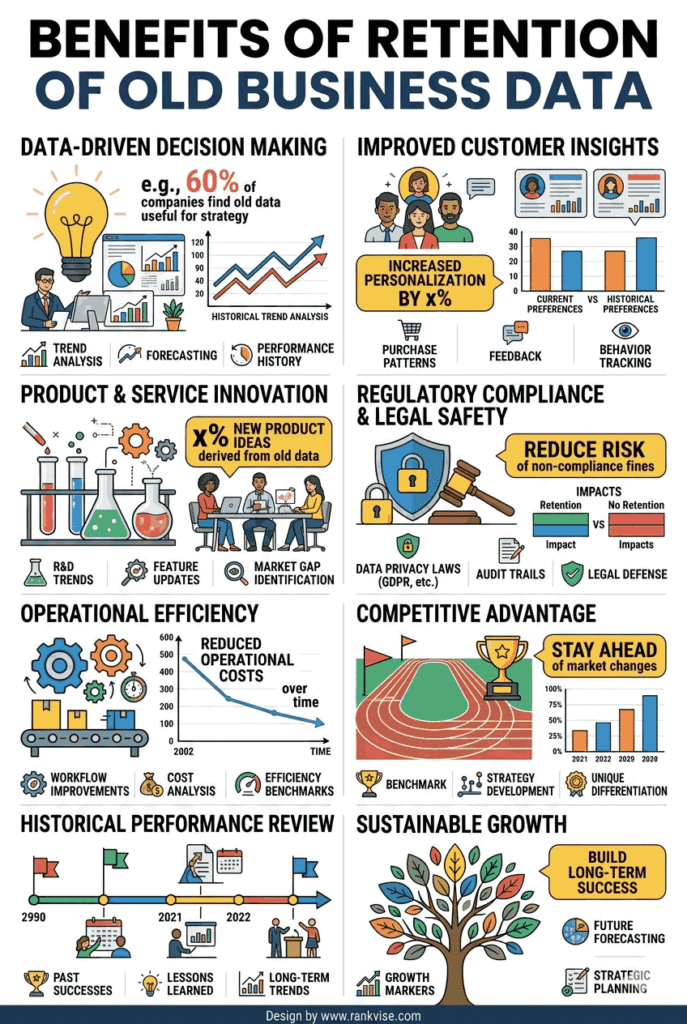
History business data is usually valuable not immediately apparent at the point of storage decisions. Past records may give information on customer behavior, financial performance and operational efficiency tendencies that can guide organizations in making superior strategic decisions.
With this information being stored safely, it turns into a long term asset that enhances analytics and forecasting. Its deletion eliminates the chances of revisiting knowledge, which can be useful as the market conditions evolve.
Archived data is also a contributor to internal learning and accountability. The ability to make a business look at previous decisions, project outcomes and communication records helps businesses streamline processes and minimize repeat errors.
This knowledge over time is embedded in the institutional memory of the organization. Secure archiving helps to make sure that this memory is not lost and it does not contaminate active systems.
Long Term Significance Of Archived Information
The archived data has a long term significance that is not limited to short term business requirements. Organizations are dynamic, change in leadership or shift in strategies and access to historical data can keep continuity during change. In the absence of archived records, new teams might not be able to get a sense of past decisions or rebuild the essential context.
Also, archived data may be useful when a company is audited, merged or during restructuring. It offers a quality reference point that assists transparency and verification. Archives can also help in maintaining the information that is important without subjecting it to unnecessary operational systems so that it will be easily accessed when it is properly managed. This is one of the major benefits of secure archiving since it ensures that records are preserved and are available at any time.
Dangers Of Irreversible Data Destruction
The inadvertent gaps in business can be caused by permanent deletion of data. Once the information is deleted, it is not retrievable in case it is later required to be analyzed, to settle a dispute or to verify compliance. This generates a reliance on future data by itself, which might not offer enough historical background to be used in decision making.
Deletion practices are also at risk of not being absolutely secure or necessarily consistent across systems. In other instances, information can be seen removed though it can be archived in backups or distributed systems that will cause fragmentation and confusion. Secure archiving should also help alleviate such risks by ensuring that the storage is controlled and organized instead of depending on the processes of irreversible removal.
Implications Of Data Removal Practices On Security
Data deletion does not necessarily ensure that all levels of storage have eliminated it. In complicated cloud systems, replicas can be present in more than one system, cache, or backup server. This raises the danger of unauthorized recovery or exposure in case deletion is not properly performed.
Archiving offers a more regulated method by aggregating older data in highly secured places with specified access controls. Organizations can limit access without compromising integrity as opposed to scattering or trying to erase the information completely. This will minimize chances of unintentional exposure, and increase the general governance of data.
Data Retention Requirements
A number of industries are regulated such that data is to be stored within organizations over a number of years. Financial institutions, health care organizations and service organizations are usually required to keep records to be audited and to comply. The inability to keep needed data may result in fines and a tarnished reputation.
Secure archiving assists companies to satisfy these needs without straining an active system. Organizations can maintain records in structured archives to ensure that whenever required, the records are at hand to be reviewed by regulatory authorities. This approach aids in compliance and operational efficiency in day to day systems.
Business Risks Related To Lost Business Records
Early deletion of business records may subject the organizations to legal challenges. Historical data is a very important piece of evidence in case of disputes, investigations, or contractual disagreements. In its absence, companies might have a hard time justifying decisions or proving to be in line with requirements.
The laws of most jurisdictions mandate companies to maintain specific types of information over a specified time. Secure archiving will make sure that this data is stored in a controlled way that will assist in retrieval when required. This minimizes the chances of non compliance in addition to safeguarding the legal status of the organization in delicate cases.
Benefits Of Open Archives Operationally
Properly organised archives enhance efficiency in operation because it can help to eliminate clutter within main storage systems. The active systems can run smoothly when old data is transferred to safe archives resulting in improved performance and ease of management. Teams are able to concentrate on the tasks at hand without being deluged by information which is obsolete.
Meanwhile, archived data is available on-demand. This balance enables the organization to have lean operations in place and at the same time still have the capability of accessing historical records. Effective archiving policies maintain access control, organization and efficiency.
Enhancements In Workflow Through Organized Data Storage
Separating active and inactive data logically also enhances workflow as structured archiving enables a logical separation of data. It does not make employees carry out searching for huge amounts of irrelevant information, minimizing time on data retrieval. This helps in increasing productivity within the departments.
Also, structured archives are more integrated with analytics tools. When all the historical data is arranged in a similar manner, this makes it easier to process and analyse. This enables businesses to extract insights without interfering with running systems and performance.
Cost In Data Storage Management
Deletion of old data is one of the factors that are motivated by the need to save on storage costs but it can be shortsighted. Although deletion can decrease short term storage, it can result in increased long term expenses in case data needs to be rebuilt or restored in the future. The loss of valuable information may lead to inefficiencies in operations that exceed savings in storage.
Secure archiving offers a more balanced solution, optimizing the storage levels. Most often data is stored in the high performance environment, whereas the data that is not used is transferred to the cost effective storage systems. This will guarantee the efficient utilization of resources without compromising on the long term data availability.
Use Of Cloud Computing In Scalable Archiving
Businesses have been able to implement scalable archiving strategies easily by the help of cloud platforms. They enable organizations to store vast amounts of data without having to maintain physical infrastructure and are also flexible in access and management. Here is where such concepts as unlimited cloud storage are applicable, with its emphasis on the scalability such a system can provide when configured appropriately.
In the cloud, data can be archived to lower cost levels and still be secure and accessible. This architecture enables organizations to expand their data storage capacity without always reorganizing their systems. It also assists in long term retention strategies without straining operational budgets or infrastructure capacity.
Business Continuity And Disaster Preparedness
Archiving security is important in business continuity planning. Archived data is also a good source of data recovery in case of system failure, cyberattacks or unintentional loss of data. In the absence of good archives, organizations can suffer major inconveniences that can interfere with operations and customer confidence.
The preparedness to disaster is based on the capability of restoring systems promptly and precisely. The past records are available in archives so that in case of failure, the records can be used to restore the environment and be operational in the least time possible. This minimizes downtime and aids in stability in case of unforeseen situations.
Resilience In The Form Of Safes Archives
Business system resilience requires adaptation and recovery abilities to disruptions. Secure archives can help achieve this resilience, by maintaining essential data in a manageable form that can be recovered. This enables organizations to react well to technical failure as well as external threats.
In the long run, archived data will be included in a wider resilience approach that will contribute to long term stability. Permanent deletion is not advisable, and the structured preservation of the information is beneficial to organizations as it allows maintaining a balance between the security, compliance and operational efficiency. This solution enhances the general data management and also makes sure that vital information is secured and accessible when required.
Protecting old data by storing it rather than destroying it is an effective strategy that enhances operational stability as well as long term business sustainability. As much as deletion might appear as an easy method of controlling storage, it can take away important historical context, contribute to higher compliance risk, and reduce the capacity of an organization to recover in case of unexpected interference.
Archiving offers an alternative that is safer and more organized and retains the necessary information, leaving active systems efficient and clean. The significance of responsible data management is only magnified as businesses rely more and more on the growing digital ecosystems and cloud platforms.