You have probably searched for something on Google and clicked one of the first three results. Most people do. The websites sitting in those top spots did not get there by accident. They earned those positions through deliberate search engine positioning.
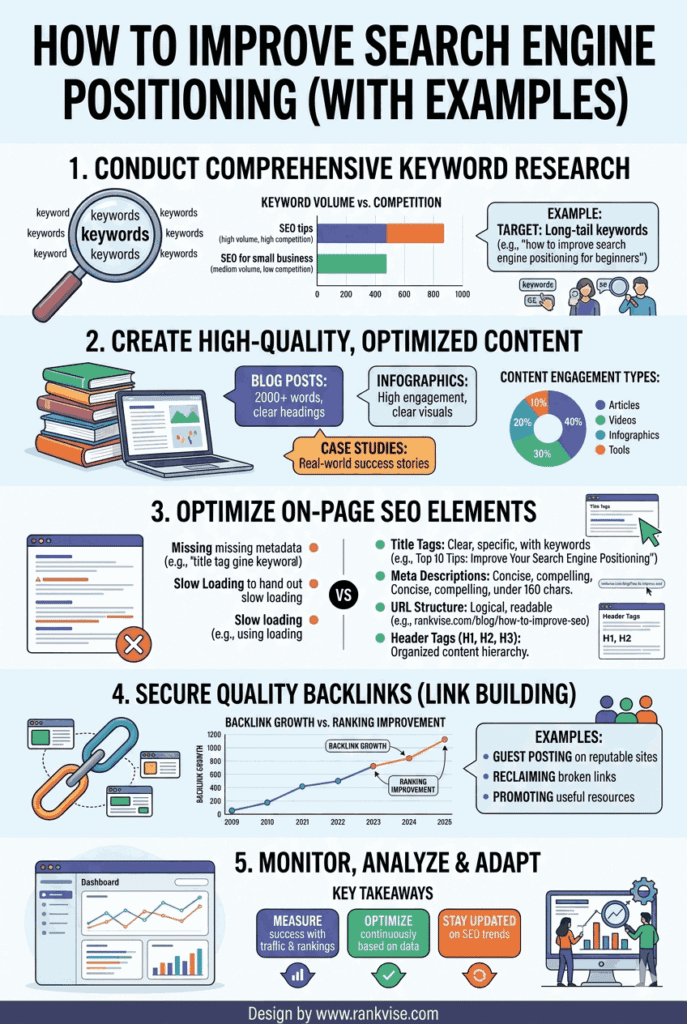
- Treat search engine positioning as a targeted, page-level effort to improve rank for specific keywords.
- Create deep, relevant content that answers searcher intent and demonstrates expertise.
- Earn backlinks from relevant, authoritative sites rather than chasing high quantity links.
- Fix technical and on-page issues: fast load times, mobile responsiveness, structured data, clear headings, and optimized meta tags.
- Monitor keyword positions with tools like Google Search Console and refine content regularly based on performance.
But what does that actually look like in practice? How does a business move from page five to page one? This guide walks you through real search engine positioning examples, explains what drives those results, and shows you how to apply the same strategies to your own website.
What Is Search Engine Positioning?
Search engine positioning refers to where your website appears in organic search results for a specific keyword. If someone searches “best running shoes” and your page shows up third, your position is number three.
This is different from general SEO, which covers broad optimization efforts. Positioning focuses on improving your rank for individual keywords or phrases. It is a targeted, page-level strategy rather than a site-wide approach.
Think of it this way. SEO is the entire game plan. Search engine positioning is the specific play you run to score on a particular keyword.
Why Does Your Google Search Position Matter?
Your ranking position directly impacts how much traffic your website receives. The data tells a clear story.
| Google Position | Average Click-Through Rate |
|---|---|
| Position 1 | 27–31% |
| Position 2 | 15–17% |
| Position 3 | 10–12% |
| Position 5 | 5–6% |
| Position 10 | 2–3% |
| Page 2 and beyond | Less than 1% |
The difference between ranking first and ranking fifth can mean thousands of additional visitors each month. For businesses that depend on organic traffic, even a one-position improvement translates directly into revenue growth.
This is why companies invest heavily in SERP positioning strategies. Every spot you climb brings measurable returns.
Search Engine Positioning Example: A Local Bakery
Let us look at a practical scenario. A bakery in Austin, Texas wants to rank for “best cupcakes in Austin.” Currently, their website sits on page three of Google. Here is how they improve their search engine placement step by step.
Step 1: Keyword and Competitor Research
The bakery owner identifies that “best cupcakes in Austin” receives 1,200 monthly searches. She analyzes the top five results and notices they all have detailed pages with photos, customer reviews, and location information. Her current page has only a brief paragraph and no images.
Step 2: On-Page Optimization
She rewrites her cupcake page with a clear heading structure. The title tag becomes “Best Cupcakes in Austin | Fresh Daily at Sweet Spot Bakery.” She adds high-quality photos of her cupcakes, includes her address and hours, and writes 800 words describing her flavors, ingredients, and baking process.
Step 3: Building Local Authority
She claims and optimizes her Google Business Profile. She encourages happy customers to leave Google reviews. She gets mentioned in two local food blogs that link back to her website.
Step 4: The Result
Within four months, her page moves from position 27 to position 4. Organic traffic to that page increases by 340%. Walk-in customers mention finding her through Google search at least twice a week.
This search engine positioning example shows how targeted changes to a single page produce dramatic ranking improvements.
Search Engine Positioning Example: An Ecommerce Brand
Now consider a larger scenario. An online store selling ergonomic office chairs wants to rank for “best ergonomic chair for back pain.” This keyword has high commercial intent and strong competition.
Analyzing the Current SERP Landscape
The top results include major retailers, review sites, and health publications. The ecommerce brand currently ranks on page two at position 14. To compete, they need content that outperforms what already exists.
Creating Superior Content
The brand publishes a comprehensive guide comparing their chairs with competitors. They include original photos, a chiropractor’s endorsement, a comparison table, and a video demonstration. The page answers every question a buyer might have about ergonomic support.
Technical and Off-Page Improvements
They improve page load speed to under two seconds. They add structured data markup for product reviews. They earn backlinks from three health and wellness websites through expert contributions.
Tracking Position Changes
Over six months, the page climbs from position 14 to position 3. Organic revenue from that single page increases by 210%. The keyword ranking improvement drives consistent sales without additional advertising costs.
This website ranking example demonstrates how combining content quality with technical optimization moves even competitive keywords.
Key Factors That Influence Your Search Engine Position
Multiple elements determine where Google places your page. Understanding them helps you prioritize your efforts.
Content Relevance and Depth
Google ranks pages that thoroughly answer the searcher’s question. Thin content with surface-level information rarely reaches page one. Your page must demonstrate genuine expertise and provide clear value.
Backlink Quality and Quantity
Links from other reputable websites signal trust and authority. A page with 20 high-quality backlinks will typically outrank a page with 200 low-quality ones. Focus on earning links from relevant, authoritative sources in your industry.
User Experience Signals
Google monitors how visitors interact with your page. High bounce rates and short visit durations suggest your content does not satisfy searchers. Fast load times, mobile responsiveness, and intuitive navigation all support stronger positioning.
Search Intent Alignment
Your page must match what the searcher actually wants. If someone searches “how to fix a leaky faucet,” they expect a tutorial, not a plumbing service advertisement. Misaligned intent kills your ranking potential regardless of how well optimized your page is.
Technical SEO Foundation
Clean URL structures, proper heading hierarchy, optimized meta tags, and crawlable site architecture give search engines the signals they need. Without these technical basics, even excellent content struggles to rank.
How to Check Your Current Search Engine Position
Before you can improve, you need to know where you stand. Several tools make this straightforward.
- Google Search Console shows your average position for every keyword your site ranks for. It is free and connects directly to Google’s data.
- Ahrefs or Semrush provide detailed keyword ranking reports with historical tracking. These paid tools offer competitor comparisons and position change alerts.
- Manual search lets you check specific keywords by searching in an incognito browser window. This removes personalization bias from your results.
- Rank tracking tools like SERPWatcher automate daily position monitoring and send alerts when rankings shift significantly.
Check your positions weekly for priority keywords. Monthly reviews work for secondary terms. Consistent monitoring helps you spot problems early and measure the impact of your optimization efforts.
A Step-by-Step Framework to Improve Your Positioning
Follow this process to move any page higher in search results.
- Identify your target keyword. Choose one primary keyword per page based on search volume, competition, and business relevance.
- Audit the current top results. Study what pages ranking in positions one through five do well. Note their content length, format, media, and depth.
- Create or improve your page. Make your content more comprehensive, more current, and more useful than what currently ranks. Add original data, visuals, or expert insights.
- Optimize on-page elements. Write a compelling title tag, craft a click-worthy meta description, use descriptive headers, and add internal links to related pages on your site.
- Build authority through backlinks. Reach out to relevant websites, contribute guest articles, and create linkable resources that naturally attract references.
- Monitor and refine. Track your position over time. Update content every few months to maintain freshness and relevance.
This organic search optimization framework works for any industry and any keyword difficulty level. Patience and consistency are the two ingredients most businesses underestimate.
Common Positioning Mistakes That Hold Businesses Back
Avoid these errors that frequently prevent websites from reaching page one.
- Targeting keywords that are too broad. A small business trying to rank for “shoes” faces impossible competition. Narrower terms like “waterproof hiking shoes for wide feet” offer realistic opportunities.
- Ignoring existing content. Many sites have pages that rank on page two or three. Updating these pages often produces faster results than creating new ones from scratch.
- Neglecting mobile optimization. Google uses mobile-first indexing. If your page performs poorly on phones, your positioning suffers across all devices.
- Chasing quantity over quality in backlinks. Ten links from respected industry websites deliver more impact than hundreds of links from irrelevant directories.
- Failing to update content regularly. Search engines favor fresh, accurate information. A page published two years ago without updates gradually loses its competitive edge.
FAQs
Ranking in the top five for your target keywords is ideal. Positions one through three capture the majority of clicks, but even a top-ten ranking drives meaningful traffic for local and niche businesses.
Most pages see noticeable ranking improvements within three to six months. Highly competitive keywords may take longer, while low-competition terms can shift within weeks.
Not exactly. SEO covers all optimization efforts across your website. Search engine positioning focuses specifically on improving your rank for individual keywords or pages within the broader SEO strategy.
No. Paid ads and organic rankings operate independently. Running Google Ads does not directly influence where your website appears in organic search results.
Use Google Search Console for free, accurate data. For quick manual checks, search your target keyword in an incognito browser window to see your current position without personalized results.