Ranking reports can either help you make better decisions or send the whole team into a tiny marketing spiral before lunch. One day, a keyword jumps three spots. The next day, it drops five. Someone asks what happened, and suddenly everyone is staring at a chart as if it personally betrayed the company.
Picking the right platform matters because rankings are signals. They need context before they deserve action.
Your freelance writer might use an AI humanizer tool to fix their draft without blindly trusting every suggestion. Similarly, SEO teams need rank data they can read with judgment.
A worthy tool should help you understand patterns and decide what needs your attention in the first place. The right choice gives you a clearer view of visibility, competitors, content performance, and search intent so that your SEO strategy is guided by evidence.
Start with the decisions you need to make
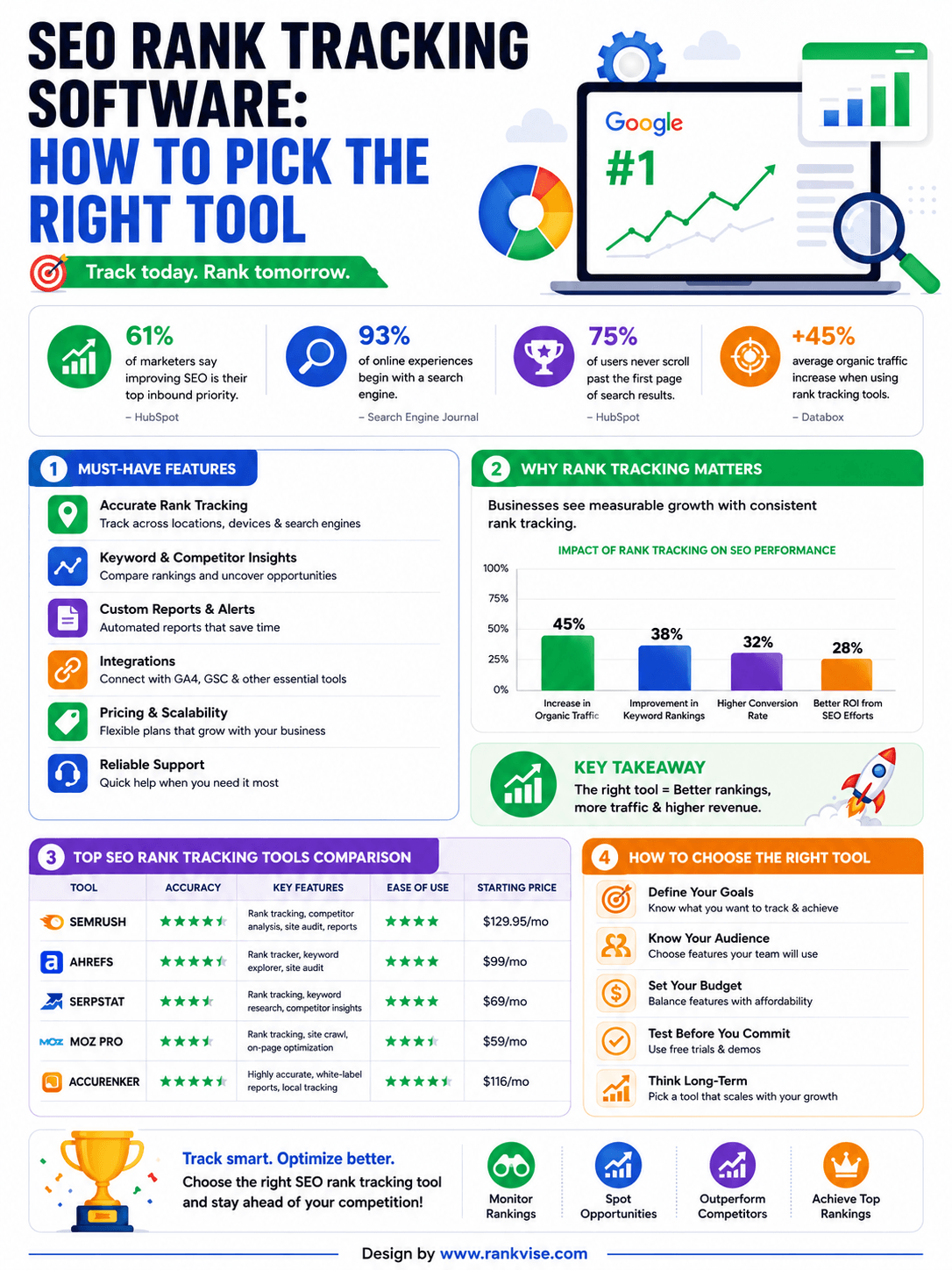
A ranking tool earns its place when it supports the decisions your team makes. Before comparing dashboards and feature lists, ask what the data needs to prove. Most rank tracker SEO tools show keyword movement, but the thing is, that movement should help you decide what to update, protect, rewrite, or ignore.
Some teams need daily tracking because they work in competitive SERPs where small changes might lead to tangible traffic loss. Others only need weekly or monthly updates because their SEO program moves through longer content cycles.
An e-commerce brand may care about category pages, product keywords, local packs, and seasonal search changes. A SaaS team may care more about competitor pages, comparison terms, integrations, and high-intent queries near the buying stage.
Many teams overbuy here. They choose the platform with the biggest feature list, then use the same few reports every month. That is by no means a valid strategy.
Start with your workflow:
- Which keywords directly support revenue?
- Which pages need visibility monitoring?
- Which competitors do you need to watch?
- Who will read the reports?
- How often will rankings change your next action?
If your team needs quick stakeholder updates, reporting matters. If your SEO lead reviews search movement every week, filters and historical data matter. If your business serves specific cities or regions, local tracking matters.
The bottom line is: the platform should fit the way your team works.
Why the best rank checker is not always the biggest platform
A large platform with endless modules can still become frustrating if it makes simple checks slow, unclear, or buried behind too many clicks.
Accuracy comes first. Rankings shift by location, device, language, search engine, timing, personalization, and SERP layout. If your customers search from Chicago on mobile, a broad national desktop view will only tell part of the story. You need settings that match how your audience actually searches.
Freshness matters, too, though daily updates are not always necessary. Daily tracking helps during launches, migrations, technical fixes, active campaigns, and volatile search periods. Weekly tracking is typically enough for evergreen blog content or slower-moving SEO.
The real test is explanation. When a keyword drops, can you see which page replaced yours? Can you tell whether a competitor moved up, a SERP feature changed the layout, or your page lost relevance? Can you review previous movements without exporting a spreadsheet that looks like it wants to ruin your afternoon?
A good platform helps you answer the manager’s question faster: “Should we care about this change?” Sometimes, the answer is yes. Often, it is “not yet.”
Make sure the tool understands SERP features
The search results page has become so crowded… Featured snippets, People Also Ask boxes, local packs, video carousels, image results, shopping modules, and AI-generated summaries can all change how much traffic a ranking brings.
For instance, a page can sit in position three and still appear lower than expected because a large SERP feature takes up the top of the page. Another page can win visibility through a snippet even if its standard organic position looks less exciting. If a platform reports position only, it may miss the reason traffic changed.
This becomes important when the numbers look strange. Rankings may stay stable while clicks drop because a new feature pushed organic results down.
A strong platform should show which SERP features appear for each keyword. That helps you decide whether to update content, add schema, rework headings, create a video, improve local signals, or move your attention to a better query.
Rank position tells you where you are. SERP context tells you what that position is worth.
Compare reporting before you compare prices
A cheap platform becomes expensive when every report takes too much time to explain. The best rank tracker tool should let you build reports around business questions, not only keyword tables.
Executive reports should show visibility trends, priority keyword movement, traffic impact, and competitive position. Content teams may need page-level ranking changes, keyword clusters, and update priorities. SEO specialists need filters, tags, historical charts, SERP snapshots, and export options.
Reporting also keeps ranking drama under control. A single keyword drop can look alarming in isolation. Inside a wider view, it may be harmless because the page gained visibility across a larger cluster.
The point is to make the numbers easier to act on.
Use tags and keyword groups to avoid spreadsheet soup
Tags and groups help you read ranking data by topic, funnel stage, page type, product line, location, or campaign. That turns rank tracking into a strategic view instead of a giant table of little emotional events.
Useful grouping options include:
- Brand and non-brand terms
- Blog, landing page, product, and category keywords
- Top-funnel, middle-funnel, and bottom-funnel queries
- Priority markets or locations
- Competitor comparison terms
- Keywords connected to recently updated pages
SEO growth rarely happens one keyword at a time. A single term can bounce around for reasons outside your control. So, a group of related terms can reveal a trend.
If a platform makes grouping hard, your reports will stay shallow. You will end up reacting to individual keyword movement instead of seeing whether a topic, page type, or funnel stage is gaining strength.
Make sure a rank tracking tool shows competitor movement
Search is competitive by nature, so your own rankings only tell half the story. You can lose position because your page got weaker, but you can also lose it because someone else improved faster.
The important part is choosing the right competitors. Business competitors and search competitors are often different groups. A software company may compete with direct product rivals, review sites, affiliate blogs, forums, YouTube videos, and Google’s own SERP elements. Everyone is simply trying to steal the same click.
A strong platform should show which domains appear most often for your tracked keywords, which pages are gaining, and which competitors own valuable SERP features. That information helps you identify content gaps, stronger formats, better page structures, and topics where other sites are building authority.
Use competitor movement to understand what search engines may be rewarding. Then decide whether your page needs better content depth, clearer intent matching, stronger internal links, fresher examples, or a different format altogether.
Look for integrations that connect rankings to outcomes
The best SEO rank tracking software should connect with the tools you already use. Integrations with Google Search Console, Google Analytics, Looker Studio, client dashboards, or project management platforms help you compare ranking movement.
This is where ranking data becomes more useful for planning. If rankings rise but clicks do not, you may have a title, meta description, SERP feature, or search-intent issue. On the other hand, if clicks rise but conversions stay flat, the page may attract the wrong audience or need a better offer.
Integrations also help with accountability. Instead of saying, “We improved rankings,” you can show what changed after updating a page, building internal links, fixing technical issues, or publishing a new content cluster.
Ranking data should sit inside your wider SEO evidence chain. Otherwise, it becomes one more tab that people open before guessing.
Check usability before committing
SEO work already has enough moving parts. If the interface feels clunky, reports are hard to customize, and basic filters are hidden, the team will use the platform less often. Then the subscription becomes another budget leak.
During a trial, test the tasks you will actually repeat:
- Add and organize keywords.
- Track desktop and mobile rankings.
- Filter by tag, location, and page.
- Compare competitors.
- Build a stakeholder report.
- Export or share data.
- Review historical ranking movement.
Pay attention to speed, layout, and friction. Can you find what changed this week without clicking through a maze? Can a non-SEO stakeholder understand the report? Can you separate priority terms from nice-to-have terms?
The right platform should make your SEO team faster.
Do not ignore alerts and historical data
Alerts help you catch ranking changes before they turn into bigger problems. Historical data helps you avoid overreacting to normal movement. You need both.
A good alert system lets you monitor major drops and gains, competitor jumps, lost SERP features, or changes for high-priority keywords. You need such monitoring during migrations, redesigns, technical fixes, content launches, and algorithm updates.
Historical data gives those alerts context. If a keyword moves up and down every week, one drop may not matter. If a stable keyword suddenly falls ten positions, that deserves attention. If several related terms drop at once, the issue may sit at the page, topic, template, or technical level.
This is how you separate ordinary search turbulence from trouble. Without history, every chart wiggle feels personal. With history, you can see patterns, seasonality, recovery speed, and the long-term effect of SEO work.
A good platform should keep enough history to show progress over months, not only the last few days of turbulence.
Match pricing to your SEO stage
Pricing should match your keyword volume, reporting needs, team size, and growth plans. The cheapest option may work for a small site tracking a focused keyword set. Larger teams may need more projects, locations, competitors, users, reports, and integrations.
Do not pay for enterprise depth if you only need a focused view of your most important terms. Also, do not squeeze a growing SEO program into a tiny plan that forces you to delete keywords every month, as if you were rationing office snacks.
Check limits carefully. Some tools charge by keyword count, update frequency, search engine, location, user seats, or reporting features. A plan that looks affordable at first can become less attractive once you add mobile tracking, local keywords, or competitor monitoring.
The best choice is the one you will use well for the next stage of your SEO work. Not forever. Just the next serious stage.
Final thoughts
Choosing ranking software gets much easier once you stop asking, “Which tool has the most features?” and start asking, “Which tool will help us make better SEO decisions?”
You need a platform that shows where your visibility is growing, where competitors are gaining ground, and which ranking changes deserve attention from your team. That might mean updating a page, fixing a technical issue, rewriting a title, or giving stakeholders a clearer report.
Accuracy matters. So does the story behind the numbers. A ranking drop without SERP data can create panic. A ranking gain without traffic or conversion insight can create false confidence.
Look for a tool that fits your workflow, organizes keywords clearly, tracks the results your audience sees, and connects rankings to outcomes beyond position changes. SEO data should make the next move clearer.