Search engines no longer work the way they used to. Ranking a page now involves more than picking a keyword and adding it to the content. Competition has increased significantly in the past decade, and expectations have shifted, so the way search engines evaluate pages has changed. The content needs to match what people are searching for, the page needs to load and function properly, and the site needs enough authority to compete with others already ranking.
Even then, positions do not stay fixed. Ranking shifts based on updates, competing content, and how users interact with the page over time. This is where working with an experienced SEO company is such a good idea. They can manage several aspects of SEO, keeping the website running and ranking as needed.
What Has Changed in SEO in 2026?
SEO is still relevant in 2026, but it’s definitely evolved as the ranking process has changed. Search results are more competitive, updates happen more often, and rankings shift more easily than before. Answer Engine Optimization (AEO) and AI-driven searches have also changed how results appear. In some cases, users get answers directly on the result page, which reduces how often they click through the website.
Search Results are More Competitive
More businesses are investing in SEO than before. In most industries, search results already include well-established pages that have been updated and improved over time. New content has to compete with that, which makes it harder to gain visibility quickly. It also means content cannot stay untouched for long. Pages that are not updated tend to lose position, even if they performed well earlier.
Google Updates are More Frequent
Search rankings do not stay the same for long. Pages move up and down even when nothing obvious has changed. Sometimes, there might be a small shift, but there might also be times when traffic drops without a clear reason. For teams handling SEO internally, this makes it harder to know what to adjust and when. By the time you notice something in-house, your performance has already taken a hit.
SEO Now Includes Content, Technical, and UX work
SEO focuses on many areas, not just content. Content still matters, but there are technical and UX aspects that need to be addressed to ensure the webpage loads properly, is easy to navigate, and works across multiple platforms. Issues like poor site structure, missing internal links, or indexing problems can prevent content from being picked up properly. User behavior plays a role, too; if people click on a page and leave too quickly, it signals that the content is not meeting expectations.
AI-Driven Search Results
When users search for something, they see direct answers, summaries, or generated responses before they even reach traditional results. A page may still rank, but it may not get the same level of attention if the answer is already shown on the result page. This also affects which kinds of content perform well. Pages that are clear, well-structured, and easy to pull information from tend to appear more often in these summaries.
Why Your Business Needs an SEO Partner
Managing SEO today requires ongoing attention. For many businesses, the challenge is not starting. It’s keeping the work and results consistent while SEO and ranking elsewhere are changing at the same time.
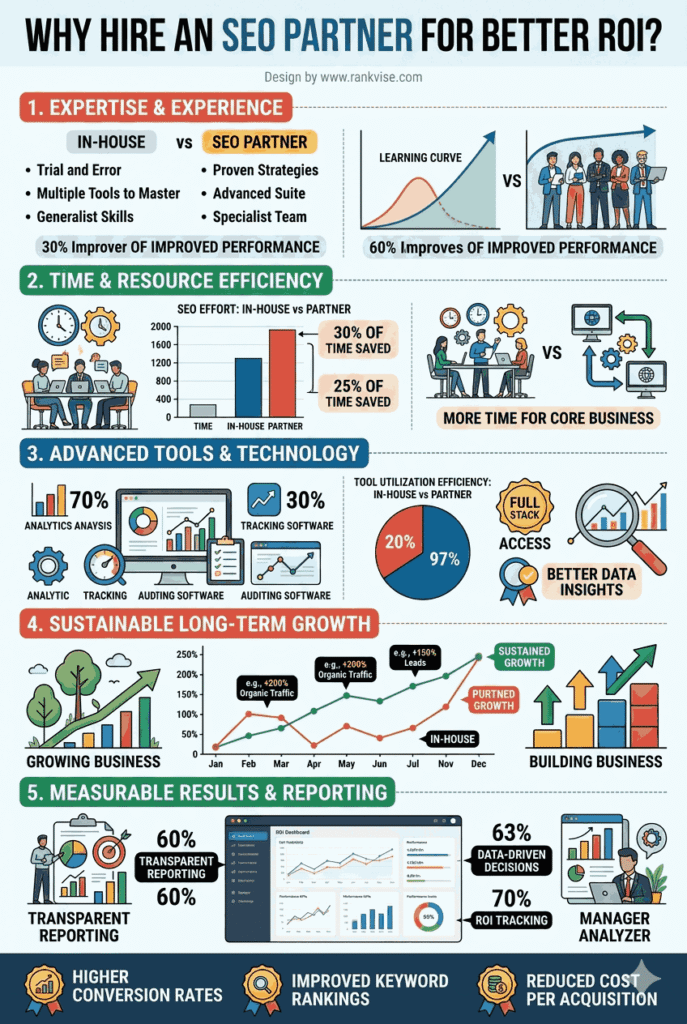
1. SEO Takes More Time Than Most Teams Expect
SEO does not move as quickly as most teams expect. The work starts with a few pages, then keeps expanding. Content needs updates, a new page gets added, and technical fixes come up along the way. But it doesn’t stay limited for long. SEO takes a lot of time and patience to work. It’s a long-term compounding strategy that might take 6 to 12 months to produce significant results in ranking, traffic, and revenue.
2. Search Algorithms Keep Changing
Rankings shift because search engine algorithms are constantly changing. A page can hold its position for a while, then drop without any clear change on the surface. It’s not always obvious what caused it, which makes it harder to respond quickly. Keeping up with those changes takes time, and most internal teams are stretched across other priorities; that’s where having an SEO partner to handle these shifts can be incredibly helpful.
3. SEO Requires Both Technical and Content Expertise
SEO work sits between content and technical structure. Content needs to answer what users are searching for on search engines. At the same time, technical elements such as indexing, site structure, and speed need to be handled correctly. These areas depend on each other, and one cannot fully compensate for the other. Most teams do not have all of these skills available at the same time, which makes progress harder to maintain.
4. They Can Help You Build a Consistent Strategy
SEO work often starts strong, then slows down. A few pages get attention, then priorities shift, and you eventually reach a point where weeks go by and nothing new gets published or updated. When that happens, results tend to stall as well. Having a structured approach keeps things moving. It connects different parts of the work instead of treating them as separate tasks.
5. SEO Partners Help You Find Missed Opportunities
It’s common to focus only on obvious keywords or core pages. However, many aspects, such as long-tail searches, under-optimized pages, or content gaps, have not been addressed. An external partner brings a different perspective and can identify areas such as technical SEO gaps, local SEO opportunities, content gaps, AI-powered competitive advantages, and more. Working with an expert can help businesses turn a weak or stagnant SEO profile into a high-performing asset.
6. They Can Track Performance and Adjust Based on Results
Traffic numbers alone do not explain what is happening. Ranking shift, user behavior changes, and some pages perform better than others for reasons that aren’t always obvious at first. An experienced SEO partner utilizes advanced tools and expertise to track KPI, reviews this data regularly, and adjusts the approach based on what is actually working.
How to Choose an SEO Partner
SEO companies have different ways of working to rank. Choosing the right one requires looking beyond broad claims and focusing on how they actually operate.
Look at Past Results
Past work shows how a partner handles projects over time. But instead of focusing only on ranking, look at how traffic, content, and site performance have changed across their work. This helps you get a clearer picture of the consistency of their work.
Ask How They Measure Progress
SEO results can take time to get significant results, but that does not mean progress is invisible. Ask how they track changes, progress, and what specific aspects they look at. Some companies focus on website traffic, and others look at rankings. So, make sure that you ask what they do with the data. Numbers by themselves don’t mean much unless they lead to changes.
Make Sure Their Process is Clear
Businesses should understand how research is done, how content is planned, and how technical work is handled. It also helps to know who is responsible for each part of the process. When these aspects are unclear, progress can slow down.
Be Careful With Guaranteed Rankings
SEO is not a fixed checklist because search engine algorithms are constantly evolving. If an SEO company promises guaranteed rankings, this is a major red flag. Some agencies that make big promises might use black-hat techniques that are unethical and can be counterproductive for the website in the long run. In some situations, these practices can even lead to penalties, so avoid any company promising guaranteed results.
Conclusion
Ranking a page now depends on more than content. If a page is slow, not indexed properly, or hard to use on mobile, it usually drops in search. The same happens when content is not updated; it does not match what people are looking for. These are the areas where most performance issues start.
Search results also change more often now. In some cases, users see answers directly on the result page, which affects how traffic comes in. SEO partners are responsible for driving business goals by tracking KPIs, adjusting to changes, and fixing issues. That’s their real value for businesses in 2026—bringing the right tool for every job to help your business improve.