Ad revenue can flatline for reasons that have nothing to do with how many people visit a site. A publisher pulling 20,000 monthly visitors can out-earn one with 80,000, if the format mix is right and a popunder ad network is part of the setup. CPM, fill rate, viewability: these three do the heavy lifting. Traffic is just the starting point. This guide gets into what’s likely dragging revenue down and what fixes it.
- Move underperforming ads above the fold or between paragraphs two and three, and load ad scripts async to capture the initial bid window.
- Run multiple ad formats, add a popunder network to broaden demand, pair popunders with banners to raise earnings on mobile and mixed audiences.
- Audit page RPM, flag bottom performers, implement fixes, run tests 14 days, and finalize placements in September to maximize holiday ad rates.
Why Decent Traffic Doesn’t Always Mean Decent Revenue?
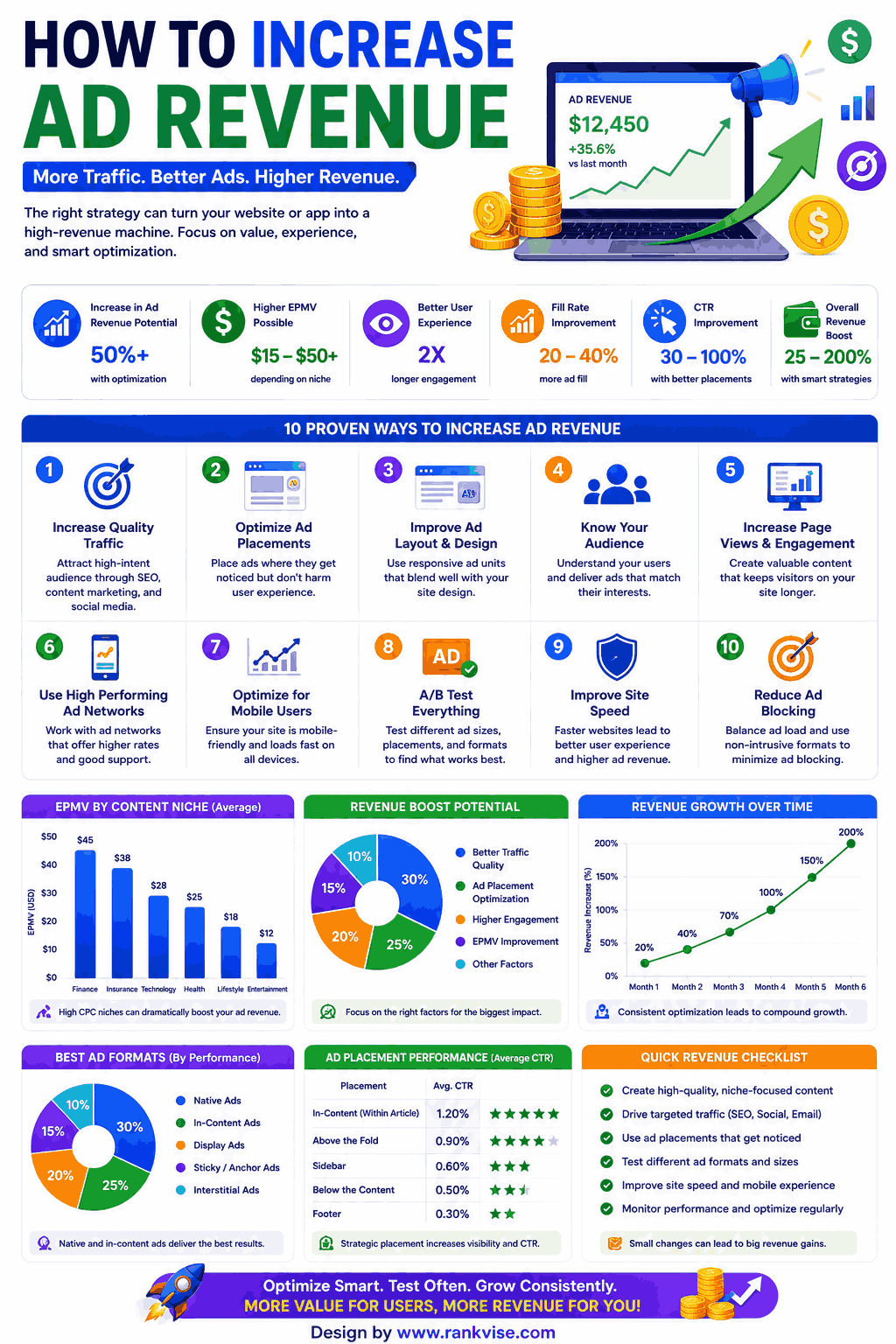
Three numbers run the show: CPM rate, fill rate, and viewability. High traffic with low revenue usually means at least one of them is off.
CPM varies a lot by niche. For example, finance and tech pages in the US pull $10–$30 CPM without much trouble. General lifestyle content? Often $2–$6. Fill rate, which is how often an ad slot actually serves an ad, matters just as much. Below 70% and a real chunk of impressions go unmonetized. Formats with broader advertiser demand tend to lift that number faster than most publishers expect.
What’s Actually Pulling CPM and Fill Rate Down
A few things come up repeatedly in revenue audits:
- Ad units below the fold or inside collapsed sections get low viewability scores;
- Running only one ad format limits the demand pool and makes CPM less predictable;
- Pages under 300 words attract weaker advertiser bids;
- Ad scripts loading past the 3-second mark miss the initial bid window.
Fix two or three of these in one pass and RPM tends to move within a couple of weeks.
Format Choice Does More Work Than Most Publishers Realize
Different formats tap different parts of the advertiser pool. Running more than one raises the odds of filling inventory at better rates.
| Ad Format | Avg CPM Range | Fill Rate | Best Traffic Type |
| Display banner | $2–$12 | 60–80% | All traffic |
| Native ads | $4–$18 | 70–85% | Organic search |
| Popunder ads | $3–$15 | 80–95% | Mixed / mobile |
| Push notifications | $2–$10 | 75–90% | Returning visitors |
Popunder ads hold strong fill rates because the advertiser pool is wider than standard display. For publishers with mobile-heavy or mixed traffic, pairing this format with banner units tends to produce a CPM lift within two weeks. Not dramatic, but consistent.
Why Some Publishers Buy Popunder Traffic Too
It’s not just a publisher-side format. Some sites choose to buy popunder traffic to push more sessions through high-RPM pages. If a page earns $18 RPM and popunder traffic costs $3–$5 CPM, the math works, provided quality holds.
A Real Example
A tech blog with $21 RPM on software review pages ran a 30-day test: bought popunder traffic at $4 CPM. Net revenue went up $340 after traffic costs. Fill rate stayed at 88% the whole time. Not a windfall, but a clean margin on existing infrastructure.
How to Audit Ad Revenue: A Step-by-Step
Most issues show up within the first hour of pulling dashboard data.
- Pull RPM by page and flag the bottom 20% of earners;
- Check fill rate per placement: below 65% means something needs to change;
- Add a popunder ad network to pages under $5 RPM with 500+ monthly sessions;
- Shift underperforming banner units above the fold or between paragraphs two and three;
- Move ad scripts to async loading if page load runs past 3 seconds;
- Let the revised setup run 14 days, then compare RPM.
Adsterra handles both display and popunder ads in one dashboard, which cuts down on the account juggling when testing format combinations.
Q4 Pays More: If You’re Ready for It
Ad rates are not the same all year. Q4, October through December, is when advertiser budgets peak. For instance, US CPM in most niches runs 40–60% higher than in Q1. The traffic numbers don’t change, the rates do.
Publishers who have their format mix sorted and fill rates healthy before October get the most out of that spike. The same pages, the same visitors, just more revenue per impression.
Audit placements in September. Add a popunder ad network to underperforming pages. Then let Q4 do its thing. Keep that setup into Q1 and the revenue floor stays higher than it would have otherwise.
FAQs
Finance and tech niches regularly land $10–$30 CPM. General content runs $3–$8, with RPM shifting based on placement quality, niche, and fill rate. Tier 2 and tier 3 geo traffic often converts better than expected when paired with the right format mix.
Popunder ads open behind the active browser window, not on top of content. Search engines assess page content independently of ad formats, so there’s no indexing impact.
Once a month is enough for most publishers. Pages showing RPM drops or unusual traffic spikes are worth checking sooner: fill rate issues tend to compound quietly if left alone.