Choosing where your SaaS lives can feel like a bigger decision than it sounds. Get it wrong and you can pay for power you never touch, or run short right when users show up.
- Bare metal gives dedicated hardware, predictable performance, and deep kernel and storage control for latency sensitive or heavy workloads.
- Virtual servers provision fast, let you size resources on demand, use snapshots, and reduce physical infrastructure management.
- Choose virtual when early or traffic is spiky to save costs; move to bare metal as steady high utilization increases.
- Test with real traffic, run a single bare metal node beside virtual instances, and measure before committing to a switch.
- Mix workloads: keep steady, latency critical loads on bare metal and bursty or experimental services on virtual to balance cost and performance.
Bare metal and virtual servers both promise to keep your app online, but they pull in different directions on speed, cost, and control.
The pull toward raw hardware is real, and the bare metal cloud market is climbing at a 24.7% clip through 2033.
Below, you can walk through what each option does well, where each one trips up, and a simple way to match the right one to where your product sits today.
What Bare Metal Servers Bring to a Growing SaaS?
A bare metal server hands you a whole physical machine with nobody else on it. No other tenants sharing the CPU, no hypervisor sitting between your code and the hardware.
For a SaaS that runs heavy workloads, think real-time analytics, big databases, or anything latency-sensitive, that direct access can mean steadier performance and fewer surprises under load.
You also get deeper control. You can tune the kernel, pick your storage layout, and lock things down the way compliance teams like. Gcore’s bare metal servers let you spin up dedicated machines without buying a rack yourself, so you keep the raw power and skip the headache of owning hardware.
Demand for this kind of setup keeps rising, and the bare metal cloud market reached $17.04 billion in 2026. If your app lives or dies on consistent speed, bare metal can be worth a serious look.
Where Virtual Servers Make Your SaaS Life Easier
Virtual servers slice one physical machine into several smaller ones, each running like its own computer. You share the underlying hardware with other tenants, and that sharing is what keeps the price friendly and the setup quick. For most early-stage SaaS apps, that trade can make a lot of sense.
Here are the wins you tend to get:
- Fast setup. You can launch a new instance in minutes, not days, which helps when you need to test or scale in a hurry.
- Pay for what you use. You can size up or down as traffic shifts, so you rarely pay for idle metal.
- Easy snapshots. You can clone, back up, or roll back an instance with a few clicks.
- Less to manage. The provider handles the physical side, so your team stays focused on the product.
If your traffic swings a lot or you’re still finding product-market fit, virtual can keep you light on your feet.
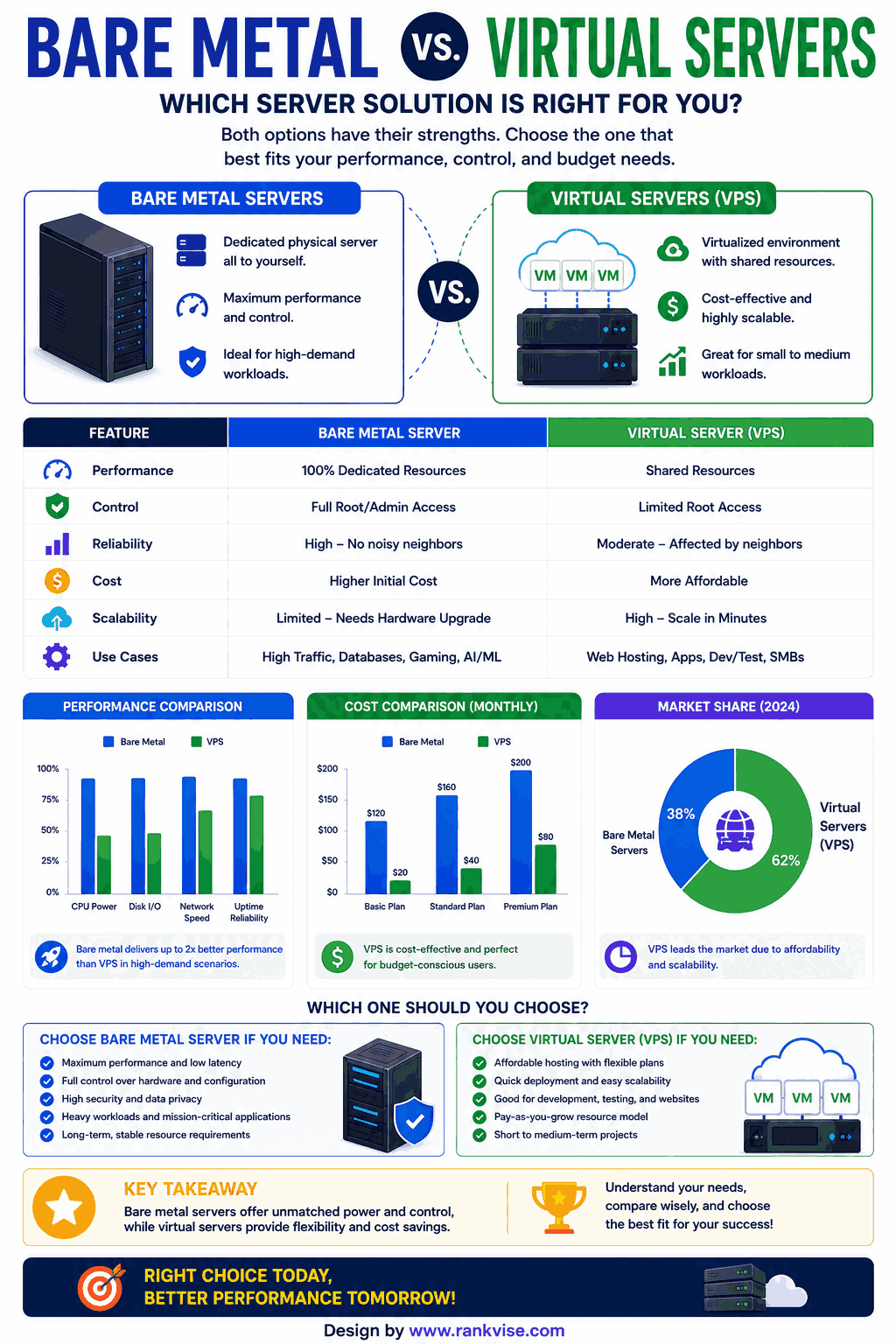
Bare Metal vs Virtual: A Quick Side-by-Side
Sometimes the fastest way to decide is to put the two next to each other. The table below sums up how they stack up on the things that tend to matter most for a SaaS team.
| What you care about | Bare metal | Virtual servers |
| Performance | Steady, no shared neighbors | Good, can dip under heavy load |
| Setup speed | Slower, hours to provision | Fast, ready in minutes |
| Cost at small scale | Higher fixed cost | Lower, pay as you go |
| Control | Full hardware access | Limited by the provider |
| Scaling style | Add whole machines | Resize on the fly |
Read it top to bottom for your biggest priority, then let that guide the call. If raw speed and control sit at the top, the left column can win. If flexibility and a lighter bill matter more right now, the right column can fit better.
Which Server Type Fits Your SaaS Right Now?
Short answer: most SaaS teams can start on virtual servers and move to bare metal once traffic and performance demands grow. Early on, you rarely need a full machine, and the flexibility of virtual saves money while you learn what your app really needs. As you scale and latency starts costing you users, dedicated hardware can pay off.
A few ways to make the call easier:
- Watch your load. If your CPU or memory sits pegged most of the day, bare metal can give you breathing room.
- Test before you switch. You can run a single bare metal node beside your virtual setup and compare real numbers.
- Mix the two. Many teams keep steady workloads on bare metal and bursty ones on virtual, so you get the best of both.
- Plan for exit. Pick providers that make moving data out simple, so you stay free to change later.
There’s no single right answer, only the one that fits your stage.
What Speed and Latency Do to Your Numbers
Speed quietly shapes how your SaaS performs as a business, not only as software. When pages and API calls lag, users feel it, and they leave. A single extra second of load time can cut conversions by around 7%, which adds up fast once you have thousands of sessions a day.
Bare metal can help here because there’s no noisy neighbor stealing cycles at the worst moment, so response times stay more predictable. Virtual servers can still be quick, though shared hardware means the odd slow spell can creep in during peak hours.
If your product leans on snappy dashboards, live data, or fast checkout flows, that predictability can matter more than the sticker price. Test under real traffic, not a quiet afternoon, and you’ll see which option holds its speed when it counts.
Counting the Real Cost as You Scale Up
Cost on paper and cost in practice can drift far apart. Virtual servers look cheap at first, and they often are, but loose sizing has a way of quietly bloating the bill. Across the industry, roughly 27% of cloud spend gets wasted on idle or oversized resources, and a lot of that hides inside virtual setups nobody bothered to trim.
Bare metal flips the math the other way. You pay a steady, higher rate up front, so heavy and predictable workloads can end up cheaper per unit of work once you’re running hot most of the time.
The trick is matching the model to your usage pattern. If your load is spiky, virtual can save you money. If it’s heavy and constant, a dedicated machine can be the better deal across a full year.
Match the Server to Your SaaS Stage, Not the Hype
The choice between bare metal and virtual servers comes down to where your SaaS sits today. If you’re early, moving fast, and watching every dollar, virtual can keep you nimble and cheap. If you’re running heavy, steady workloads where every millisecond counts, bare metal can give you the speed and control that pay off.
You don’t have to pick once and live with it forever. Start with what fits now, measure how your app behaves under real traffic, and shift when the numbers tell you to. The right server is the one that matches your stage, not the loudest trend.