A google ads for doctors seo outline is a strategic framework that combines paid advertising with organic search optimization. It helps medical practices attract patients through both channels simultaneously.
- Use Google Ads for immediate patient flow while investing in SEO for long term organic visibility.
- Research and separate keywords by intent; bid high-intent local terms, reserve informational queries for SEO content.
- Structure campaigns by service line and create dedicated landing pages matching ad groups for higher quality scores and conversions.
- Optimize local SEO: consistent listings, Google Business Profile, and active patient reviews to boost organic and ad performance.
- Track conversions and cost per acquisition by channel; shift budget from ads to SEO as organic patient value improves.
Most doctors understand they need online visibility. Few know how to structure a plan that coordinates Google Ads with SEO efforts. Without a clear outline, practices waste budget on disconnected tactics that compete against each other.
This outline serves as your roadmap. It defines which keywords get paid promotion, which deserve organic content investment, and how both channels support your patient acquisition goals together.
Why Doctors Need Both Google Ads and SEO Working Together
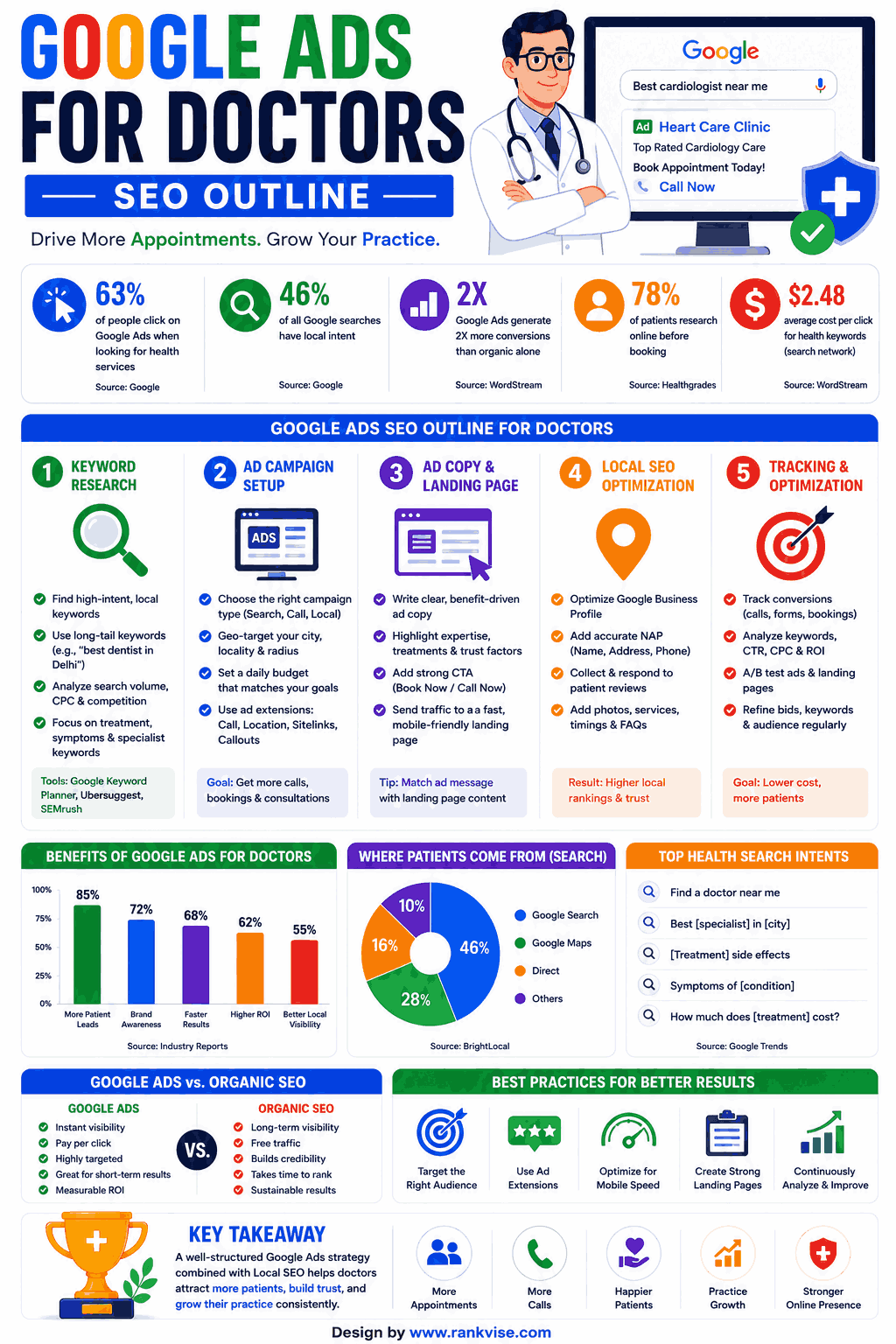
Relying on Google Ads alone is expensive. Relying on SEO alone is slow. Combining both channels creates a patient acquisition system that delivers immediate results while building long-term visibility.
Google Ads puts your practice at the top of search results today. Patients searching for “dermatologist near me” see your ad immediately. You pay per click, but you get instant exposure while your organic rankings develop.
SEO builds authority over months. Once your website ranks organically, you attract patients without paying per click. The traffic becomes essentially free. But reaching page one takes consistent effort over time.
Smart medical practices use ads to fill appointment slots now. They invest in SEO to reduce ad dependency over time. The outline coordinates both efforts so they reinforce each other rather than duplicating work.
How to Research Keywords for Your Medical Practice Ads
Identify High-Intent Patient Keywords
Start with keywords that signal someone ready to book an appointment. These high-intent terms convert best in both paid and organic channels.
High-intent keywords for doctors typically include:
- Specialty plus location (“orthopedic surgeon Dallas”)
- Condition plus treatment (“laser eye surgery consultation”)
- Urgency signals (“same day dentist appointment”)
- Insurance-related terms (“pediatrician accepting Blue Cross”)
- Action phrases (“book appointment cardiologist near me”)
These keywords deserve your ad budget because searchers are ready to act. They also deserve dedicated landing pages for organic ranking over time.
Separate Keywords by Channel Strategy
Not every keyword belongs in your paid campaign. Some cost too much per click relative to patient value. Others convert better through educational content than advertisements.
| Keyword Type | Best Channel | Example | Reason |
|---|---|---|---|
| High-intent, local | Google Ads + SEO | “knee replacement surgeon Austin” | Immediate need, high patient value |
| Informational | SEO only | “symptoms of sleep apnea” | Low purchase intent, expensive clicks |
| Branded | SEO only | “Dr. Smith cardiology reviews” | People already know you |
| Competitive specialty | Google Ads first | “best plastic surgeon Miami” | Hard to rank organically quickly |
| Long-tail specific | SEO content | “recovery time after rotator cuff surgery” | Builds authority, attracts research-phase patients |
This separation prevents wasting ad spend on keywords that perform better through organic content. It also focuses your SEO efforts where paid advertising cannot sustain long-term costs.
Building Your Google Ads Campaign Structure for Medical Practices
Organize Campaigns by Service Line
Structure your healthcare PPC campaigns around specific services you offer. Each service line becomes its own campaign with dedicated budget and targeting.
A multi-specialty practice might create separate campaigns for:
- Primary care and annual checkups
- Orthopedic consultations and procedures
- Dermatology treatments
- Urgent care and walk-in visits
- Specialized procedures with high revenue per patient
This structure gives you granular budget control. You invest more in high-value service lines. You reduce spend on services with full schedules. Each campaign gets optimized independently.
Write Ad Copy That Builds Patient Trust
Medical advertising requires a different tone than retail marketing. Patients look for credibility, compassion, and convenience. Your physician advertising strategy should reflect these values.
Effective medical ad copy includes specific trust signals. Mention board certifications, years of experience, and accepted insurance plans. Highlight convenience factors like online booking, same-day appointments, or telehealth availability.
Avoid aggressive sales language. Patients respond to reassurance, not pressure. Phrases like “compassionate care” and “experienced specialists” outperform pushy calls to action in healthcare advertising.
Set Up Location Targeting Precisely
Most patients choose doctors within a reasonable driving distance. Set geographic targeting to match your realistic patient radius. Urban practices might target a five-mile radius. Rural practices might extend to thirty miles or more.
Use radius targeting around your office location. Exclude areas where you know patients will not travel from. Layer in demographic targeting where platform options allow.
Location-specific ad extensions show your address, phone number, and directions. These increase click-through rates significantly for medical searches with local intent.
Creating SEO Content That Supports Your Ad Strategy
Build Landing Pages for Every Key Service
Every Google Ads campaign needs a corresponding landing page optimized for conversions. These same pages serve as SEO assets that rank organically over time.
A strong medical practice landing page includes:
- Clear description of the service or condition treated
- Doctor credentials and experience specific to that service
- Patient testimonials relevant to the procedure
- Insurance information and accepted plans
- Prominent booking functionality above the fold
- Location details with embedded maps
These pages pull double duty. They convert paid traffic immediately. They accumulate organic rankings gradually as search engines index and rank them.
Develop Educational Blog Content for Organic Traffic
Patients research conditions and treatments before booking appointments. Educational content captures them during this research phase. It builds trust before they ever click a paid ad.
Write blog posts answering common patient questions. Topics like “what to expect during a colonoscopy” or “signs you need a knee replacement” attract organic traffic from people entering your patient funnel.
This content also improves your overall domain authority. Stronger domain authority helps your service pages rank higher. Your organic visibility increases across all keywords, including those you bid on through ads.
Optimize for Local SEO Signals
Local search optimization amplifies both your paid and organic efforts. A complete Google Business Profile improves ad quality scores and organic map pack visibility simultaneously.
Ensure your practice information stays consistent across every online directory. Name, address, phone number, and hours must match exactly everywhere. Inconsistencies confuse search engines and reduce your local ranking potential.
Collect patient reviews actively. Review quantity and quality influence both organic rankings and ad effectiveness. Potential patients check reviews regardless of whether they found you through ads or organic search.
Budget Allocation Between Google Ads and SEO
How to Split Your Medical Marketing Budget
New practices should invest more heavily in Google Ads initially. You need patients now while SEO builds momentum. A typical starting split allocates 70 percent to ads and 30 percent to SEO content and optimization.
As organic rankings improve, shift budget gradually. Mature practices with strong organic visibility might run 30 percent ads and 70 percent SEO maintenance. The goal is reducing paid dependency as organic traffic grows.
Monitor cost per patient acquisition across both channels monthly. When organic traffic delivers patients at lower cost, redirect ad budget toward new service lines or competitive keywords that still need paid support.
Track Return on Investment Separately
Measure each channel independently before evaluating combined performance. Know exactly what each Google Ads click costs relative to patient value. Track which organic pages generate appointment requests.
Set up proper conversion tracking for both channels. Phone calls, form submissions, and online bookings should all attribute to their traffic source accurately. Without this tracking, budget decisions rely on guesswork.
Compare cost per new patient from ads versus organic monthly. This data guides your budget allocation decisions and reveals which keywords deserve continued ad spend versus organic investment.
Common Mistakes in Doctor Google Ads and SEO Strategies
Bidding on Keywords Your SEO Already Dominates
If you rank number one organically for a keyword, paying for ads on that same term wastes money. Your organic listing already captures most clicks. Adding an ad above it cannibalizes your free traffic.
Audit your keyword overlap quarterly. Pause ads on terms where you hold strong organic positions. Redirect that budget toward keywords where organic ranking remains weak or competitive.
The exception is highly competitive terms where multiple competitors run ads. Even with organic position one, competitor ads above you can steal clicks. Test pausing ads and monitor whether patient volume drops.
Ignoring Ad Policy Compliance for Healthcare
Google restricts healthcare advertising heavily. Certain conditions, treatments, and claims require certification or are prohibited entirely. Violating these policies gets your ads disapproved or your account suspended.
Review Google’s healthcare and medicines advertising policies thoroughly before launching campaigns. Avoid making outcome guarantees. Never use before-and-after imagery without proper disclaimers. Certain specialties face additional restrictions.
Sending All Traffic to Your Homepage
Your homepage cannot convert every type of patient search effectively. Someone searching for “ACL surgery specialist” needs a dedicated page about your orthopedic capabilities. Sending them to a generic homepage wastes their click and your budget.
Create specific landing pages for each ad group and major organic keyword target. Match the page content precisely to the searcher’s intent. This improves quality scores, reduces cost per click, and increases conversion rates.
Measuring Success of Your Combined Strategy
Define clear metrics that show whether your google ads for doctors seo outline produces results. Patient-focused metrics matter more than vanity numbers like impressions or rankings alone.
Track these key performance indicators monthly:
- New patient appointments from paid versus organic sources
- Cost per acquisition across each channel and service line
- Phone call volume attributed to website traffic
- Organic keyword rankings for your priority service terms
- Ad quality scores indicating landing page and relevance performance
- Patient lifetime value relative to acquisition cost by channel
Review performance quarterly to adjust strategy. Shift budget toward channels and keywords delivering the strongest patient volume at acceptable costs.
FAQs
Most medical practices invest between 2,000 and 10,000 USD monthly on Google Ads depending on specialty, competition, and location. High-value specialties like plastic surgery or dental implants often require higher budgets.
Medical practice SEO typically shows meaningful results in three to six months. Competitive specialties in major cities may take longer. Local SEO improvements often appear faster than broader organic rankings.
Yes, but healthcare advertising policies are complex. Many doctors start with agency support to avoid policy violations and wasted spend, then bring management in-house once campaigns stabilize and perform consistently.
Focus on high-intent, location-specific keywords that signal appointment readiness. Combine your specialty, location, and action terms. Avoid broad informational keywords that attract researchers rather than patients ready to book.
Start both simultaneously if budget allows. Google Ads delivers patients immediately while SEO builds over time. If you must choose one first, start with ads for instant patient flow, then add SEO within the first month.