Skip to content
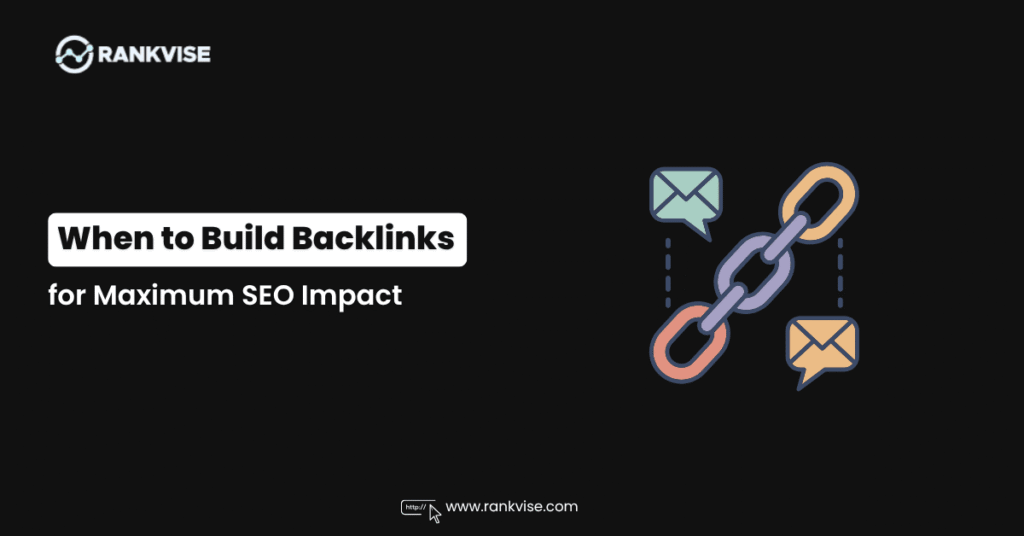
Most businesses blame their link building failures on quality issues.
They think they need better domains. Higher authority sites. More relevant placements.
But here’s the truth: you probably have a timing problem, not a link problem.
In 2026, Google doesn’t just evaluate where your backlinks come from. It watches when they appear, how they cluster, and whether they align with your content’s lifecycle.
This is why two identical pages with the same backlinks can rank completely differently. One built links at the right time. The other didn’t.
If you’ve been building links consistently but seeing minimal results, the issue isn’t your outreach. It’s your schedule.
Understanding How Google Views New Content
Before we discuss timing, you need to understand how search engines evaluate fresh pages.
When you publish new content, Google enters a testing phase. It doesn’t immediately trust your page or assign it a permanent position.
Instead, it runs experiments. Your page appears in search results briefly. Google measures user behavior. Then it adjusts your rankings based on engagement signals.
This testing period typically lasts two to four weeks. During this window, Google is answering one question: does this page deserve to rank?
Here’s what Google evaluates during testing:
- Click-through rates from search results
- Time spent on page
- Bounce rates and pogo-sticking behavior
- Internal link structure and site navigation
- Content freshness and update frequency
Notice what’s missing from that list? Backlinks.
That’s because external links don’t prove your content is valuable. User behavior does. Links simply amplify the authority of content that’s already performing.
This is the core principle most marketers miss. You can’t force rankings with backlinks alone. You can only accelerate what’s already working.
Why Backlinks Don’t Create Authority — They Amplify It
Think of backlinks like a megaphone. They make your voice louder.
But if nobody wants to hear what you’re saying, a louder voice doesn’t help. You just annoy people faster.
The same logic applies to SEO. If your content hasn’t proven itself valuable during Google’s testing phase, backlinks won’t save it.
In fact, building links too early can actually hurt your progress. Here’s why.
When you send powerful backlinks to an unproven page, Google notices the disconnect. Your page has authority signals without engagement signals.
This creates a red flag. Search engines may view your link profile as manipulative or artificial.
Even worse, you waste valuable link equity on pages that aren’t ready to convert that authority into rankings.
What Happens When You Build Links Too Early
Let’s say you publish a new blog post and immediately launch a guest posting campaign. Within one week, you’ve secured five high-quality backlinks.
Sounds great, right? Not necessarily.
Your page hasn’t gained impressions yet. Google hasn’t tested it with real users. Your internal linking structure might be weak.
So when those backlinks arrive, Google has no baseline to compare against. The sudden authority spike looks unnatural.
Your rankings might jump temporarily. Then they plateau or even drop as Google recalibrates.
This pattern is incredibly common with aggressive link building campaigns. Short-term gains followed by stagnation.
The Three-Phase Framework for Strategic Link Building
Instead of building links randomly, follow a structured approach that aligns with your content’s natural lifecycle.
This framework respects Google’s testing phases while maximizing the impact of every backlink you earn.
Phase 1: Foundation (Weeks 1–3) — Let Google Test Your Content
Your only job in the first three weeks is to give Google data. Don’t build external links yet.
Here’s what to focus on instead:
Publish high-quality content. Make sure it’s comprehensive, well-structured, and genuinely helpful. Your content must stand on its own merit.
Optimize internal linking. Connect your new page to relevant existing content. Add contextual links from high-authority pages on your site.
Drive initial traffic. Share on social media. Send to your email list. Get early readers who provide engagement signals.
Monitor performance. Watch Google Search Console for impressions, clicks, and average position. Track how users interact with your page.
During this phase, Google is deciding whether your content deserves to rank. Give it the behavioral signals it needs.
Many pages naturally start ranking for long-tail keywords during this period. That’s your signal to move forward.
Phase 2: Validation (Weeks 4–6) — Build Initial Trust
Once your page shows positive engagement signals, you can start building backlinks carefully.
The goal here isn’t volume. It’s establishing a natural link profile that validates your content’s quality.
Start with these tactics:
Earn easy wins first. Reach out to sites that already know you. Request relevant placements from industry directories or resource pages.
Use natural anchor text. Avoid exact-match keywords. Mix branded anchors, URLs, and generic phrases like “learn more” or “this guide.”
Build slowly. Aim for one to three backlinks per week. This mirrors organic link acquisition patterns.
Prioritize relevance over authority. A contextual link from a topically relevant site outperforms a random link from a high-DA domain.
If you’re using a guest post marketplace or outreach service, this is when to activate those relationships. But keep velocity low.
Watch your rankings closely during this phase. If you see steady improvement, continue. If rankings stagnate, revisit your content before building more links.
Phase 3: Acceleration (Weeks 7–12) — Push What’s Working
Now you can increase link building velocity, but only for pages that are already performing.
This is the phase where strategic link building creates dramatic ranking improvements.
Identify your best opportunities. Focus on pages ranking between positions 11 and 20. These are ready to jump to page one with additional authority.
Increase backlink frequency. Scale up to three to five quality links per week. Maintain consistency rather than creating spikes.
Diversify your link sources. Mix guest posts, digital PR, resource links, and content partnerships. Variety signals natural growth.
Target competitive keywords. Use anchor text strategically for high-value search terms. But keep it under 10% of your total link profile.
Monitor competitors. Track which pages are moving up in your niche. Model their link acquisition patterns without copying them.
This sustained effort over several weeks is what separates pages that reach the top five from those stuck on page two.
Common Link Building Timing Mistakes That Kill Results
Even experienced marketers make these errors. Avoid them and you’ll outperform most competitors.
Mistake 1: Building Links to Pages with Zero Impressions
If Google isn’t showing your page in search results yet, external links won’t help. You need visibility first.
Check Google Search Console. Does your page have at least 100 impressions? If not, focus on internal optimization instead.
Mistake 2: Creating Sudden Spikes Then Stopping
Getting ten backlinks in one week, then nothing for two months creates an unnatural pattern. Google notices these inconsistencies.
Slow, steady link acquisition always outperforms bursts of activity. Build three links per week for twelve weeks instead of thirty-six links in one week.
Mistake 3: Ignoring Internal Links Completely
External backlinks get all the attention, but internal links are equally important for distributing authority.
Before seeking guest post opportunities, ensure your new page is well-connected within your site architecture.
Mistake 4: Sending Links to Low-Quality Content
No amount of perfect timing will save poorly written content. Your page must genuinely deserve to rank.
If you’re not seeing any organic traction after four weeks, the issue is probably your content, not your links.
How to Know When Your Page Is Ready for Links
Look for these specific signals before launching any link building campaign:
Google Search Console shows consistent impressions. Your page appears in search results regularly, even if rankings are low.
You rank for long-tail variations. Check for rankings on related keywords, even if they’re not your primary target.
Engagement metrics are positive. Average time on page exceeds 90 seconds. Bounce rate is below 70%.
Internal links are established. At least three to five relevant pages on your site link to this content.
The content is genuinely complete. It answers the search intent thoroughly and matches or exceeds competitor quality.
If all these boxes are checked, you’re ready to start building external backlinks strategically.
Creating a Sustainable Link Building Calendar
Here’s a practical monthly schedule you can adapt to your needs:
Week 1: Publish new content. Optimize internal linking. Share socially.
Week 2: Monitor early performance. Make content adjustments based on user behavior.
Week 3: Continue monitoring. Identify quick-win link opportunities.
Week 4: Begin outreach for one to two backlinks. Focus on high-relevance targets.
Weeks 5-8: Increase to three links per week. Diversify link types and sources.
Weeks 9-12: Scale to four to five links weekly for top performers. Maintain lower velocity for newer pages.
This calendar creates natural growth patterns that search engines trust while maximizing your return on every link building effort.
The Bottom Line: SEO Rewards Patterns, Not Bursts
Modern search algorithms are sophisticated enough to distinguish between organic growth and manipulation.
When you build links before your content is ready, you create red flags. When you create sudden spikes in authority, you trigger algorithmic skepticism.
But when you align your link building with your content’s natural lifecycle, everything changes. Rankings improve steadily. Authority compounds. Results last.
Stop asking how many backlinks you need. Start asking when you should build them.
Because in 2026 SEO, timing isn’t just important. It’s everything.
The most successful link building campaigns aren’t the most aggressive. They’re the most strategic.
Build links when your content has proven it deserves them. Let Google’s testing phase complete before adding external authority. Focus on pages that are already showing positive signals.
This approach requires patience. But it delivers results that actually last.
Your competitors are still fighting yesterday’s SEO battles, obsessing over domain authority scores and link counts. Meanwhile, you can win by simply understanding when to take action.
That’s the advantage timing gives you.
FAQs
Wait at least three to four weeks after publishing. Let Google test your page and ensure it’s gaining impressions before adding external links.
Only if they’re showing impressions and engagement. Zero visibility means Google hasn’t validated your content. Internal optimization comes first.
Start with one to three links weekly for new pages. Scale to three to five after week six for strong performers. Consistency matters more than volume.
That’s ideal. It means your content is strong and your internal SEO is working. Add links strategically to push from page two to page one.
They can be useful during phase two for finding relevant placements quickly. Just maintain natural velocity and prioritize topical relevance over metrics.