Choosing the right web application development company can shape your project’s success. The right partner helps you launch faster, control costs, and reduce risk. The wrong one can delay your launch, stretch your budget, and create avoidable technical issues.
That is why this decision should never start with price alone. You need a company that understands your goals, your users, and your business model. You also need a team that can build reliably and support the product after launch.
A reliable web application development company should understand not only technology but also product strategy, user experience, and long-term business goals. Looking beyond technical expertise often leads to better project outcomes.
In 2026, businesses expect more from web applications. They want speed, security, easy user journeys, and room to scale. Your development partner should help you deliver all four without making the process harder than it needs to be.
Why does choosing the right web application development company matter?
A web app is not just a digital product. It is often part of sales, operations, customer service, or internal workflows. If the application performs poorly, the business feels the impact quickly.
Imagine a retailer launching a custom ordering portal. If the web app crashes during peak demand, sales drop at once. If a logistics company builds a tracking dashboard with weak data flow, support teams get flooded with complaints.
A strong web application development company protects you from those outcomes. It plans carefully, builds with discipline, and tests before problems reach your users. That reduces stress for your team and creates a better return on investment.
What should you define before shortlisting a web application development company?
Before you compare vendors, define your needs clearly. This step saves time and leads to better proposals. It also helps you spot companies that truly understand your project.
What business problem should the web app solve?
Start with the business goal, not the feature list. Ask what outcome matters most. You may want to reduce manual work, improve customer experience, or launch a new revenue stream.
For example, a B2B company may need a client portal that cuts support tickets. A healthcare provider may need a booking system that reduces missed appointments. A development partner can build better when the problem is clear.
What scope, budget, and timeline do you have?
You do not need every detail at the start. Still, you should know your expected launch window, budget range, and must-have features. This prevents confusion during early discussions.
Separate features into three groups:
- Must-have features for launch
- Useful features for the next phase
- Nice-to-have ideas for later
That simple structure keeps the project grounded. It also helps a web development agency recommend the right delivery plan.
Who will use the application?
The best web app development services focus on users, not just code. Think about who will log in, what they need, and where friction may happen.
A customer-facing portal needs strong UI/UX design and smooth navigation. An internal operations tool needs efficiency and clarity. When a company asks smart questions about users, that is a good sign.
What qualities should you look for in a web application development company?
Not every company that builds websites can deliver strong web applications. You need a team with the right mix of technical skill, business thinking, and communication discipline.
Do they have relevant project experience?
Look for experience that matches your product type, industry, or complexity. A company that has built enterprise web applications may understand permissions, integrations, and security better than a simple design studio.
Ask for examples that relate to your needs. If you need a booking engine, ask for similar scheduling platforms. If you need a dashboard, ask how they handled data visibility and reporting.
Relevant experience does not mean they must work only in your industry. It means they understand similar user journeys, technical needs, and business stakes.
Do they follow a clear development process?
A reliable software development partner should explain its process in plain language. You should understand how it handles planning, design, development, testing, and launch.
A good process usually includes:
- Discovery and requirement planning
- Wireframes or early design direction
- Development in clear phases
- Testing before release
- Post-launch support and fixes
If the process feels vague, expect problems later. Clear delivery steps often reflect strong project discipline.
Do they think beyond development?
The best companies do more than build what you ask. They help you make smarter product choices. They question weak assumptions and suggest practical improvements.
For example, you may ask for ten user roles. A strong team may show that four roles will work better. You may ask for a complex dashboard. A strong team may simplify it so users adopt it faster.
That is valuable product thinking. It protects your budget and improves outcomes.
How strong is their communication?
Poor communication breaks good projects. You need a team that responds clearly, explains trade-offs, and keeps you informed.
Look for signs like these:
- They answer questions directly
- They explain technical points simply
- They set realistic expectations
- They flag risks early
- They document decisions clearly
A web application development company should make the process feel manageable. If calls already feel confusing, the project may feel worse.
How can you compare companies in a practical way?
A structured comparison helps you avoid emotional decisions. It also prevents a polished sales pitch from hiding weak delivery habits.
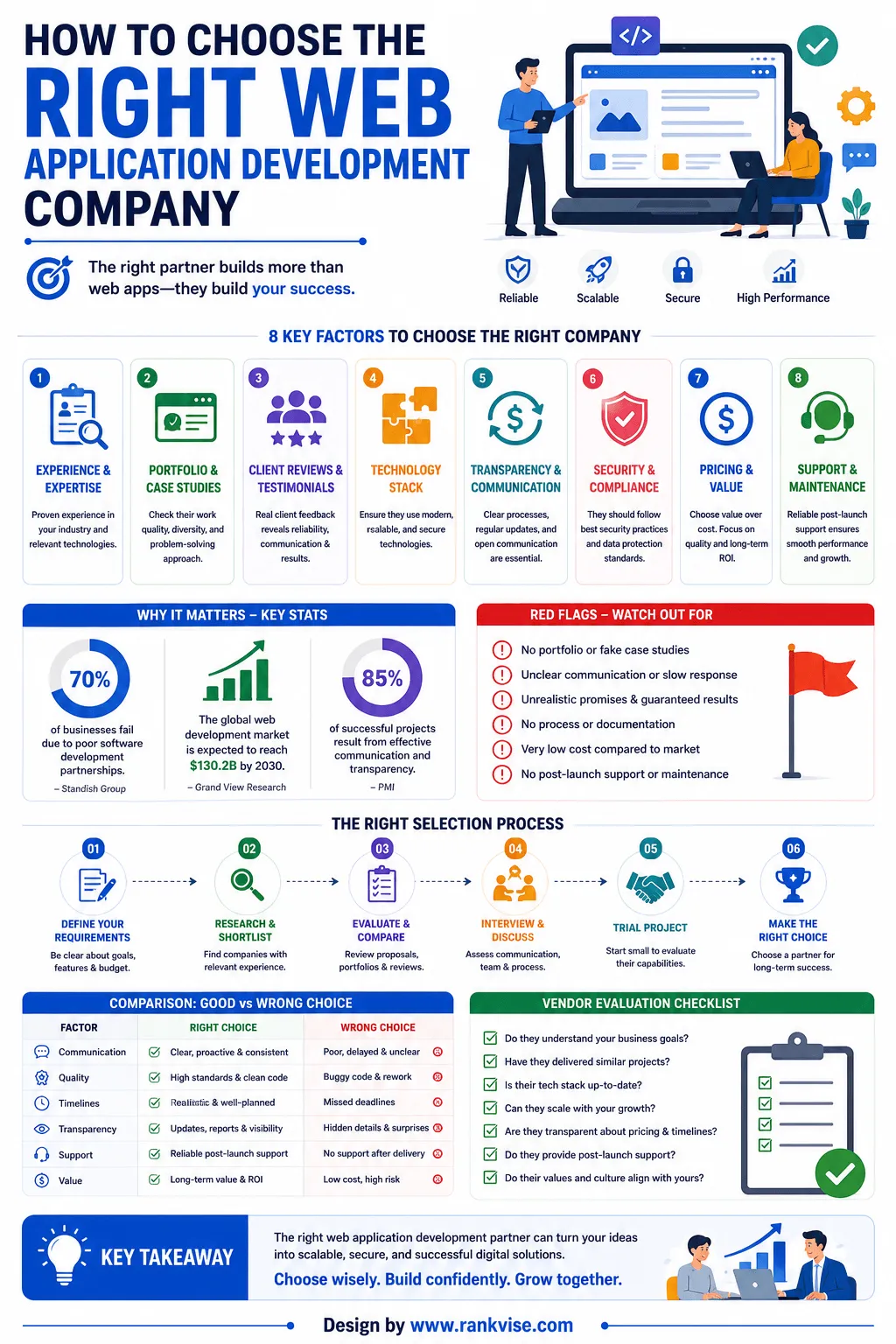
| Evaluation area | What to ask | Green flag | Red flag |
|---|---|---|---|
| Experience | Have you built similar products? | Specific case studies | Vague examples |
| Process | How do you manage delivery? | Clear milestones | No defined workflow |
| Team | Who will work on my project? | Named specialists | Unclear staffing |
| Communication | How often will we get updates? | Regular reporting | Slow or inconsistent replies |
| Support | What happens after launch? | Ongoing support plan | Support not discussed |
| Pricing | What is included in the quote? | Transparent scope | Hidden costs |
Use this table during vendor calls. It keeps the discussion focused and easier to compare later.
What questions should you ask before hiring?
Good questions reveal how a company thinks under pressure. They also show whether the team is honest, prepared, and user-focused.
Ask these questions during your evaluation:
- What similar projects have you delivered, and what results did they achieve?
- How do you estimate budgets and control change requests?
- Who will manage the project day to day?
- How do you handle testing and quality checks?
- What happens if timelines shift?
- What post-launch support do you offer?
- How do you protect user data and application security?
The answers matter as much as the portfolio. Strong companies answer with clarity and confidence, not vague promises.
Which red flags should you avoid?
Some warning signs appear early. If you catch them soon, you can avoid expensive mistakes later.
Watch for these red flags:
- Very low pricing without a clear scope
- Promises of unrealistically fast delivery
- No questions about your business goals
- No testing plan or support process
- Weak documentation and unclear ownership
- Overuse of technical terms without clear explanations
- Pressure to sign before requirements are discussed
If a company sells speed but skips planning, be careful. Fast starts often lead to slow recoveries.
Why should you not choose on price alone?
Price matters, but value matters more. A cheaper quote can become more expensive when delays, rework, or support gaps appear.
Say one vendor quotes USD 18,000 and another quotes USD 30,000. The cheaper quote may exclude testing, support, or UI/UX design. The higher quote may include planning, quality assurance, and post-launch help.
That difference changes the real cost. A web application development company should show what is included, what is excluded, and what could affect the final budget. Transparency matters more than a low starting number.
What should a strong proposal include?
A solid proposal should remove uncertainty. It should help you understand how the company will approach your project and measure progress.
Look for these elements:
- Project goals and business context
- Defined scope and key deliverables
- Estimated timeline with milestones
- Team roles and responsibilities
- Technology approach in simple terms
- Testing and launch plan
- Post-launch support details
- Pricing structure and assumptions
If the proposal feels generic, the delivery may feel generic too. Strong proposals reflect careful listening and thoughtful planning.
What happens after you choose a development partner?
Hiring the company is only the start. A strong working relationship still needs structure, feedback, and shared ownership.
Set expectations early around approvals, timelines, and communication. Decide who signs off on designs, who reviews features, and how issues will be escalated. That avoids delays later.
You should also agree on success measures. These may include faster processing time, lower support volume, higher user adoption, or better conversion rates. When goals are measurable, both sides stay aligned.
Post-launch support also matters. Even strong applications need updates, bug fixes, and performance monitoring. Choose a company that treats launch as a milestone, not the finish line.
How do you make the final decision with confidence?
When you reach the final shortlist, step back and compare companies across four areas: fit, trust, process, and long-term value. The best choice is rarely the flashiest one. It is the one most likely to deliver steadily and support your growth.
If one company understands your business better, communicates more clearly, and shows a better delivery method, that usually matters more than a slightly lower price. A reliable software development partner reduces risk and gives you confidence at every stage.
The right web application development company should feel like a strategic partner. It should help you make better decisions, not just write code. That is the difference between a finished project and a successful product.
FAQs
Define your goals, compare experience, review process, and assess communication before making a final choice.
Ask about similar projects, timelines, testing, support, pricing structure, and who will manage delivery.
Costs vary by scope, features, integrations, and support needs, so request a detailed proposal.
Post-launch support keeps the app secure, stable, and useful as your business needs change.
Choose the team with relevant experience, clear communication, and a process that fits your project.