People talk about your brand online every day. Some praise your product. Others complain. A few share feedback that could reshape your entire strategy. The question is whether you are listening.
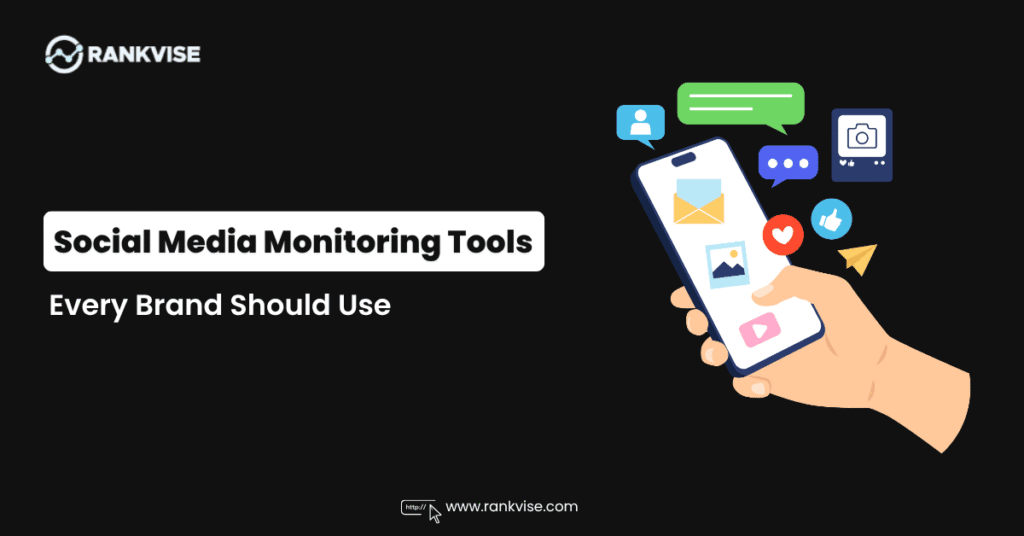
Social media monitoring tools help you track those conversations in real time. They scan platforms for brand mentions, competitor activity, industry trends, and customer sentiment. Instead of manually searching every network, these tools bring the insights to you.
This guide covers what social media monitoring actually involves, which tools lead the market, and how to choose the right one for your business. Whether you manage a startup or a global brand, the right monitoring tool changes how you engage with your audience.
What Is Social Media Monitoring?
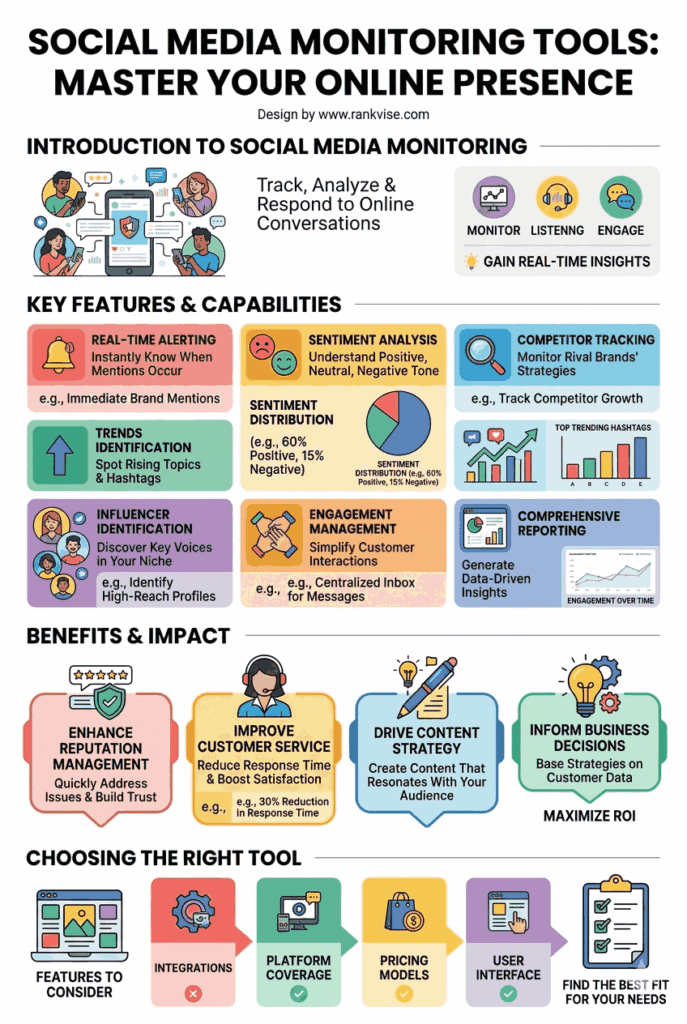
Social media monitoring is the process of tracking online conversations about your brand, products, competitors, or industry. It goes beyond checking your own notifications. It captures mentions across platforms, forums, blogs, news sites, and review pages.
Think of it as a radar system for your brand reputation. Every time someone mentions your company name, tags your handle, or discusses a relevant keyword, the monitoring tool flags it. You see the conversation as it happens.
This differs from social media management, which focuses on publishing and scheduling content. Monitoring is about listening. Management is about posting. Most businesses need both, and many tools now combine these functions into a single platform.
Effective monitoring tracks several data points:
- Direct brand mentions and tags
- Indirect mentions without tagging your handle
- Competitor mentions and activity
- Industry keywords and trending hashtags
- Customer sentiment and emotional tone
- Influencer conversations relevant to your niche
Why Do Businesses Need Social Media Monitoring Tools?
Manual monitoring is impossible at scale. Millions of social posts go live every minute. No team can search every platform, read every comment, and catch every mention without automation.
Social media monitoring tools solve this by aggregating everything into one dashboard. They save time, surface opportunities, and protect your reputation before small issues become public crises.
Here are the core reasons businesses invest in these tools:
- Catch negative feedback early and respond before it escalates
- Identify brand advocates and potential influencer partnerships
- Track competitor strategies and audience reactions
- Measure campaign performance through real-time engagement data
- Discover unfiltered customer opinions for product improvement
- Monitor industry trends to stay ahead of market shifts
A single unanswered complaint on social media can snowball into a viral crisis. Monitoring tools ensure nothing slips through the cracks.
Key Features to Look for in Social Media Monitoring Tools
Not all monitoring tools offer the same capabilities. Some specialize in listening. Others bundle analytics, publishing, and reporting. Knowing which features matter most helps you avoid paying for functionality you will never use.
Real-Time Alerts and Notifications
Speed matters in social media. A tool that delays alerts by hours defeats the purpose. Look for platforms that send instant notifications when specific keywords, brand names, or sentiment thresholds get triggered.
Sentiment Analysis
Sentiment analysis uses natural language processing to determine whether a mention is positive, negative, or neutral. This feature turns raw data into actionable insight. Knowing that you received 500 mentions means little until you understand how many were complaints versus compliments.
Multi-Platform Coverage
Your audience does not live on one platform. Effective social media monitoring tools track conversations across Facebook, Instagram, X (formerly Twitter), LinkedIn, TikTok, YouTube, Reddit, forums, blogs, and news outlets. Broader coverage means fewer blind spots.
Competitive Analysis
Monitoring your own brand is only half the picture. Tools that track competitor mentions, share of voice, and audience sentiment give you a strategic advantage. You see what works for competitors and learn from their mistakes.
Reporting and Dashboards
Clean, visual reports make data accessible to stakeholders who do not live in analytics dashboards. Look for customizable reports that highlight the metrics your team cares about most.
10 Best Social Media Monitoring Tools Compared
Choosing the right tool depends on your budget, team size, and specific needs. Here is a breakdown of the leading platforms in the market.
| Tool | Best For | Starting Price | Key Strength |
|---|---|---|---|
| Brandwatch | Enterprise-level listening | Custom pricing | Deep consumer intelligence and AI analytics |
| Sprout Social | All-in-one management and monitoring | 249 USD/month | Unified inbox with robust reporting |
| Hootsuite | Teams managing multiple accounts | 99 USD/month | Broad platform coverage with scheduling |
| Mention | Real-time brand tracking | 41 USD/month | Fast alerts across web and social |
| Brand24 | Small to mid-sized businesses | 79 USD/month | Affordable monitoring with sentiment analysis |
| Talkwalker | Global brands and agencies | Custom pricing | Visual recognition and 150M+ sources |
| Meltwater | PR and communications teams | Custom pricing | Media monitoring combined with social listening |
| Keyhole | Hashtag and campaign tracking | 89 USD/month | Real-time hashtag analytics and influencer tracking |
| Awario | Budget-conscious startups | 49 USD/month | Non-social web monitoring including forums and blogs |
| Socialbakers (Emplifi) | Data-driven marketing teams | Custom pricing | AI-powered benchmarking and audience analysis |
Brandwatch
Brandwatch is the industry standard for enterprise social listening. It monitors over 100 million online sources and uses AI to surface trends, detect crises, and segment audiences. The platform excels at consumer intelligence, going beyond simple mention tracking to analyze cultural shifts and market movements.
Best suited for large organizations with dedicated insights teams.
Sprout Social
Sprout Social combines publishing, engagement, and monitoring in one clean interface. Its unified Smart Inbox pulls mentions, comments, and messages from every connected platform into a single stream. The analytics suite generates presentation-ready reports without manual formatting.
A strong choice for mid-sized teams that want monitoring and management without juggling multiple tools.
Hootsuite
Hootsuite remains one of the most recognized names in social media management. Its monitoring streams let you track keywords, hashtags, and mentions across major platforms. The tool integrates with over 150 apps, making it highly adaptable to existing workflows.
Works well for teams already using Hootsuite for scheduling who want to add listening capabilities.
Mention
Mention focuses specifically on real-time monitoring. It scans social media, news sites, blogs, and forums for brand mentions and delivers alerts within minutes. The interface is straightforward, making it accessible for teams without dedicated analysts.
An excellent fit for businesses that prioritize speed and simplicity over advanced analytics.
Brand24
Brand24 offers solid monitoring at a price point that suits smaller businesses. It tracks mentions across social platforms, news, blogs, podcasts, and review sites. The sentiment analysis and influence scoring features help you prioritize which conversations deserve attention first.
A practical option for growing companies that need professional monitoring without enterprise costs.
How to Choose the Right Social Media Monitoring Tool
With so many options available, narrowing down your choice requires clarity on what your business actually needs.
Define Your Primary Goal
Start with one clear objective. Are you monitoring for reputation management? Competitive intelligence? Campaign tracking? Customer service? The answer shapes which features matter most.
A brand focused on crisis prevention needs real-time alerts and sentiment analysis above everything else. A marketing team tracking campaign hashtags needs strong analytics and reporting.
Consider Your Budget Realistically
Enterprise tools like Brandwatch and Meltwater deliver powerful insights but require significant investment. If your budget is limited, tools like Brand24, Mention, and Awario offer strong monitoring at accessible price points.
Match the tool to your current stage. You can always upgrade as your needs grow.
Evaluate Platform Coverage
Check which social networks and online sources each tool monitors. If your audience is active on Reddit or niche forums, make sure the tool covers those platforms. Some tools focus heavily on mainstream networks and miss conversations happening elsewhere.
Test Before You Commit
Most monitoring tools offer free trials or demo periods. Use them. Set up brand tracking, test the alert speed, and evaluate how easy the dashboard is to navigate. A tool that looks impressive in a sales demo might frustrate your team during daily use.
Social Media Monitoring vs Social Listening: What Is the Difference?
These terms often get used interchangeably, but they describe different levels of analysis. Understanding the distinction helps you set the right expectations.
Social media monitoring tracks individual mentions, comments, and conversations. It tells you what people are saying right now. It is reactive and tactical. Someone complains, you respond.
Social listening takes a wider view. It analyzes patterns across thousands of conversations to reveal trends, shifts in sentiment, and emerging topics. It is proactive and strategic. You spot a growing concern before it becomes a crisis.
| Aspect | Monitoring | Listening |
|---|---|---|
| Focus | Individual mentions | Broader trends and patterns |
| Approach | Reactive | Proactive |
| Output | Alerts and responses | Insights and strategy |
| Timeframe | Real-time | Over weeks or months |
| Use case | Customer service, crisis response | Market research, brand strategy |
Most modern social media monitoring tools include listening features. The best platforms let you zoom in on specific mentions and zoom out to see the bigger picture.
Common Mistakes to Avoid With Social Media Monitoring
Even with the right tool, poor execution limits your results. Watch for these frequent missteps.
Tracking too many keywords overwhelms your dashboard with noise. Start with your brand name, product names, and two or three competitor names. Expand gradually as you learn which keywords produce actionable data.
Ignoring negative sentiment defeats the purpose of monitoring. Some teams celebrate positive mentions but avoid addressing complaints. Negative feedback is where the most valuable insights and recovery opportunities live.
Failing to act on insights turns monitoring into an expensive spectator sport. Every alert should connect to a workflow. Assign team members to respond, escalate, or log insights for future planning.
Skipping regular reviews causes strategic drift. Schedule weekly or monthly reviews of monitoring data. Look for patterns in sentiment, recurring complaints, and shifts in competitor activity.
FAQs
They track brand mentions, competitor activity, customer sentiment, and industry trends across social platforms, blogs, forums, and news sites in real time.
Google Alerts offers basic free monitoring for web mentions. For social-specific tracking, tools like Mention and Brand24 provide limited free trials worth exploring.
Monitoring tracks individual mentions and conversations reactively. Social listening analyzes broader patterns and trends over time to inform proactive business strategy.
Yes. Affordable tools like Brand24 and Awario give small businesses access to brand tracking, sentiment analysis, and competitor insights without enterprise-level budgets.
Set up real-time alerts for urgent mentions and review your full dashboard daily. Conduct deeper analysis of trends and sentiment patterns weekly or monthly.