You found the perfect candidate. The interviews went well. Now comes the critical step that many hiring managers rush through — sending the offer letter. A poorly written employment offer letter can confuse candidates, delay acceptances, or even create legal headaches down the road.
- Use clear templates covering essentials: job title, compensation, start date, work schedule, benefits, employment type, at-will or contract terms, and acceptance deadline.
- Choose the right template for the hire: full-time, part-time, remote, internship, contractor, executive, internal transfer, seasonal, sales, or conditional offers.
- Personalize each letter: use candidate name, match company tone, highlight agreed perks, and keep legal language plain and reader friendly.
- Avoid common mistakes: state exact compensation, set an acceptance deadline, disclose contingencies, and proofread to protect employer brand and speed hiring.
The right offer letter template removes guesswork from this process. It helps you present a clear, professional, and complete job offer every single time. This guide gives you 10 ready-to-use templates designed for real hiring situations.
What Is an Offer Letter and Why Does It Matter?
An offer letter is a formal document a company sends to a selected candidate. It outlines the job title, compensation, benefits, start date, and key employment terms. Think of it as the bridge between a verbal “you’re hired” and the first day on the job.
A well-structured offer letter format sets expectations from the start. It protects both the employer and the new hire. It also reflects your company culture before the candidate even walks through the door.
Candidates often compare offers side by side. A clear and professional job offer letter can tip the decision in your favor.
Key Elements Every Offer Letter Must Include
Before diving into templates, understand what belongs in every hiring letter. Missing even one detail can cause confusion or delays in onboarding.
Every strong offer letter should cover these essentials:
- Job title and department — Clearly state the role and reporting structure.
- Start date — Provide a specific or tentative joining date.
- Compensation details — Include salary, pay frequency, and any signing bonuses.
- Work schedule and location — Specify hours, remote or onsite expectations.
- Benefits summary — Mention health insurance, paid leave, retirement plans.
- Employment type — Clarify full-time, part-time, contract, or temporary status.
- At-will statement or contract terms — Address the nature of the employment relationship.
- Deadline for acceptance — Give candidates a reasonable window to respond.
These elements form the backbone of any sample offer letter, regardless of the role or industry.
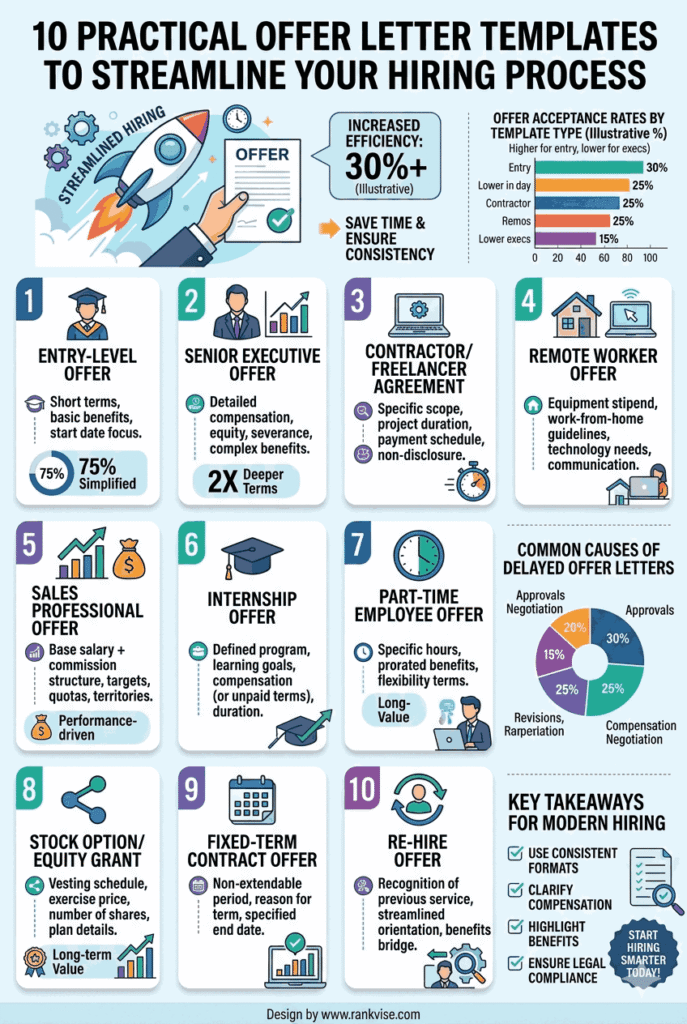
10 Practical Offer Letter Templates for Every Hiring Scenario
1. Standard Full-Time Offer Letter Template
This is the most commonly used offer letter example. It works for salaried, full-time positions across industries. Include the job title, annual salary, benefits overview, and reporting manager. Keep the tone professional yet welcoming. This template suits most mid-level and entry-level roles.
2. Part-Time Employment Offer Letter
Part-time roles need just as much clarity as full-time ones. Specify weekly hours, hourly pay rate, and benefit eligibility. Many part-time employees receive limited benefits, so be transparent about what is and isn’t included. Avoid vague language around scheduling expectations.
3. Remote Work Offer Letter Template
Remote hiring has become standard across many industries. This template should address the work-from-home arrangement clearly. Include equipment provisions, time zone expectations, and communication tools. Also mention any requirements for occasional in-office visits if applicable.
4. Internship Offer Letter Template
Internship offer letters differ from regular new hire offer letters. State whether the position is paid or unpaid. Outline the internship duration, learning objectives, and supervisor details. Mention any possibility of conversion to a full-time role after the program ends.
5. Contract or Freelance Offer Letter Template
Use this for project-based or fixed-term engagements. Clearly define the contract duration, deliverables, and payment terms. State whether the contractor is eligible for benefits. Include termination clauses and intellectual property ownership terms.
6. Executive-Level Offer Letter Template
Senior hires expect detailed and polished offer letters. This template should cover base salary, performance bonuses, equity or stock options, and severance terms. Include relocation assistance if relevant. Executive employment offer letters often require legal review before sending.
7. Internal Transfer or Promotion Offer Letter
When promoting or transferring an existing employee, a formal offer letter still matters. It documents the new role, updated compensation, and revised responsibilities. This prevents misunderstandings and gives the employee a clear record of the change.
8. Seasonal or Temporary Offer Letter Template
Retail, hospitality, and logistics companies hire seasonal staff regularly. This template should specify the employment period, hourly rate, and shift expectations. Make the temporary nature of the role explicit to avoid any confusion about long-term employment.
9. Commission-Based Sales Offer Letter Template
Sales roles often combine base pay with variable compensation. This offer letter format must clearly explain the commission structure, quotas, and payout schedule. Include examples or a simple table to show how earnings scale with performance.
| Component | Details |
|---|---|
| Base salary | Fixed monthly amount |
| Commission rate | Percentage per closed deal |
| Quota | Monthly or quarterly target |
| Payout schedule | Monthly, quarterly, or upon invoice payment |
Transparency here builds trust and reduces disputes later.
10. Conditional Offer Letter Template
Some offers depend on background checks, drug screenings, or credential verification. A conditional offer letter states the role is offered pending these requirements. List each condition clearly. Also include a timeline for when verification results are expected.
Tips for Customizing Any Offer Letter Template
Templates save time, but every offer letter needs personalization. A generic letter can feel cold and impersonal to a candidate you worked hard to recruit.
Follow these tips to make each letter feel tailored:
- Use the candidate’s full name and reference the specific role discussed during interviews.
- Match the tone to your company culture — a startup might be casual while a law firm stays formal.
- Highlight unique perks that were discussed, like flexible hours or learning budgets.
- Keep legal language simple — avoid dense paragraphs that candidates need a lawyer to understand.
- Proofread carefully — typos in an offer letter signal carelessness and hurt your employer brand.
A personalized job offer letter shows candidates they are valued from the very first official interaction.
Common Mistakes to Avoid in Offer Letters
Even experienced HR teams make errors that slow down hiring. Watch out for these frequent pitfalls when drafting your next hiring letter.
Vague compensation language is the most common issue. Always state exact figures, not ranges. Candidates should know precisely what they will earn before they sign.
Missing deadlines for acceptance creates unnecessary back-and-forth. Give candidates five to seven business days to respond. This keeps your hiring timeline on track.
Overlooking at-will disclaimers can create legal exposure. Most U.S. employers operate on an at-will basis. State this clearly to avoid implied contract claims.
Forgetting to mention contingencies is risky. If the offer depends on a background check, say so upfront. Surprises after acceptance damage trust and your reputation.
Sending the letter too late costs you top talent. Move quickly after the final interview. Speed signals genuine interest and keeps candidates engaged.
How an Offer Letter Differs From an Employment Contract
Many hiring managers confuse these two documents. An offer letter is a summary of the proposed employment terms. It is typically shorter, less formal, and not always legally binding.
An employment contract, on the other hand, is a detailed legal agreement. It covers non-compete clauses, dispute resolution, and termination procedures in depth. Some roles, especially executive and contract positions, require both documents.
For most standard hires, a well-written offer letter template is sufficient to get the relationship started on the right foot.
FAQs
Every offer letter template should include the job title, salary, start date, work schedule, benefits summary, employment type, and a deadline for the candidate to respond.
In most cases, an offer letter is not a legally binding contract. However, specific language or promises within the letter can create enforceable obligations, so review the wording carefully.
An offer letter summarizes key job terms like pay and start date. An employment contract is a detailed legal agreement covering clauses like non-competes, termination, and dispute resolution.
Most companies give candidates five to seven business days to accept. For executive or relocation-heavy roles, extending the window to two weeks is reasonable.
Yes, free templates are designed as starting points. Customize them with your company name, specific role details, branding, and any unique terms that match your hiring policies.