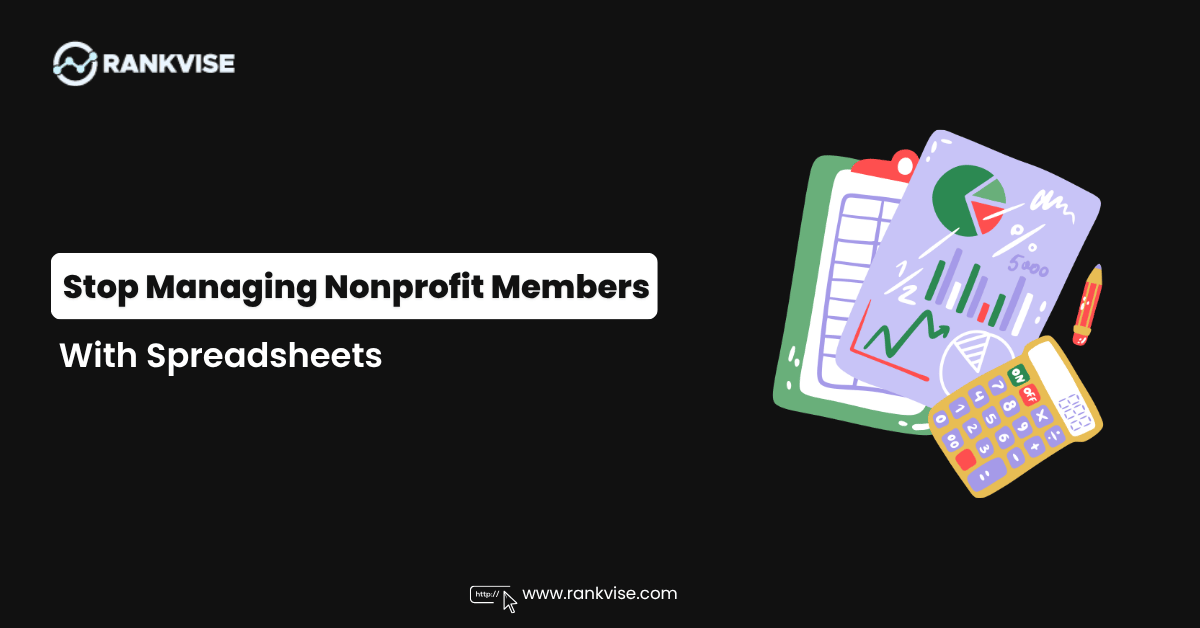
Manual membership management might feel familiar, but it’s costing your organization more than you think. Between error-prone data entry, security vulnerabilities, and hours wasted reconciling information across disconnected files, spreadsheets were never designed to handle today’s membership demands.
Research shows that 88 to 90% of Excel files contain errors, creating real financial and operational risks.
Notably, 75% of major enterprises have reported significant problems due to defective data, and 33% have failed to bill or collect receivables. For nonprofits managing member dues, event registrations, and donor relationships, these statistics should raise serious concerns.
The consequences extend far beyond simple typos.
Billions of dollars are lost every year due to human error in spreadsheets. When your membership database lives in a spreadsheet, every formula mistake or accidentally deleted row can cascade into billing errors, missed renewals, or communications sent to the wrong people. These aren’t just theoretical risks. They’re happening to organisations every day.
Modern nonprofits need systems purpose-built for membership management. A cloud membership platform can automate renewals, centralize member data, and eliminate the manual processes that drain staff time whilst introducing costly errors. The technology exists. The question is why so many organizations continue relying on outdated tools.
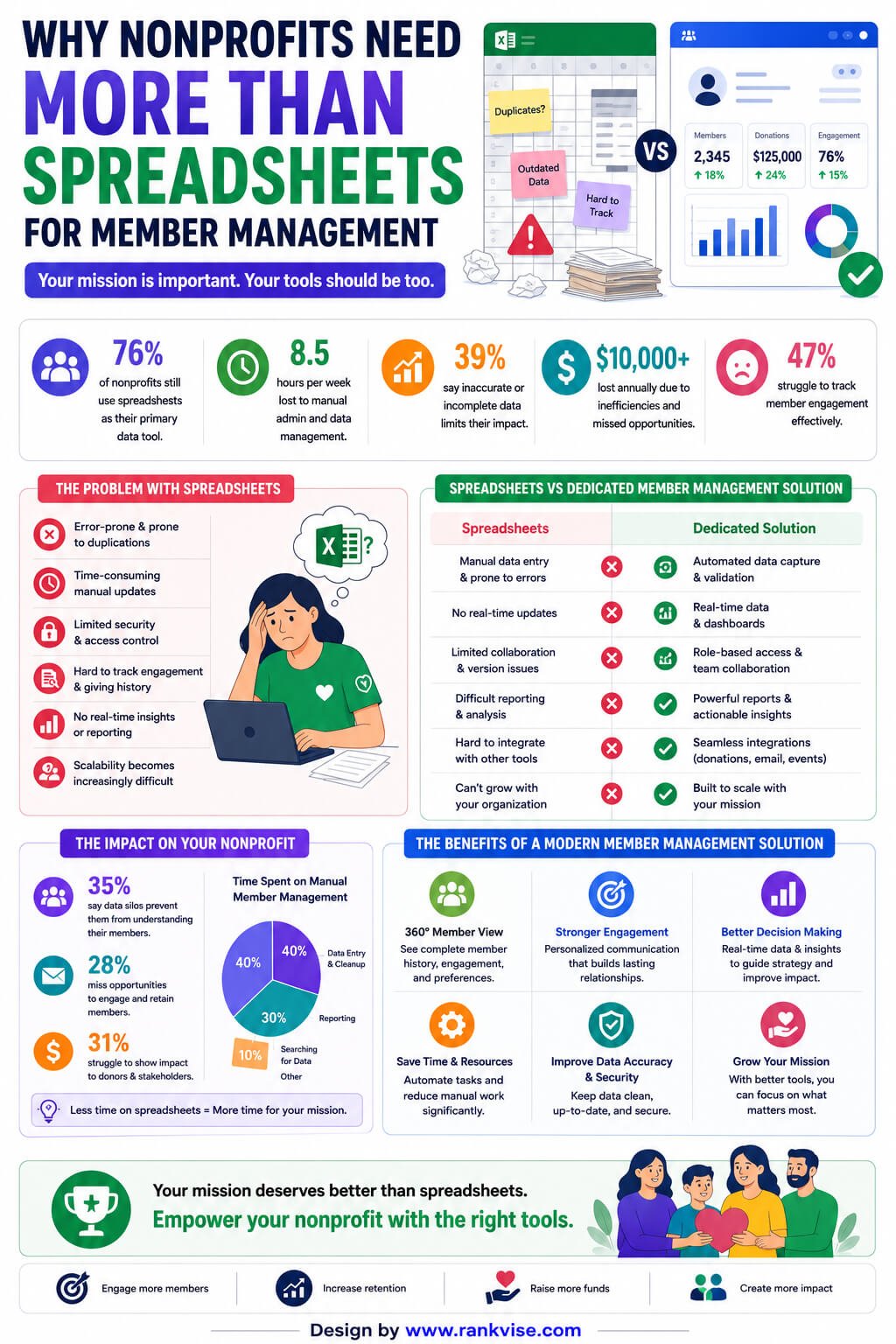
The Hidden Costs of Spreadsheet Management
One of the biggest tech issues plaguing nonprofits and associations today is reliance on multiple systems that don’t play nice with each other, where processing a single new member might involve a payment processor, an Excel sheet, and an email platform that share nothing but one poor staffer doing manual data entry. This fragmented approach creates information silos that make reporting to your board a nightmare.
Manual tasks like sending invoices or tracking renewals drain time and resources, and there is a high chance of errors, with 94% of companies performing repetitive, time-consuming tasks. Your staff shouldn’t spend hours each week copying data between systems or manually sending renewal reminders. These are precisely the workflows modern software automates.
When those answers aren’t all in one place, too much staff time is spent trying to reconcile information, and when a finance update or board report comes up, someone has to clean the file, check what is current, and make sure the totals hold together. This manual cleanup isn’t adding value to your mission. It’s administrative overhead that proper systems eliminate.
Security represents another critical concern that spreadsheets simply weren’t designed to address.
Many nonprofits collect and store sensitive personal information that is protected by law as confidential, and when there is a breach of the confidentiality of those data, that poses a risk for the individuals whose data was disclosed and for the nonprofit that will now potentially be subject to liability for the breach. Member databases contain email addresses, payment information, and potentially sensitive demographic data. A spreadsheet shared via email or stored on someone’s laptop creates vulnerabilities that specialised software prevents through encryption and access controls.
What Modern Membership Systems Actually Do
Purpose-built membership platforms transform how nonprofits operate. They centralise all member information in one secure location accessible to authorised staff from anywhere. Automated renewal reminders go out on schedule without manual intervention. Payment processing integrates directly with member records. Reports generate with a few clicks rather than hours of spreadsheet wrangling.
These systems track member engagement across touchpoints. You can see who attended which events, opened your emails, or hasn’t renewed in two years. This visibility enables targeted communication and better retention strategies. Software solutions for business success have become essential infrastructure for organisations that want to scale their impact without proportionally scaling their administrative burden.
Data management practices should be consistent with FAIR principles, which are Findable, Accessible, Interoperable, and Reusable, making it easier for systems to process and analyse datasets. Whilst this guidance comes from NIH data management standards, the principles apply equally to membership data. When your systems follow recognised data standards, integration with other tools becomes straightforward rather than requiring custom workarounds.
Making the Transition From Spreadsheets
Moving from spreadsheets to proper membership software feels daunting, but the migration process is typically straightforward. Most platforms offer import tools that accept CSV files from your existing spreadsheets. You’ll map your columns to the system’s fields, run a test import, clean up any issues, and then go live. Many vendors provide implementation support to ensure the transition goes smoothly.
Organisations around the world have increasingly employed data for a variety of purposes, and nonprofit organisations are no exception, capturing a variety of data including public and financial data, performance measures, program evaluation data, and volunteer information. The systems you choose should accommodate this breadth whilst remaining intuitive for staff who aren’t technical experts.
Training typically requires just a few hours for most users. The interfaces in modern membership platforms are designed for ease of use, not technical complexity. Your team will likely find the new system easier than the spreadsheet workarounds they’ve been managing. Plus, research from Yale shows that effective adoption requires digital expertise distributed through the organisation rather than sequestered in an IT team, because digital tools touch everything.
Cost concerns often prevent organisations from upgrading, but consider what your current approach actually costs. Calculate the staff hours spent on manual data management each month. Factor in the risk of billing errors or data breaches. Many membership platforms offer affordable tiers for smaller organisations, and the time savings alone often justify the investment within months.
The Bottom Line
Spreadsheets served their purpose when they were the best tool available. That time has passed. Modern membership management requires systems built for the task with automation, security, reporting, and integration capabilities that spreadsheets cannot provide. Your members deserve better data stewardship. Your staff deserve tools that eliminate tedious manual work. Your mission deserves technology that enables growth rather than constraining it.
The question isn’t whether to upgrade. It’s how quickly you can make the transition and start recovering the time and reducing the risks that spreadsheet-based systems create. Your nonprofit has outgrown Excel. The solution exists. The only remaining step is implementation.