Selling online does not eliminate business risk. Product liability claims, data breaches, and shipping disputes happen to ecommerce sellers daily. A single lawsuit can cost more than an entire year of revenue.
Ecommerce business insurance protects your store from financial losses you cannot predict. It covers legal fees, damaged inventory, customer injuries, and cyber incidents. Without proper coverage, one unexpected event could shut down your operation permanently.
Many new sellers assume insurance is only for physical stores. That assumption leaves them dangerously exposed to risks unique to online retail.
What Is Ecommerce Business Insurance?
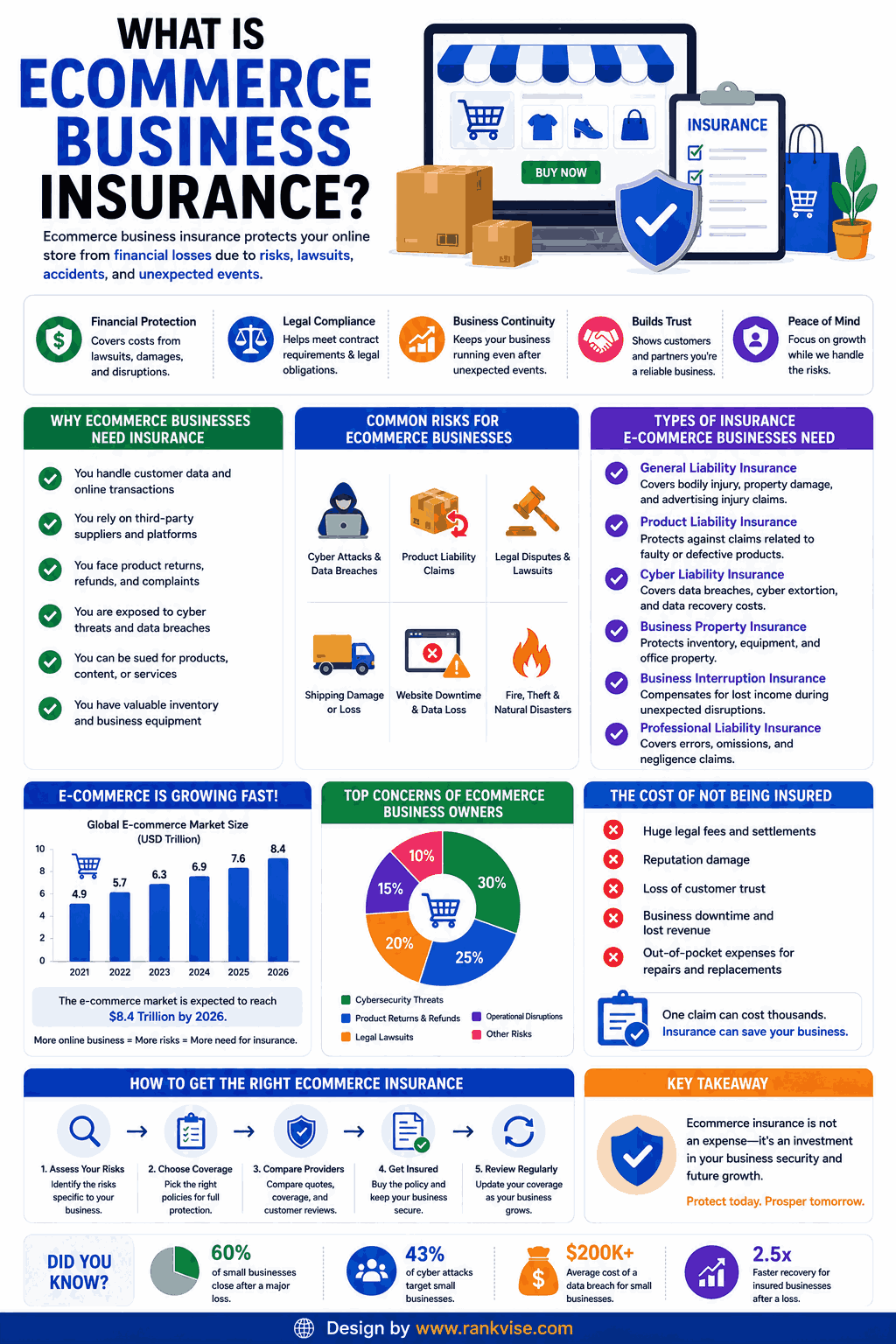
Ecommerce business insurance is a collection of policies designed for online retailers. It protects against risks specific to selling products or services through digital channels. These risks include product defects, shipping damage, intellectual property disputes, and cyberattacks.
Unlike traditional retail insurance, ecommerce policies account for digital storefronts, third-party marketplace selling, and cross-border shipping. Coverage adapts to how online businesses actually operate rather than applying brick-and-mortar assumptions.
Types of Insurance Coverage for Online Businesses
Different risks require different policies. Most ecommerce sellers need a combination of coverage types to fully protect their business.
General Liability Insurance
This covers third-party bodily injury and property damage claims. If a customer gets hurt using your product, general liability pays legal defense costs and settlements.
Every online store should carry this as a baseline policy. Most marketplace platforms like Amazon require proof of general liability coverage once you reach certain sales thresholds.
Product Liability Insurance
Product liability insurance specifically covers claims arising from defective or harmful products. It pays for medical expenses, legal fees, and damages if your product injures a customer.
Sellers who manufacture, import, or private-label products face the highest product liability risk. Even resellers can face claims if the original manufacturer cannot be located or lacks insurance.
Cyber Liability Insurance
Data breaches cost online businesses an average of 4.45 million USD globally. Cyber liability insurance covers costs related to data theft, ransomware attacks, and privacy violations.
This policy pays for customer notification, credit monitoring, forensic investigation, and legal defense. Any store collecting payment information or personal data needs this coverage.
Business Property Insurance
This protects physical assets like inventory, equipment, and warehouse space. If a fire destroys your stored products or a flood damages your fulfillment center, this policy covers replacement costs.
Home-based sellers should note that homeowner’s insurance typically excludes business property. A separate commercial policy fills that gap.
Business Interruption Insurance
When disasters halt your operations, this coverage replaces lost income. It pays ongoing expenses like rent, payroll, and loan payments during recovery periods.
Ecommerce sellers relying on single warehouses or suppliers benefit most from this protection. Extended downtime without revenue can quickly drain cash reserves.
Coverage Comparison for Online Retailers
| Insurance Type | What It Covers | Average Annual Cost | Who Needs It Most |
|---|---|---|---|
| General liability | Third-party injury and property damage | 400–1,500 USD | All online sellers |
| Product liability | Defective product claims | 500–3,000 USD | Product manufacturers and importers |
| Cyber liability | Data breaches and hacking | 1,000–5,000 USD | Stores handling customer data |
| Business property | Inventory and equipment loss | 500–2,500 USD | Sellers with physical inventory |
| Business interruption | Lost income during shutdowns | 750–2,000 USD | Single-location operations |
| Professional liability | Errors in services or advice | 500–2,000 USD | Service-based ecommerce businesses |
How Much Does Ecommerce Insurance Cost?
Insurance premiums depend on several factors unique to your business. Costs vary significantly based on risk profile and coverage limits.
Key pricing factors include:
- Annual revenue and sales volume
- Product category and associated risk level
- Number of employees or contractors
- Geographic markets you sell into
- Claims history and business age
- Coverage limits and deductible amounts
A small ecommerce store typically pays between 500 and 2,000 USD annually for a basic policy bundle. Larger operations selling higher-risk products may spend 5,000 to 15,000 USD or more.
Bundling multiple coverage types into a Business Owner’s Policy often reduces total costs by 10–15%.
When Do Ecommerce Sellers Need Insurance?
Several triggers signal that coverage becomes essential:
- You launch your first product for public sale.
- Amazon, Walmart, or other marketplaces require proof of insurance.
- You store inventory worth more than 10,000 USD.
- You hire employees or independent contractors.
- You collect and store customer payment data.
- You import products from overseas manufacturers.
- You sign warehouse leases or vendor contracts requiring coverage.
Waiting until after an incident occurs means paying out-of-pocket for damages. Proactive coverage costs far less than reactive legal battles.
How to Choose the Right Policy for Your Online Store
Selecting proper coverage requires matching your specific risks with appropriate policies. Follow this process:
- Audit your risk exposure. List every potential liability your business faces. Consider products, data, employees, and physical assets.
- Determine required coverage. Check marketplace requirements and contract obligations first. Add voluntary coverage for remaining gaps.
- Compare multiple providers. Get quotes from at least three insurers specializing in ecommerce or small business coverage.
- Review exclusions carefully. Understand what each policy does not cover. Many standard policies exclude international shipping claims or certain product categories.
- Reassess coverage annually. As revenue grows and operations expand, update policies to reflect new risks.
Top Insurance Providers for Ecommerce Businesses in 2026
Several insurers specialize in coverage for online sellers:
| Provider | Specialization | Best For |
|---|---|---|
| NEXT Insurance | Small business digital policies | New ecommerce sellers |
| Hiscox | Professional and general liability | Service-based online businesses |
| Hartford | Business owner’s policies | Established mid-size stores |
| Thimble | Flexible short-term coverage | Seasonal sellers |
| Simply Business | Policy comparison marketplace | Sellers wanting multiple quotes |
Each provider offers different strengths. Compare coverage limits, exclusions, claims processes, and customer reviews before committing.
Common Mistakes Ecommerce Sellers Make With Insurance
Avoid these costly errors that leave online businesses underinsured:
- Assuming marketplace platforms provide seller protection equivalent to insurance
- Choosing the cheapest policy without reviewing coverage exclusions
- Underestimating inventory value when setting property coverage limits
- Ignoring cyber liability despite collecting customer data
- Failing to update policies after expanding into new product categories or markets
One overlooked exclusion can void your entire claim when you need coverage most. Read every policy document thoroughly before purchasing.
Real Scenarios Where Ecommerce Insurance Pays Off
Scenario 1: A customer suffers an allergic reaction to your skincare product. They file a lawsuit demanding 50,000 USD in medical expenses. Product liability insurance covers legal defense and settlement costs.
Scenario 2: Hackers breach your Shopify store and steal 5,000 customer credit card numbers. Cyber liability insurance pays for breach notification, credit monitoring, and regulatory fines.
Scenario 3: A warehouse fire destroys 80,000 USD worth of inventory before peak season. Business property and interruption insurance covers replacement stock and lost sales revenue.
FAQs
Amazon requires general liability insurance once you exceed 10,000 USD in monthly sales. Coverage protects you from claims Amazon’s own policies do not cover.
General liability and product liability insurance form the essential foundation. Add cyber liability if you store customer payment or personal data.
Small online stores typically pay 500 to 2,000 USD annually for basic coverage. Costs increase with revenue, product risk, and additional policy types.
No. Most homeowner’s policies exclude business activities and commercial inventory. You need a separate commercial policy for proper protection.
Yes. Most insurers cover new businesses without claims history. Premiums may be slightly higher initially but decrease as you build a clean record.