Most businesses think of search engine optimization as a marketing function. They focus on keywords, backlinks, page speed, and content and relegate customer support to a back seat position. That separation makes sense on paper, but it rarely reflects how online stores actually perform.
Search engines are designed to reward websites that meet user expectations. Customers, meanwhile, judge an online store by how easily they can find information, solve problems, and complete a purchase.
When support teams answer questions quickly and reduce confusion, it improves the buying experience overall. And these efforts often strengthen those signals that search engines value.
Good customer support won’t directly improve search rankings in the same way that quality content or technical optimization can. However, it influences many of the factors that contribute to long-term SEO success.
Visitors stay longer, bounce less often, leave stronger reviews, and recommend the business to others. Support conversations also uncover content opportunities that marketers may never have considered.
Businesses that treat customer support as part of their SEO strategy often build stronger websites than competitors that view support as just a cost center. The relationship is indirect, but the results can be significant.
Why Search Engines Care About User Experience?
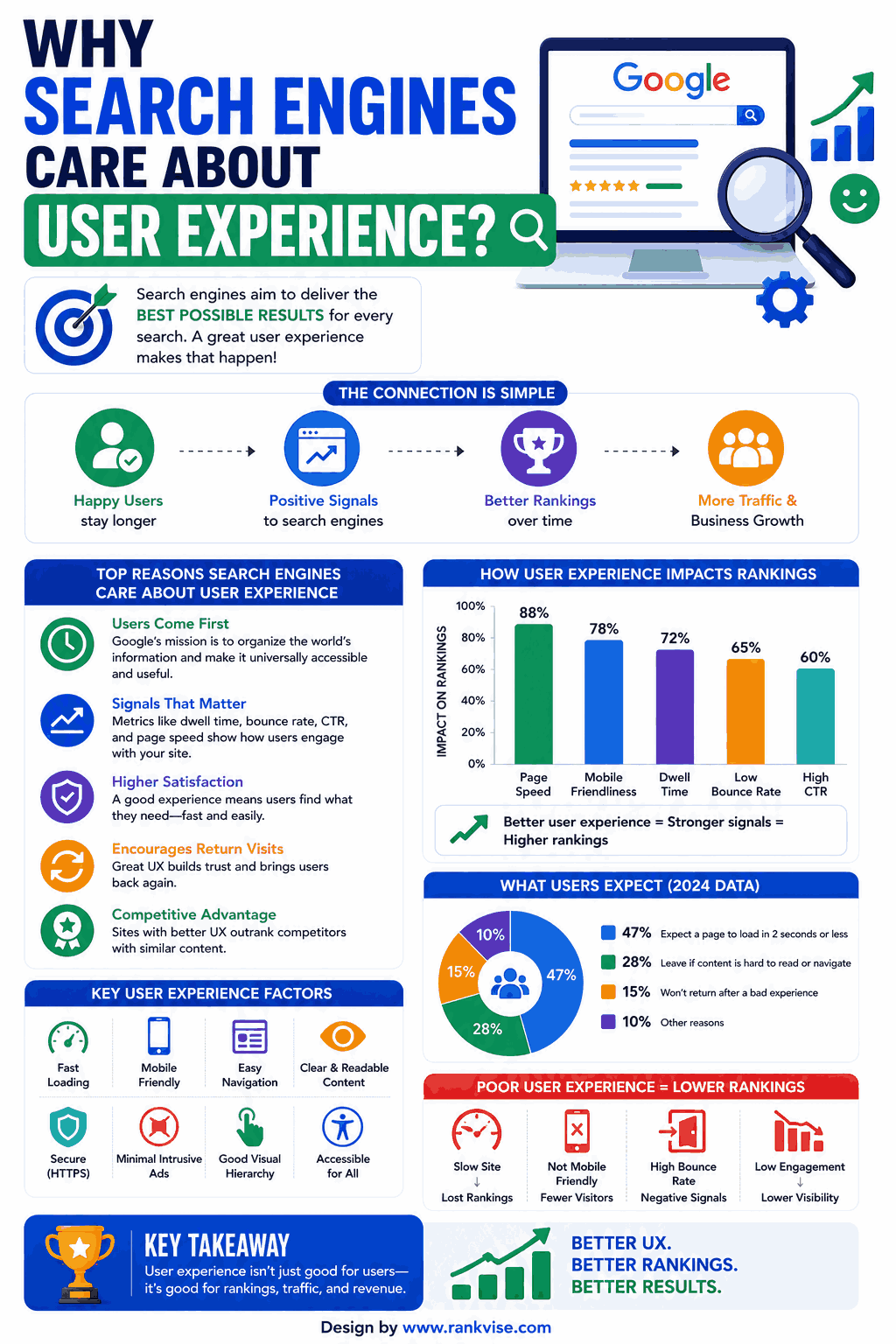
Modern search engines aim to deliver pages that satisfy search intent. Ranking a page is only part of the equation. If users quickly leave because they cannot find answers or become frustrated during the buying process, search engines believe that the experience may not be meeting expectations and stop directing traffic there.
Customer support plays an important role in preventing those frustrations. Before a visitor abandons a purchase, they often have simple questions.
They may want to know whether a product fits their needs, how long shipping will take, whether returns are free, or if an item is compatible with something they already own. When companies answer these questions clearly and quickly, customers are more likely to remain on the site.
And that’s why it’s important to consider e-commerce customer service outsourcing if your internal team is battling to keep up. The right team makes sure that your customers get the service that they deserve.
Even self-service support can improve user satisfaction. Detailed FAQs, buying guides, comparison pages, and troubleshooting articles help customers solve problems without contacting a support representative. Those resources also create valuable content that search engines can index.
Instead of viewing support materials as documents hidden away after purchase, businesses should recognize them as content assets that attract new visitors through search.
Support Content Creates Valuable Search Opportunities
Customer questions provide an ongoing source of keyword ideas.
Traditional keyword research tools reveal search volume, but they cannot always explain what customers genuinely struggle to understand. Support teams hear those concerns every day through emails, chat sessions, phone calls, and social media and they notice patterns.
Perhaps customers repeatedly ask whether a particular fabric shrinks after washing. Maybe buyers want to compare two product models before purchasing. Others may wonder whether international shipping includes customs fees.
Each recurring question represents an opportunity to create useful content.
Instead of publishing articles based only on popular keywords, businesses can build pages that answer real customer concerns. These pages often target highly specific search queries with lower competition and stronger purchase intent.
For example, a furniture retailer may notice repeated questions about assembling a dining table. Rather than answering each inquiry individually, the company creates a detailed guide with photographs and troubleshooting advice. Over time, that guide begins attracting search traffic from people facing the same issue, many of whom become future customers.
The support department becomes a source of content research rather than simply handling inquiries.
Better Support Reduces Bounce Rates
A visitor who cannot find an answer often leaves within minutes.
While bounce rate itself is not considered a direct Google ranking factor, poor user experiences can still limit SEO performance. If visitors consistently abandon pages without engaging further, businesses lose opportunities to build trust, generate conversions, and encourage return visits.
Customer support helps reduce this problem by removing obstacles before they become reasons to leave.
Live chat can answer purchase questions in real time. Well-written product descriptions eliminate uncertainty before customers even need assistance. Helpful navigation directs visitors toward relevant information without frustration.
Imagine someone searching for “best hiking boots for wet weather.” They arrive on a product page but remain unsure whether the boots are waterproof enough for extended use. If they immediately receive a clear answer through chat or an accessible buying guide, they are far more likely to continue browsing instead of returning to the search results.
Small improvements in support often produce meaningful improvements in engagement.
Reviews Influence Visibility and Trust
Customer reviews affect much more than purchasing decisions.
Positive reviews strengthen trust with potential buyers, generate fresh user-generated content, and may improve click-through rates from search results. Businesses that consistently deliver strong customer support generally receive more favorable reviews because customers remember how problems were handled.
Support becomes especially important when mistakes occur.
Orders occasionally arrive damaged. Deliveries may be delayed. Products sometimes fail to meet expectations.
Customers rarely expect perfection. They expect fairness, responsiveness, and practical solutions.
A business that resolves issues professionally often earns positive reviews despite the original problem. Some customers become more loyal after experiencing excellent support than they would have if nothing had gone wrong.
Those reviews contain authentic language that naturally includes product names, features, and descriptive phrases. Search engines value this ongoing stream of fresh, relevant content.
Customer Support Encourages Repeat Visits
SEO should not focus exclusively on attracting first-time visitors.
Returning customers strengthen a business in several ways. They generate repeat sales, recommend the brand to others, and often spend less time comparing competitors before making another purchase.
Excellent support encourages customers to return whenever they need similar products.
For example, an online pet supply store that quickly resolves subscription issues creates confidence. The customer remembers the experience months later when ordering food or accessories again.
Although repeat visits themselves do not automatically improve rankings, they contribute to stronger brand recognition and increased direct traffic. Search engines recognize established brands that consistently satisfy users.
Over time, businesses with loyal customer bases often outperform competitors that rely solely on attracting new visitors.
Support Helps Build High-Quality Content
Content marketing works best when it solves real problems.
Unfortunately, many businesses publish articles that answer questions nobody is asking. They choose topics based only on keyword volume and overlook the practical concerns that customers raise every day.
Support teams help prevent this disconnect.
Every conversation offers insight into customer language, priorities, and decision-making. Marketing teams can use this information to create buying guides, troubleshooting articles, comparison pages, instructional videos, and product updates.
Suppose an electronics retailer receives frequent questions about connecting wireless speakers to older televisions.
Rather than repeating the same explanation hundreds of times, the business creates a comprehensive guide covering different connection methods, compatible accessories, and common mistakes. That article supports existing customers while attracting new visitors searching for the same information.
Useful content often begins with a simple support conversation.
Faster Response Times Improve Customer Confidence
Waiting for answers creates uncertainty.
Online shoppers cannot ask questions across a checkout counter, so response times become part of the buying experience.
Businesses that answer inquiries promptly help customers make decisions before doubts lead them elsewhere.
This responsiveness may increase conversion rates, but it also supports SEO indirectly. Visitors remain engaged for longer periods, explore additional pages, and develop stronger trust in the brand.
Quick responses also reduce abandoned shopping carts caused by unanswered questions about shipping, payment methods, warranties, or product compatibility.
Many companies focus heavily on attracting traffic while overlooking the importance of converting that traffic into satisfied customers.
Both goals deserve equal attention.
Strong Support Generates Natural Backlinks
Most backlinks develop because people find something worth sharing.
Support resources often become valuable reference materials for bloggers, industry websites, online communities, and educational organizations.
A detailed installation guide, comprehensive size chart, or troubleshooting article may attract links simply because it explains a topic better than competing resources.
For example, a cycling retailer could publish an exceptionally detailed guide explaining bicycle frame sizing across different manufacturers. Cycling clubs, forums, and bloggers may reference that guide whenever newcomers ask sizing questions.
Those links strengthen SEO while also bringing qualified visitors to the website.
Content created from genuine customer needs often earns more attention than articles written solely to target keywords.
Customer Support Improves Local SEO for Multi-Location Businesses
Businesses with physical stores face additional opportunities.
Customers frequently contact local branches with questions about stock availability, opening hours, parking, repairs, or collection services.
When those questions appear repeatedly, businesses can update location pages with accurate information before customers need to ask again.
Improved location pages help search engines understand the relevance of each store while giving visitors greater confidence before visiting in person.
Customer reviews also play a major role in local search visibility.
Businesses that respond professionally to both positive and negative reviews demonstrate active customer engagement. Potential customers often read these responses before deciding where to shop.
Support continues influencing SEO long after the original interaction ends.
Negative Experiences Can Hurt Organic Performance
Poor support rarely stays private.
Unhappy customers often leave critical reviews, post complaints on social media, and discuss their experiences in online communities. Those conversations may appear prominently in branded search results, influencing future customers before they even visit the company’s website.
Negative experiences also reduce repeat business and referrals.
If customers consistently struggle to obtain refunds, receive delayed responses, or encounter confusing policies, they become less likely to recommend the business.
Search visibility depends partly on reputation.
Brands that consistently disappoint customers often find it harder to build authority, earn backlinks, and attract positive mentions across the web.
Support failures eventually become marketing problems.
Measuring the SEO Impact of Customer Support
Businesses should look beyond traditional support metrics.
Response times and customer satisfaction scores remain important, but several SEO-related indicators deserve attention as well.
Consider monitoring:
- Content topics generated from recurring customer questions
- Organic traffic to FAQ and support pages
- Time spent on help articles
- Conversion rates after live chat interactions
- Customer review volume and average ratings
- Repeat purchase rates
- Backlinks earned by support resources
Examining these metrics together provides a clearer picture of how support contributes to broader business performance.
Support and marketing teams should also meet regularly to discuss emerging customer questions. A recurring issue today could become next month’s highest-performing content.
Bringing Support and SEO Together
Many organizations still operate with separate marketing and customer service departments that rarely exchange information.
That approach limits growth.
Marketing teams understand search demand, while support teams understand customer concerns. Combining those perspectives leads to stronger content, more helpful websites, and better customer experiences.
Simple collaboration can produce noticeable improvements.
- Share recurring customer questions with the content team
- Update product pages using feedback collected by support staff
- Review live chat transcripts for content ideas
- Refresh FAQ pages regularly instead of treating them as static resources
- Encourage support teams to report recurring points of confusion
- Measure customer satisfaction alongside organic performance
When departments share information consistently, the website evolves alongside customer needs rather than relying on assumptions.
Conclusion
Customer support and SEO are often treated as separate business functions, yet they influence many of the same outcomes.
Helpful support reduces confusion, encourages longer visits, improves customer satisfaction, and uncovers valuable content opportunities. Those improvements strengthen the overall quality of an eCommerce website, making it more useful for both customers and search engines.
Businesses that listen carefully to customer questions gain insights that keyword tools alone cannot provide. Every conversation has the potential to improve product pages, buying guides, FAQs, and educational content that attracts future visitors.
Long-term SEO success depends on much more than rankings. It requires building a website that consistently answers questions, solves problems, and earns customer trust. Strong customer support helps achieve each of those goals while creating a better experience for everyone who visits the site.