Skip to content

The internet gave everyone a microphone. Platforms like Before It’s News handed them a stage. Since 2008, this citizen journalism platform has attracted millions of readers looking for stories outside mainstream media coverage. But that openness comes with a cost.
- Open publishing lets anyone post instantly without editorial review, prioritizing speed and volume over accuracy.
- Repeated assessments label the site unreliable, citing pseudoscience, conspiracy amplification, and poor sourcing.
- Users value it for immediacy, niche topics, and community engagement despite credibility risks.
- Always cross-check BIN claims with reputable outlets and fact‑checkers before trusting or sharing.
According to the Reuters Institute Digital News Report 2024, trust in online news globally sits at just 40%. Platforms that skip editorial oversight push that number even lower. Understanding how before it’s news operates helps readers make smarter decisions about where they get information.
This guide examines the platform honestly. You will learn what it offers, where it falls short, and how to navigate the broader landscape of user-generated news content with confidence.
What Exactly Is Before It’s News?
Before It’s News is an open publishing platform launched in 2008. It allows anyone to register and publish articles without editorial review. The site positions itself as a home for alternative news, covering topics from politics and finance to health and technology.
Think of it as a blog aggregator with almost no gatekeeping. Writers do not need credentials, journalism experience, or verified sourcing. They simply sign up, write, and publish. This model attracts independent voices who feel overlooked by traditional outlets.
The platform organizes content into categories like Economy, Health, Beyond Science, Power of Belief, and a Top 50 list of trending stories. It also features a live section for breaking event coverage. Its revenue comes primarily from display advertising, which explains the heavy ad presence across the site.
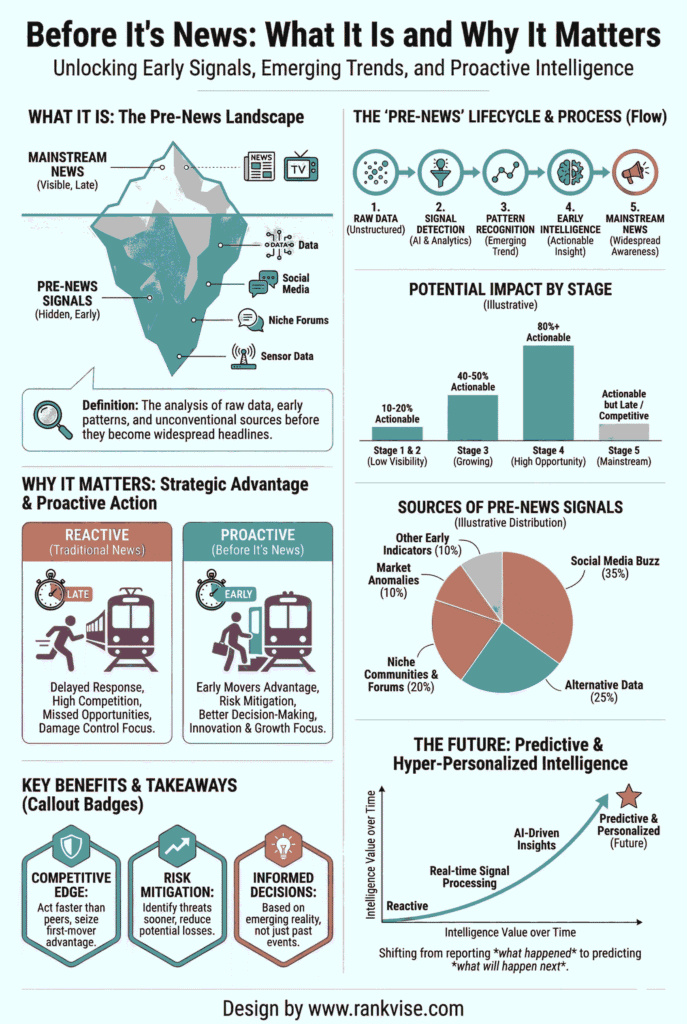
How Does the Open Publishing Model Work?
The defining feature of before it’s news is its barrier-free publishing system. Any registered user can post an article, and that article goes live without passing through an editor, fact-checker, or compliance review.
This is fundamentally different from how established news organizations operate. At outlets like the Associated Press or Reuters, stories pass through multiple rounds of verification. Editors check sources, confirm quotes, and flag unsupported claims. That process is slow but essential.
An open publishing platform skips all of that. The result is speed and volume at the expense of accuracy. Readers get a constant stream of fresh content, but they also inherit the full responsibility of verifying what they read. According to MIT research published in Science, false news stories spread six times faster than accurate ones on open platforms. That dynamic plays out clearly on sites like BIN.
Why Do People Use Before It’s News?
Despite its credibility issues, the platform attracts a loyal audience. Understanding why helps explain its staying power.
First, it fills a perceived gap. Many readers feel mainstream media ignores or underreports certain topics. Before it’s news gives those topics a home, from fringe science to grassroots political movements.
Second, it offers immediacy. Without an editorial bottleneck, stories appear within minutes. For readers who want information fast, that speed is appealing even when accuracy suffers.
Third, community engagement drives loyalty. Readers comment, rate stories, and share posts. That interaction creates a sense of belonging that polished, one-directional news sites often lack.
A 2024 Pew Research study found that 55% of U.S. adults who consume alternative news do so because they distrust mainstream sources. That distrust, whether justified or not, is the engine powering platforms like BIN.
What Are the Credibility Concerns?
The lack of editorial oversight creates serious reliability problems. Multiple independent media watchdogs have assessed the platform and reached consistent conclusions.
Ad Fontes Media rates Before It’s News as “Unreliable, Inaccurate” with a reliability score of just 6.23 out of 64. That places it near the bottom of their entire media landscape chart. They classify the site’s political leaning as “Hyper-Partisan Right” with a score of 29.41.
Media Bias/Fact Check labels BIN a “Questionable Source.” Their assessment cites the promotion of pseudoscience, conspiracy theories, and poor sourcing as core problems. They also document specific instances of published false claims, including fabricated arrest reports and debunked health misinformation.
These are not isolated concerns. The pattern is consistent across evaluation frameworks. For anyone relying on before it’s news for factual reporting, these ratings represent a significant red flag.
Notable Examples of Misinformation on the Platform
The credibility concerns are not theoretical. Several high-profile misinformation incidents trace directly back to BIN content.
The Pizzagate Conspiracy
Before It’s News was among the platforms that amplified the debunked Pizzagate conspiracy theory in 2016. The baseless claim alleged that senior political figures operated a trafficking ring from a Washington, D.C. pizzeria. The story gained enough traction online to inspire a real-world armed incident at the restaurant. No evidence ever supported the claims.
Fabricated Reports About Public Figures
The platform published a false report in 2019 claiming the arrest of philanthropist George Soros in Switzerland. The story was entirely fabricated. It fit a broader pattern of unverified claims targeting public figures, published without any attempt at source verification.
Health Misinformation During COVID-19
During the pandemic, BIN hosted articles promoting debunked theories, including claims that 5G networks spread the virus and that COVID-19 was a deliberately engineered bioweapon. The World Health Organization flagged this type of content as part of a dangerous “infodemic” that undermined public health responses globally.
These examples show what happens when a platform prioritizes publishing speed over fact-checking news sources. The consequences extend beyond the internet into real-world harm.
How to Evaluate Any News Source for Credibility
The skills needed to assess before it’s news apply to every media source. Media literacy is not about trusting or distrusting a single platform. It is about building a personal verification habit.
Here is a practical framework anyone can use:
| Credibility Signal | What to Look For | Red Flag |
|---|---|---|
| Editorial oversight | Named editors, correction policies | No masthead, no corrections page |
| Author credentials | Bylines with bios, verifiable expertise | Anonymous posts, no background info |
| Source transparency | Links to primary sources, data, studies | Vague references, no citations |
| Tone and language | Neutral, measured reporting | Alarmist, emotionally charged headlines |
| Third-party ratings | Positive assessments from MBFC, Ad Fontes | “Questionable” or “Unreliable” labels |
| Correction history | Published retractions when errors occur | No acknowledgment of past mistakes |
According to Stanford University’s 2023 digital literacy research, fewer than 10% of online readers check more than one source before sharing a news article. Building a quick cross-referencing habit dramatically reduces your exposure to misinformation online.
Reliable Alternatives for Staying Informed
If you value accuracy and depth, several established platforms deliver verified reporting consistently.
TechCrunch covers startups, venture capital, and emerging technology with professional editorial standards. Their reporting team includes experienced journalists who verify claims before publishing. For technology and science news, it remains one of the most cited sources in the industry.
Ars Technica offers deep technical analysis written by subject matter experts. Their coverage of hardware, software, and digital policy is thorough and well-sourced. The site has built a reputation over two decades for accuracy and depth.
The Verge blends consumer technology coverage with cultural and policy reporting. Owned by Vox Media, it follows standard editorial practices including fact-checking and editorial review.
Reuters and the Associated Press serve as foundational wire services. Their reporting feeds thousands of downstream outlets. Both organizations maintain rigorous fact-checking protocols and transparent correction policies.
For anyone currently using before it’s news as a primary information source, supplementing it with at least one of these outlets significantly improves the quality of your news diet.
The Bigger Picture: Citizen Journalism in 2026
Before It’s News represents one extreme of the citizen journalism spectrum. The concept itself is not the problem. Citizen reporting has broken important stories, from the Arab Spring to police accountability videos. Everyday people with cameras have genuinely changed how news gets reported.
The challenge is quality control. When citizen journalism operates within platforms that encourage verification, the results can be powerful. When it operates without any checks, it becomes a channel for misinformation.
A 2024 Knight Foundation study found that 67% of Americans believe citizen journalism plays a valuable role but needs better tools for verification and accountability. The future likely involves hybrid models where open platforms integrate basic fact-checking tools, AI-powered source verification, and community moderation.
Until that future arrives, the responsibility falls on individual readers. Knowing how a platform like BIN works, understanding its limitations, and cross-referencing its claims are the best defenses available today.
How to Navigate Open News Platforms Safely
If you choose to read content on before it’s news or similar alternative news websites, apply these five practices consistently.
Approach every headline with healthy skepticism. Sensational claims require stronger evidence, not less. Cross-reference any significant claim with at least two established news outlets before accepting it as fact. Check the author’s profile for credentials, a publishing history, and verifiable expertise. Use dedicated fact-checking tools like Snopes, FactCheck.org, or PolitiFact to verify specific claims. Never share an article until you have confirmed its accuracy, because sharing amplifies reach regardless of truth.
These habits take less than two minutes per article. They protect both you and your network from the spread of unverified information.
Final Takeaway
Before it’s news serves a real audience need. People want diverse perspectives, fast updates, and stories that mainstream outlets sometimes overlook. The platform delivers all of that. What it does not deliver is reliability.
Without editorial oversight, fact-checking, or accountability mechanisms, BIN places the entire burden of verification on its readers. That model works only if readers are equipped and willing to do the work.
The smartest approach is not to avoid the platform entirely or to trust it blindly. It is to use it as one input among many, always filtered through your own critical thinking and supported by credible sources. Media literacy is no longer optional. It is the most important skill in the modern information landscape.
FAQs
Before It’s News is an open citizen journalism platform founded in 2008 where anyone can publish articles without editorial review. It focuses on alternative news topics across politics, health, and technology.
Most media watchdogs rate it as unreliable due to its lack of fact-checking and history of publishing conspiracy theories. Readers should always cross-reference its claims with established outlets.
Ad Fontes Media gives it a reliability score of 6.23 out of 64 because it has no editorial oversight, no correction policies, and a documented pattern of hosting misinformation and unverified content.
TechCrunch, Ars Technica, The Verge, Reuters, and the Associated Press all offer fact-checked, editorially reviewed reporting with transparent sourcing and established credibility standards.
Use tools like Snopes, FactCheck.org, or PolitiFact to verify specific claims. Also cross-reference with at least two mainstream outlets and check the author’s credentials before trusting or sharing.