Skip to content

A sales associate is a front-line professional who helps customers find and purchase products or services. You will find sales associates in retail stores, showrooms, dealerships, and even corporate offices. They are the human connection between a business and its buyers.
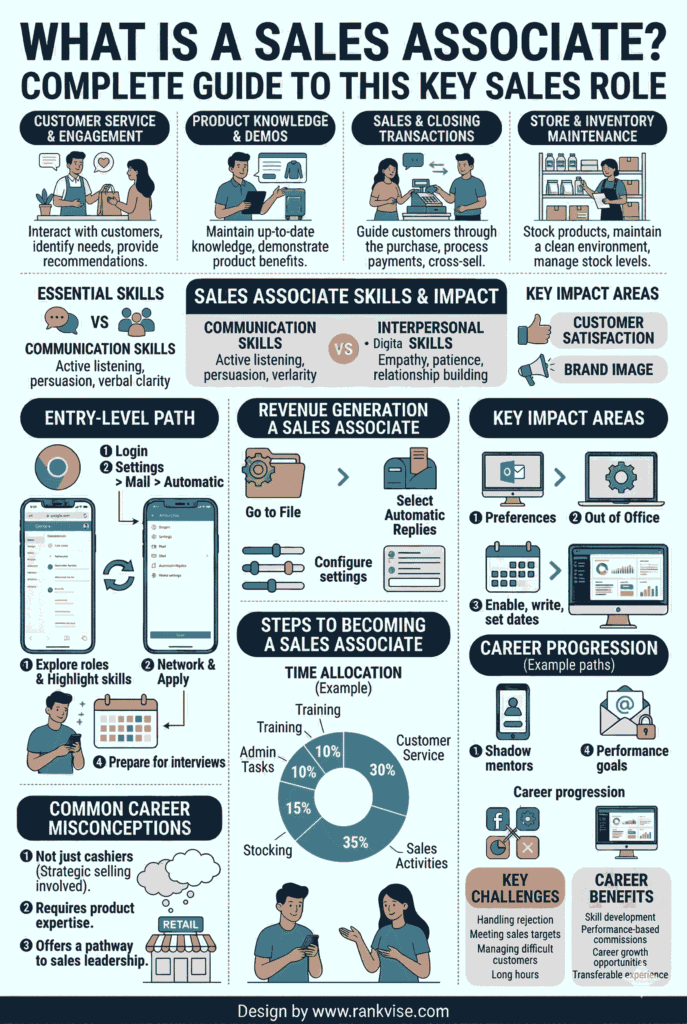
- Core responsibilities: assist and guide customers, process transactions, maintain displays, resolve complaints, and meet sales targets through service and operational discipline.
- Essential skills: active listening, clear communication, deep product knowledge, adaptability, problem solving, and time management that drive conversions and customer satisfaction.
- Career pathway and compensation: low entry barriers, promotion opportunities into management, and variable pay including hourly rates, commissions, and bonuses in higher-value sectors.
This role may sound simple on the surface. However, a skilled sales associate directly impacts revenue, customer loyalty, and brand reputation. If you are considering this career path or hiring for the position, this guide covers everything you need to know.
What Does a Sales Associate Actually Do?
A sales associate greets customers, answers questions, and guides them toward the right purchase. The role goes well beyond standing behind a cash register. It involves active listening, product expertise, and genuine relationship building.
In a typical shift, a sales associate might help a customer compare two products, process a return, restock shelves, and handle a complaint. The variety keeps the job engaging. Every interaction is an opportunity to create a positive experience that brings the customer back.
The core purpose stays the same across industries. Whether someone works at an electronics retailer or a luxury clothing boutique, their job is to make buying easy and enjoyable for the customer.
Key Sales Associate Responsibilities
The sales associate job description varies by company and industry. However, most positions share a common set of daily duties.
- Greeting and assisting customers — Approaching shoppers with a friendly attitude and offering help without being pushy.
- Understanding product features — Knowing enough about the inventory to answer questions and make honest recommendations.
- Processing transactions — Handling purchases, returns, and exchanges accurately at the point of sale.
- Maintaining store presentation — Keeping shelves stocked, displays organized, and the sales floor clean and inviting.
- Meeting sales targets — Hitting individual or team goals set by management on a daily, weekly, or monthly basis.
- Handling customer complaints — Resolving issues calmly and finding solutions that protect both the customer relationship and company policy.
- Upselling and cross-selling — Suggesting complementary products or upgrades that genuinely add value for the buyer.
These retail sales associate duties require a mix of interpersonal skill and operational discipline. Top performers balance both consistently.
Essential Sales Associate Skills
Technical knowledge matters, but soft skills often separate average associates from top performers. Employers across industries look for a specific combination of abilities.
Communication and Listening
Strong communication sits at the heart of every successful sales interaction. A good associate listens more than they talk. They ask the right questions to understand what the customer actually needs before recommending a product.
Clear verbal communication also helps when explaining features, pricing, or store policies. Customers value associates who speak plainly and avoid confusing terminology.
Product Knowledge
Customers trust associates who genuinely understand the products they sell. This means going beyond memorising spec sheets. It means knowing how a product performs in real life and when it makes sense for different types of buyers.
Companies that invest in regular product training see measurably higher conversion rates from their floor teams. Associates who can confidently compare options help customers make faster, more satisfying decisions.
Adaptability and Problem-Solving
No two customers are alike. Some arrive knowing exactly what they want. Others need significant guidance. A skilled sales associate reads the situation quickly and adjusts their approach accordingly.
Problem-solving also matters when things go wrong. A delayed shipment, a defective item, or a billing error can turn a loyal customer into a lost one. Associates who handle these moments with composure and initiative protect the brand.
Time Management
Retail environments move fast, especially during peak seasons. Associates juggle multiple customers, restocking tasks, and register duties simultaneously. Prioritising effectively under pressure is a skill that develops with experience but starts with the right mindset.
Sales Associate Salary: What to Expect
Compensation for sales associates varies based on industry, location, and experience level. Here is a general breakdown based on recent data.
| Experience Level | Average Annual Salary (USD) |
|---|---|
| Entry-level (0–1 year) | 25,000 – 30,000 |
| Mid-level (2–4 years) | 30,000 – 40,000 |
| Experienced (5+ years) | 40,000 – 50,000 |
| Specialised retail (luxury, tech) | 45,000 – 65,000+ |
Many positions also include commission, performance bonuses, or employee discounts. In industries like automotive, real estate, or high-end retail, commission structures can push total compensation significantly higher. The sales associate salary often reflects the value of the products being sold and the complexity of the sales cycle.
How to Become a Sales Associate
Most sales associate positions do not require a college degree. Employers prioritise attitude, communication ability, and willingness to learn over formal credentials.
Here is a typical path into the role:
- Start with a strong resume — Highlight any customer-facing experience, even from volunteer work, hospitality, or food service.
- Develop product knowledge — Research the industry you want to work in before your first interview. Showing genuine interest sets you apart.
- Practice your people skills — Confidence, friendliness, and active listening can be sharpened through everyday interactions.
- Apply broadly — Retail chains, boutiques, showrooms, and service businesses all hire sales associates regularly.
- Invest in certifications — Optional credentials in retail management or customer service from platforms like Coursera or LinkedIn Learning add credibility to your profile.
Entry barriers are low, which makes this an accessible starting point for many career paths.
Sales Associate Career Path and Growth Opportunities
One of the strongest appeals of this role is its upward mobility. A sales associate position is rarely a dead end. It is a launchpad.
Many retail managers, regional directors, and even vice presidents of sales started as floor associates. The skills you build in direct customer interactions translate directly into leadership roles. Companies actively promote from within because associates who understand the front line make better managers.
A common career progression looks like this: sales associate to senior associate, then to team lead, assistant manager, store manager, and eventually district or regional manager. In corporate sales environments, associates often move into account executive or business development roles.
Specialising in a high-value industry like technology, pharmaceuticals, or luxury goods accelerates this path. Sales professionals in these verticals often reach six-figure compensation within five to seven years.
Sales Associate vs. Sales Representative: What Is the Difference?
People often confuse these two roles. While they overlap, the distinctions matter.
A sales associate typically works in a retail or customer-facing environment. They assist buyers who have already shown interest by walking into a store or visiting a website. The sales cycle is usually short, often completed in a single interaction.
A sales representative usually works in B2B or outside sales. They prospect for new clients, manage longer sales cycles, and often handle larger deal sizes. Representatives typically carry individual revenue quotas and work with more complex products or services.
Both roles build foundational sales skills. Many professionals start as associates and transition into representative positions as they gain experience and industry knowledge.
What Makes a Great Sales Associate Stand Out?
The difference between a good and a great sales associate lies in consistency, intention, and commitment to delivering an exceptional customer experience. Top-performing retail sales associates treat every customer interaction as an opportunity to build trust and loyalty.
They remember returning customers, follow up on special orders, and take genuine pride in helping shoppers find the right products for their needs. Their focus on personalized service directly improves sales performance and customer satisfaction.
Great sales associates also prioritize continuous improvement and professional growth. They actively seek feedback from managers, ask for coaching, and learn from high-performing team members to sharpen their retail sales skills.
By viewing every shift as a chance to improve product knowledge, communication, and closing techniques, they develop a strong growth mindset. This dedication separates those who build long-term careers in sales from those who simply work a job.
FAQs
Most positions require a high school diploma and strong communication skills. Retail experience helps but is not always mandatory for entry-level roles.
A cashier primarily processes transactions at checkout. A sales associate actively engages customers on the floor, provides product advice, and works toward sales goals.
Hourly rates typically range from 12 to 20 USD depending on location, industry, and experience. Commission-based roles can push total earnings significantly higher.
Yes. The role builds communication, problem-solving, and time management skills that transfer to virtually every other career path.
Absolutely. Most retail companies promote from within. A dedicated sales associate can advance to team lead, assistant manager, and store manager within three to five years.