Most TikTok advertisers are flying blind when it comes to competitor strategy. Tools for analyzing competitor TikTok ads exist precisely because TikTok’s native ad transparency is nowhere near as open as Meta’s Ad Library, and the trends that work today can be completely stale by next week. Estimating what competitors are actually spending, without direct access to their accounts, is genuinely hard. After reviewing the top platforms in this space, this guide breaks down five tools worth your attention.
- Use ad intelligence to track competitor creative volume, engagement signals, and estimated impression share to turn guesswork into action.
- Pick tools by specialty and coverage: Anstrex, ADSpy, BigSpy, Pipi ADS, and Minea each serve distinct verticals and research needs.
- Align choice to use case: evaluate TikTok features, pricing models, measurement capabilities, and compliance before committing.
The research approach for this ranking
Each platform on this list was evaluated by pulling information from official product pages, user reviews across major review platforms, published case studies, and directory profiles. Only tools with a clear track record serving digital marketers in the paid social space made the cut.
→ See the full research breakdown
- Anstrex – Best for e-commerce and dropshipping competitive intelligence
- ADSpy – Best for competitor ad analysis and Facebook/Instagram advertising research
- Big Spy – Best for competitor ad tracking and advertising intelligence
- Pipi ADS – Best for TikTok and Facebook ad intelligence and ecommerce product discovery
- Minea – Best for ecommerce ad research and dropshipping competitor analysis
Why Tools For Analyzing Competitor TikTok Ads Matter for Your Business
TikTok doesn’t hand you a clear window into what your competitors are running. Unlike Meta’s Ad Library, which gives you at least some view of active ads, TikTok’s native tools make competitive research genuinely difficult without third-party help.
Creative trends also move fast on TikTok. An ad format that’s pulling strong engagement this month may be ignored next month, so working from stale data can send your creative strategy in the wrong direction.
The right tool gives you real visibility into competitor ad creative volume over time, a sense of estimated impression share, and clear signals about what’s driving actual ad engagement: likes, comments, and shares per creative.
That kind of visibility turns guesswork into something you can actually act on.
Top 5 Tools For Analyzing Competitor TikTok Ads Breakdown and Comparison
Note: All data in this table is sourced from review platforms and the official websites of the listed companies.
| Company Name | Years Operating | Headquartered In |
| Anstrex | Est. 2016 | Santa Rosa, United States |
| ADSpy | Est. 2003 | Charlestown, United States |
| Big Spy | Est. 2017 | San Jose, CA |
| Pipi ADS | Est. 2021 | Guangzhou, China |
| Minea | N/A | N/A |
1. Anstrex
Anstrex is the best for E-Commerce and Dropshipping Competitive Intelligence.
What Does Anstrex Do?
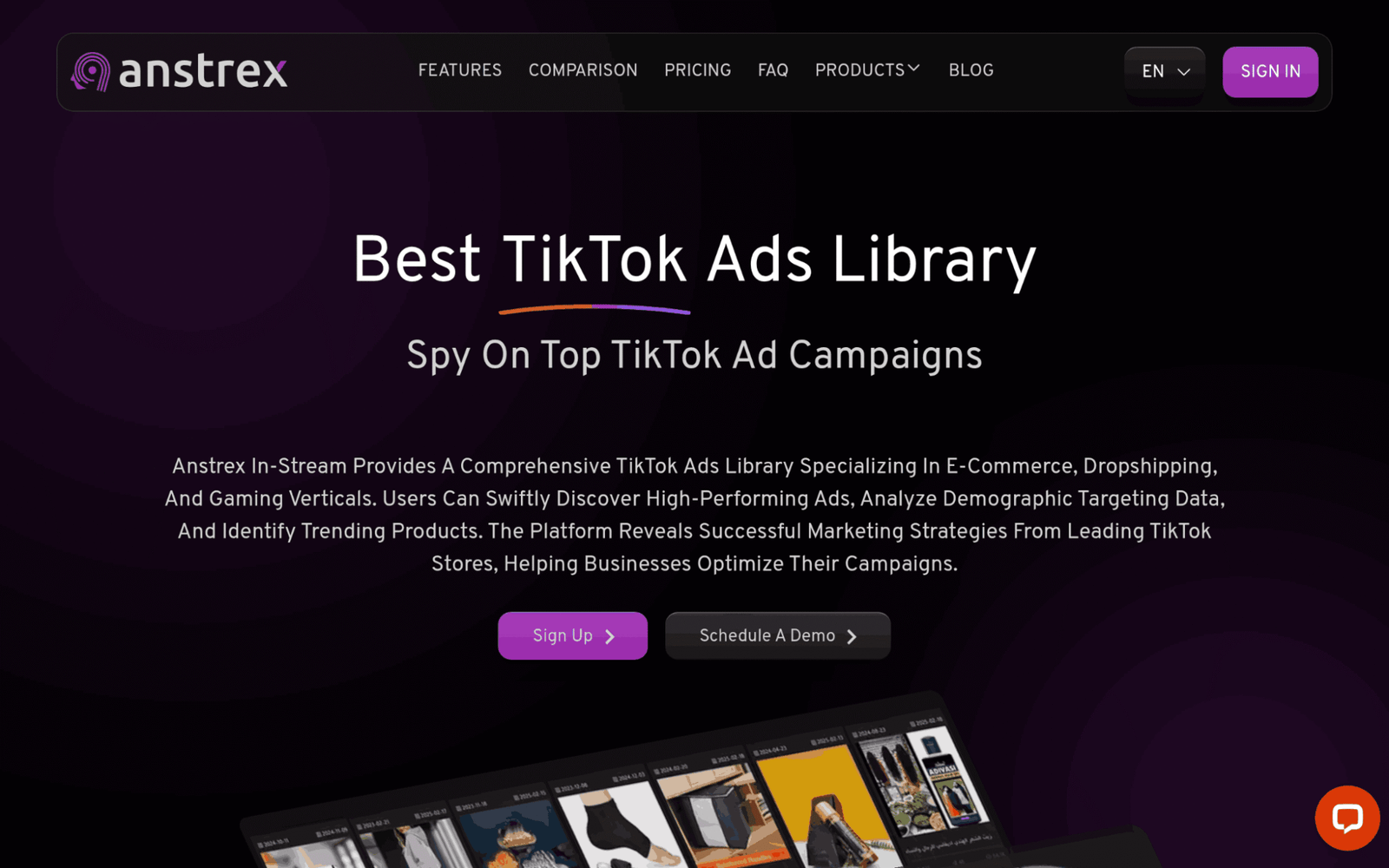
Anstrex is an ad intelligence platform covering multiple ad channels: native ads, push notifications, pop ads, and TikTok in-stream ads. Their TikTok-specific product, Anstrex In-Stream, gives users access to a library of over 100,000 ads from more than 34,000 advertisers across 55 countries. The platform focuses heavily on e-commerce, dropshipping, and gaming verticals. Users can search for high-performing ads, dig into demographic targeting data, and spot trending products before they peak.
Why Does Anstrex Stand Out for Tools For Analyzing Competitor TikTok Ads?
Anstrex solves one of the hardest problems in TikTok ad research: getting clean, searchable competitor data across a genuinely global ad pool. Fifty-five countries is hard to match at this price point. The reverse image search feature and integrations with Shopify, WooCommerce, and AliExpress make it especially practical for e-commerce marketers who need to move from insight to action fast.
Summary of Real User Reviews:
Feedback from practitioners is consistently positive. Luke Kling of AffLift points to the platform’s usefulness for affiliates needing real market visibility, and Edward Regalbuto of FluentCo credits Anstrex with giving his team a competitive edge in native advertising. Users tend to note the depth of the data and how quickly it surfaces insights that would otherwise take hours to find manually.
2. ADSpy
ADSpy is best for Competitor Ad Analysis and Facebook/Instagram Advertising Research.
What Does ADSpy Do?
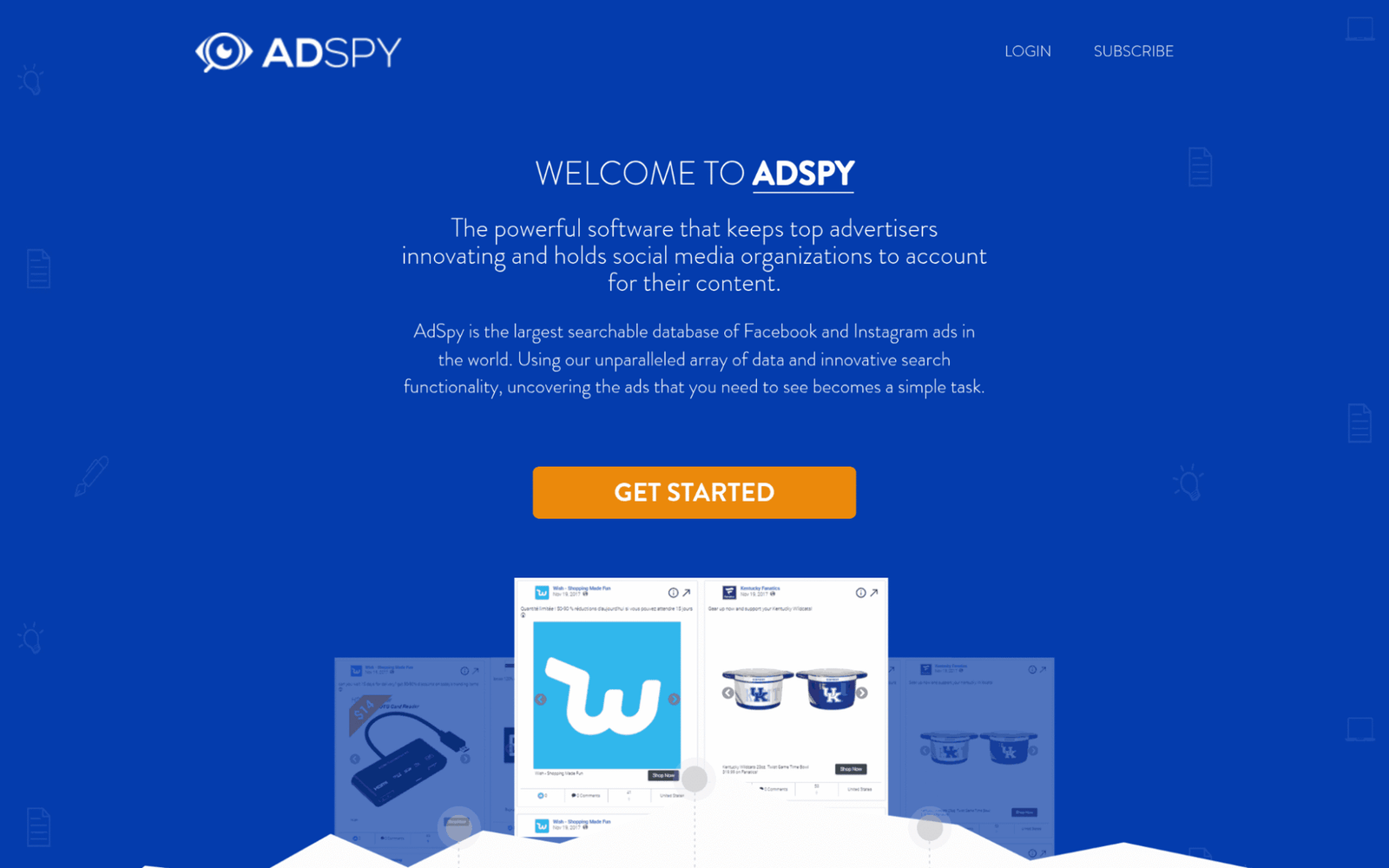
ADSpy runs what it describes as the largest searchable database of Facebook and Instagram ads in the world: over 209 million ads pulled from 225 countries, representing more than 30 million advertisers. Users can search by ad text, destination URLs, page names, and even landing page technologies. The comment search feature is a smart touch for anyone who wants to monitor audience reactions to competitor ads, not just the ads themselves.
Why Does ADSpy Stand Out for Tools For Analyzing Competitor TikTok Ads?
Most tools make you choose between breadth and search flexibility. ADSpy delivers both, with more filter options than any comparable ad intelligence tool in this category. For paid social teams running cross-platform campaigns, having 209 million ads searchable in one place means you’re benchmarking against real market data, not a limited sample.
Summary of Real User Reviews:
Review sentiment around ADSpy tends to center on its sheer scale and search depth. Users frequently mention the database size as the reason they stick with it over alternatives. The platform attracts marketers who prioritize research depth over a simpler interface, which is worth knowing before you sign up. It’s not always the easiest tool to start with, but it’s powerful once you do.
3. Big Spy
Big Spy is best for Competitor Ad Tracking and Advertising Intelligence.
What Does Big Spy Do?
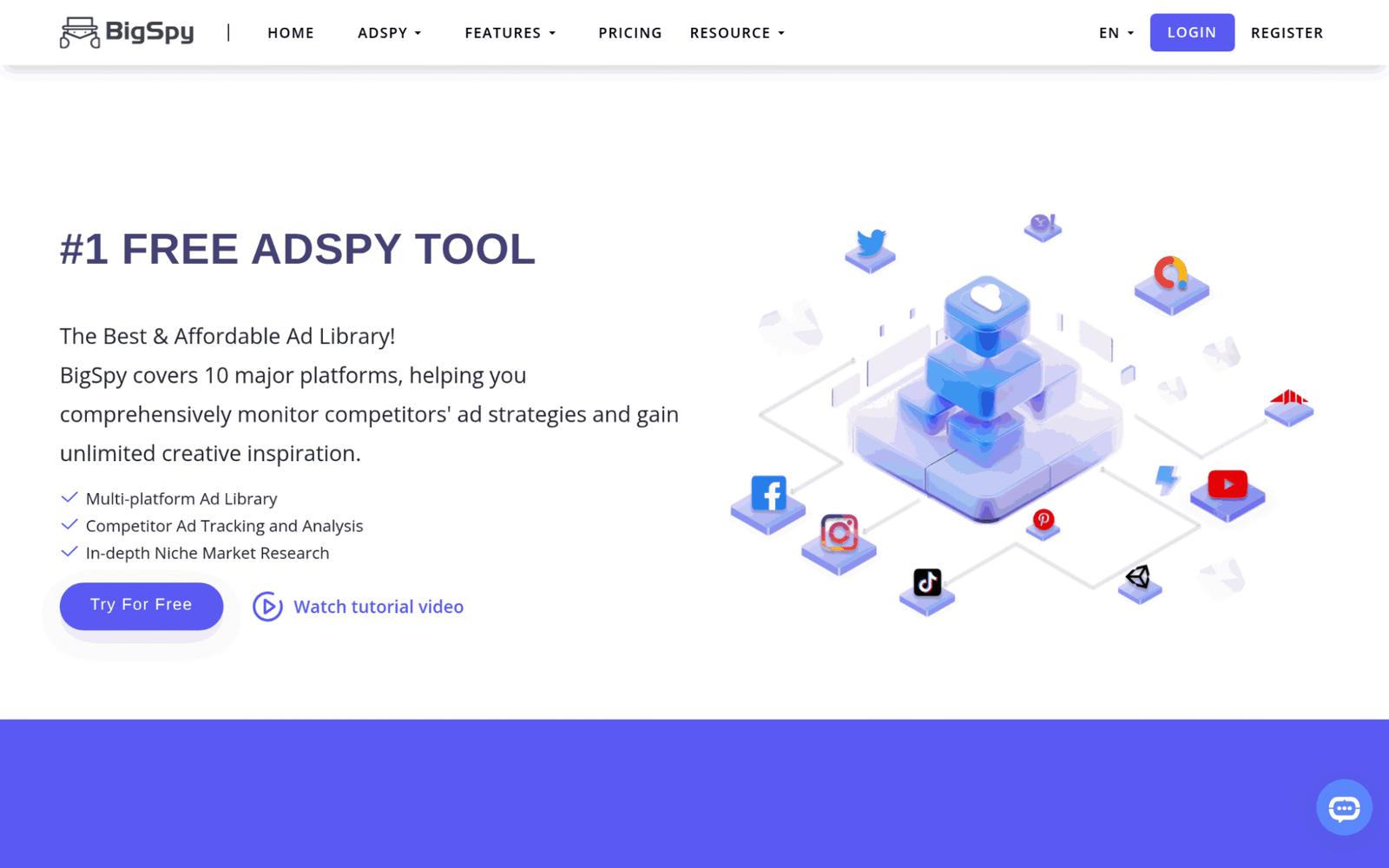
BigSpy covers 10 major ad platforms including Facebook, Instagram, TikTok, YouTube, and Twitter, plus 40 e-commerce sites. Their database holds over 1 billion ad creatives from close to 10 million advertisers across 71 countries and 23 languages. The platform is designed to work for everyone from beginners to more experienced marketers, with multi-dimensional search and a clean interface. There’s also a free tier, which makes it one of the more accessible entry points in this space (pricing starts at $9/month, so the barrier is low).
Why Does Big Spy Stand Out for Tools For Analyzing Competitor TikTok Ads?
BigSpy covers more platforms in one place than almost anything else on this list, which matters when you’re tracking competitor activity across TikTok and other channels at the same time. The combination of a billion-plus ad creatives and an accessible free plan makes it a strong starting point for teams that are new to ad intelligence tools but serious about competitive research.
Summary of Real User Reviews:
BigSpy earns strong marks across multiple review platforms: 4.8/5 on G2, 4.9/5 on Capterra, and 4.8/5 on FixThePhoto. Users consistently praise the breadth of platform coverage and the pricing. It’s particularly popular with marketers who want a single tool that spans multiple ad channels without a steep learning curve.
4. Pipi ADS
Pipi ADS is best for TikTok and Facebook Ad Intelligence and Ecommerce Product Discovery.
What Does Pipi ADS Do?
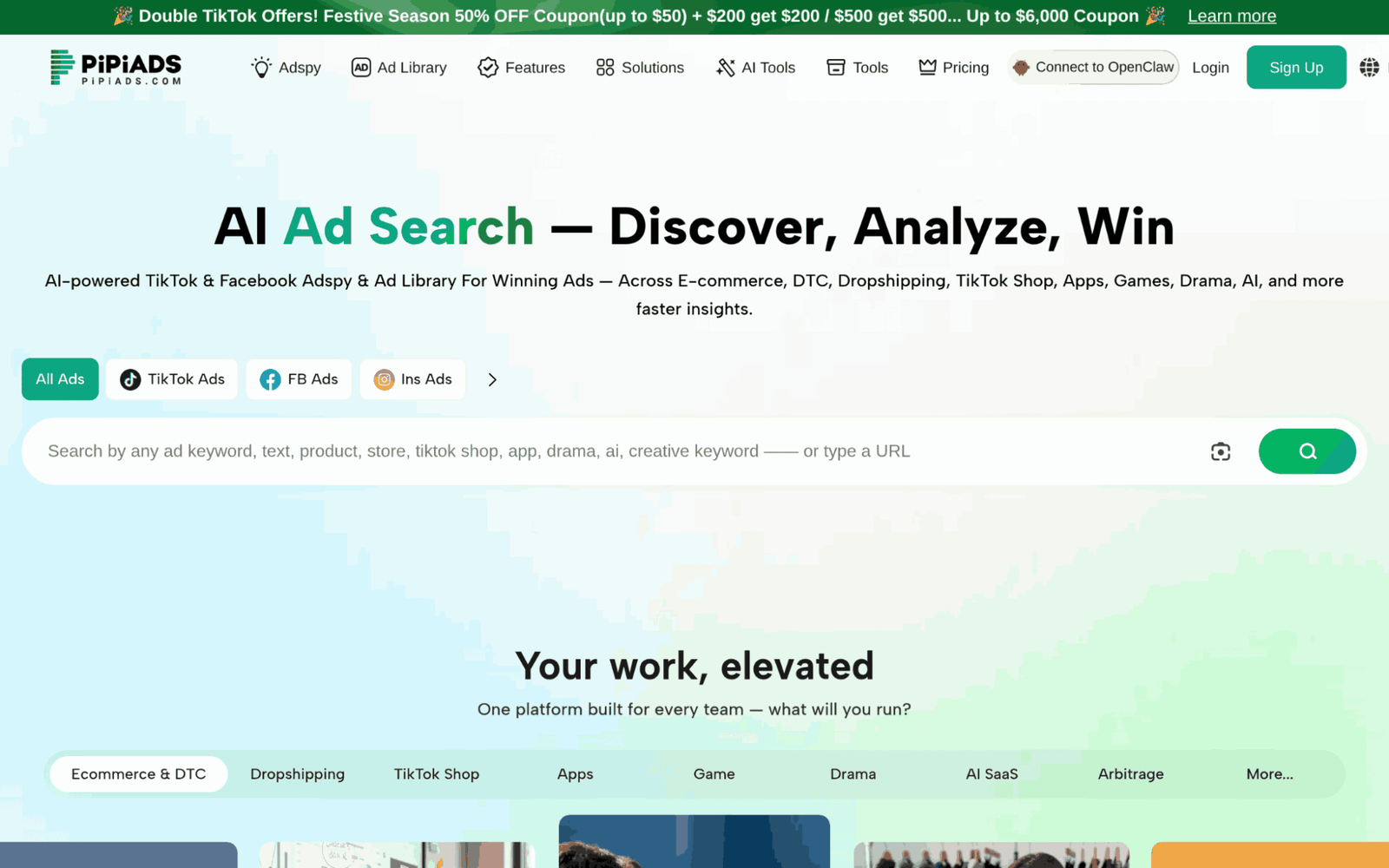
Pipi ADS is a TikTok and Facebook ad intelligence platform focused on ad creatives, copy, targeting patterns, and performance signals. The platform serves over one million advertisers, businesses, and agencies worldwide. It’s built for e-commerce teams, app developers, gaming companies, AI/SaaS businesses, and content creators who need to understand what competitor ads are actually doing in the market. Pricing runs on a credit-based subscription model with a free trial available.
Why Does Pipi ADS Stand Out for Tools For Analyzing Competitor TikTok Ads?
Pipi ADS goes deeper on TikTok-specific ad intelligence than most general-purpose tools, which matters when you’re trying to understand creative performance on a platform with its own unique content culture. The analytics layer helps users move past surface-level creative data and spot actual patterns in what’s driving ad engagement across competitor accounts.
Summary of Real User Reviews:
Pipi ADS has built a following among e-commerce and TikTok-focused marketers who want more than just a surface view of competitor ads. Users tend to note the TikTok-specific depth and the product discovery features as standout strengths. Teams running serious TikTok ad programs tend to find it more relevant than broader, platform-agnostic alternatives.
5. Minea
Minea is best for Ecommerce Ad Research and Dropshipping Competitor Analysis.
What Does Minea Do?
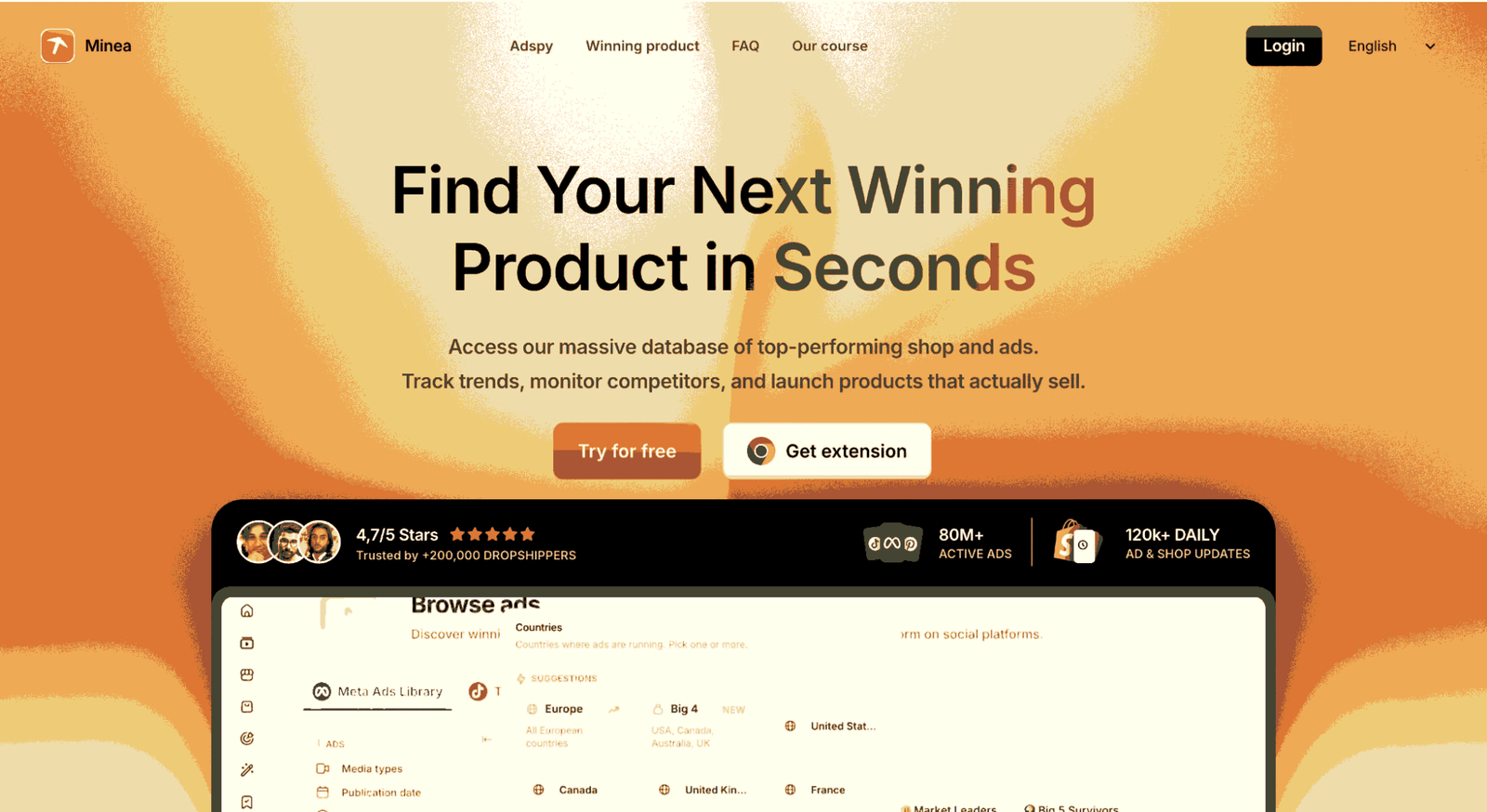
Minea is an ad spy tool built for e-commerce and dropshipping businesses. The database holds 80 million active ads with daily updates, covering Facebook, Pinterest, and TikTok. More than 200,000 dropshippers use the platform to track competitors, identify trending products, and filter through ad data to find what’s actually working. There’s also a direct Shopify store creation feature, which is a practical touch for anyone moving from product research to launch quickly.
Why Does Minea Stand Out for Tools For Analyzing Competitor TikTok Ads?
Minea targets a specific audience and does it well, which gives it an edge over broader tools for dropshippers and e-commerce teams who need daily-updated ad data across three platforms at once. Daily refreshes on 80 million active ads mean the creative data you’re working with reflects what’s actually running right now, not what was trending six months ago.
Summary of Real User Reviews:
Minea holds a 4.7/5 star rating from user reviews, and it’s backed by endorsements from e-commerce figures including Iman Gadzhi and Yomi Denzel. The platform’s credibility within the dropshipping community is real, and users frequently point to the daily product discovery feature as a reason they keep coming back.
Research Methodology and Selection Process
The process of building this list started with a broad scan of the ad intelligence tool market, pulling from multiple sources before any company was considered for inclusion.
1. Initial Data Collection
Sourcing began with directories, review aggregators, community forums, and published case studies focused on paid social advertising tools. Each platform that appeared in multiple credible sources was logged for further review. The goal at this stage was to build a wide list before narrowing it down, rather than starting with assumptions about which tools were already well-known.
2. Shortlisting Phase
From that broader list, options without verifiable user reviews or a clear track record serving performance marketers were removed. Review patterns were analyzed across platforms like G2 and Capterra, with attention paid to consistency across review periods, not just overall scores. Tools that showed spikes in ratings without supporting review depth were flagged and deprioritized. What remained was a tighter list of platforms with demonstrated, sustained use by digital marketing practitioners.
3. Verification of Claims
Claims made on each company’s official website were cross-checked against independent user reviews and any available third-party coverage. Where a platform described a feature or database size, that claim was checked against what actual users reported experiencing. Discrepancies between marketing language and user experience were noted. Platforms where the gap between stated claims and real-world feedback was large did not make the final list.
4. Authority and Industry Contribution Layer
Beyond user reviews, the research looked at signals that suggest a company carries real weight in the industry. This included mentions in marketing publications, recognition from practitioners in the field, named endorsements from credible figures, and any original research or data the company had contributed to the broader marketing conversation. Companies that appeared only in their own marketing materials, without independent recognition, were not prioritized.
Tools For Analyzing Competitor TikTok Ads-Specific Evidence
The final filter was relevance to the specific problem: analyzing competitor TikTok ads. Each platform was evaluated for dedicated TikTok ad features, relevant case studies, and verified reviews from users running paid TikTok campaigns. Platforms with general ad intelligence capabilities but no clear application to TikTok competitor research were excluded, even if they scored well on other criteria. Only tools where TikTok ad analysis was a clear, documented use case were included in the final ranking.
How to Choose the Right Tools For Analyzing Competitor TikTok Ads?
The right tool depends heavily on what you’re actually trying to learn. Are you tracking competitor creative volume, monitoring ad engagement trends, or researching products to sell? Different tools are built for different answers, so it’s worth getting clear on your use case before committing.
- Industry/Domain Experience: Look for platforms with proven use in your specific vertical, whether that’s e-commerce, gaming, or SaaS. A tool trusted by dropshippers may not be the right fit for an app developer.
- Features and Service: Check whether the tool covers TikTok specifically, not just as an afterthought. TikTok-native search filters, trending audio data, and creative lifespan tracking matter more here than on other platforms.
- Pricing Structure: Free tiers and trial periods are worth testing before committing to a paid plan. Credit-based models (like Pipi ADS) work differently from flat subscriptions, so understand what you’re actually getting per dollar.
- Results Measurement: The best tools don’t just show you ads. They show you estimated impression share, ad engagement rates, and how long a creative has been running, which tells you whether it’s actually working.
- Industry Knowledge and Compliance: Make sure any platform you use handles TikTok advertising policies and data privacy rules correctly. Working with ad data that violates platform terms creates real risk.
Bottom Line
Choosing the right ad intelligence tool for TikTok competitor research comes down to how deep you need to go and what vertical you’re in. Anstrex works well for e-commerce and dropshipping teams who need global coverage. BigSpy suits marketers who want breadth across platforms. Pipi ADS and Minea are strong picks for TikTok-first research. As TikTok advertising keeps growing, having solid competitive visibility will only get more important.