Skip to content
Social media management software has revolutionized business and personal management. These tools offer simplified scheduling, analytics, and engagement features with the promise of efficiency, management, and data-driven results.
- Centralized access creates major privacy and security vulnerabilities that can expose credentials and enable mass breaches.
- Algorithmic control and AI-driven amplification can manipulate visibility, distort public opinion, and skew engagement metrics.
- Always-on demands of these tools drive widespread burnout among social media professionals, harming wellbeing and productivity.
The software has made it easier than ever to plan campaigns, track engagement, and respond to audiences in real time. But below the surface is a complex knot of problems that can cause privacy invasions, algorithmic control, and rampant burnout.
Here, we outline the dark side of social media management tools, combining historical examples, facts, and ethics issues to build a comprehensive picture of what the risk really involves.
Key Risks and Challenges of Social Media Management Tools
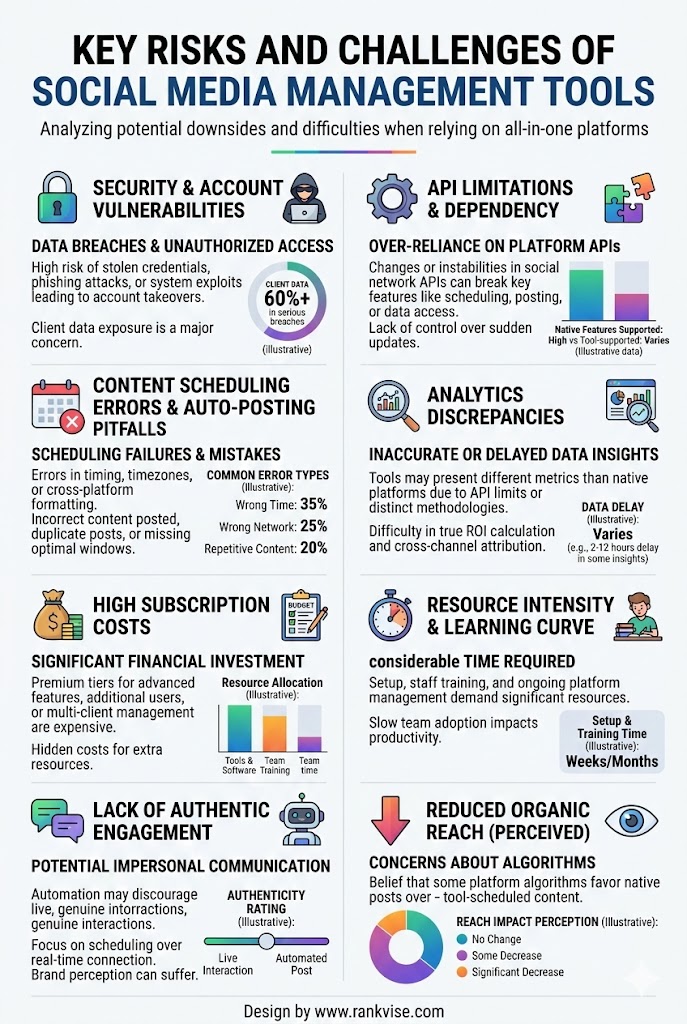
Social media management tools are convenient to use but also come with huge potential risks. The following sections present the main privacy, security, human, and ethical issues:
1. Privacy Risks: Baring Sensitive Data
Social media management tools generally require access to vast amounts of personal and organizational data. They must be able to get login credentials, profile info, analytics data, and sometimes even private messages in order to be effective. That access is, of course, central to their use, but it does increase the level of threat exposure too.
History provides an example of real-world consequences of such threats:
- Hootsuite hack (2013)
Hackers exploited a number of client accounts, which exposed sensitive credentials and demonstrated the danger of centralized social media management. The breach implicated businesses as well as individuals, highlighting the fact that stringent security practices are crucial.
- Buffer security breach (2015)
A data breach exposed user credentials that were stored in the platform, giving attackers unapproved access to certain accounts. The breach reinforced the importance of storing passwords securely encrypted, using two-factor authentication, and continuously monitoring third-party tools.
In addition to breaches, social media management tools carry other privacy concerns, including:
- Unauthorized access to personal or business accounts: Attackers hijack accounts, post content, or steal data.
- Scraping of data by illegal automated agents: Vast amounts of user data can be scraped and misused.
- Sale or exploitation of data: Sensitive information can be transferred to a third party or competitors.
- Leaking through weak passwords: Simple or copied passwords make accounts susceptible to hacking.
For example, while testing a new social media management tool, googling tools like “show my IP,” DNS leak tests, or browser fingerprint checkers can help users understand what network and device information is exposed, highlighting why protecting your connection, location, and traffic matters.
Using unique, robust passwords and activating two-factor authentication also provides an added layer of security.
According to a 2023 Pew Research Center survey, 68 % of social media users have changed their privacy settings as a way of managing their online privacy. This tells us that privacy is not so much an intangible concept, but something that users are actively trying to manage.
2. Algorithmic Manipulation: The Hidden Hand Behind Content
Social media algorithms are coded to sort content on the basis of engagement levels in shares, likes, comments, and view duration.
AI-empowered algorithms search through enormous streams of data to predict the actions of users and display content in the best way it can. Although this might render the experience more user-friendly, it also opens up spaces for manipulation.
Some of the most noteworthy incidents which are indications of these threats include:
- Cambridge Analytica scandal (2018) demonstrated how Facebook data and algorithms can be used to influence voter behavior.
- Study on X (formerly Twitter) showed that small tweaks to algorithms can boost certain voices while silencing others.
Algorithmic manipulation dangers involve the ways in which platform algorithms can skew content visibility, affect engagement, and alter audience behavior:
- Compelled to increase visibility of content: Certain content is given more visibility than organic performance would allow.
- Withholding “other” or contrasting content: Isolated words or blocks of content are withheld, affecting fairness and visibility.
- Controlling engagement reports that mislead marketing strategy: Measurement may not accurately reflect actually how audiences behave, potentially leading to poor decisions.
- Creating echo chambers which reinforce certain viewpoints: Individuals are mainly presented with like-minded viewpoints, limiting thinking diversity.
Experts warn that unchecked algorithmic authority will impact everything from consumer behavior to political discourse. As algorithms get smarter, companies need to remain vigilant about how their content is being filtered, featured, or drowned out, aware of the risks of relying too heavily on automated recommendations.
3. Burnout Epidemic: The Human Cost of Constant Connectivity
It’s easy for some to forget, but behind every automated tweet and advance post, there’s still a human social media expert.
Since the emergence of social media management tools, these experts have faced increased pressure to produce continuous high-quality content on all social media platforms. A 2023 Hootsuite report on social media experts shows:
- 41% of social media managers said their job had a negative impact on their mental well-being. Ongoing content creation and response pressure lead to stress, anxiety, and exhaustion.
- Many marketers feel burned out, and many are considering quitting the business. Requirements of managing multiple platforms and round-the-clock responsiveness create burnout as a prevalent problem in the industry.
Some primary causes of burnout among social media professionals include:
- Constant pressure to create content: Social media managers have to constantly post new content to remain relevant, which is stressful.
- Having to maintain multiple accounts at once: Managing numerous profiles is confusing and can lead to more errors.
- Immediacy of audience engagement: Ongoing observation and responses contribute to the “always-on” pressure.
- Immediacy on multiple platforms: Each platform has different content demands, which multiplies the work.
The “always-on” culture promoted by social media management tools blurs the line between work and personal life. Professionals are more likely to reply outside work hours or feel pressured to reply immediately, inducing stress and risk of suffering anxiety.
Businesses that are not considering this human cost might end up with high turnover rates, decreased productivity, and decreased employee welfare.
4. Security Risks: The Risks Lying in Wait
Other than privacy concerns, social media management tools are serious cybersecurity risks – and common targets. For ease, single, centralized access is needed, but it can also make the effects of a single breach much, much worse.
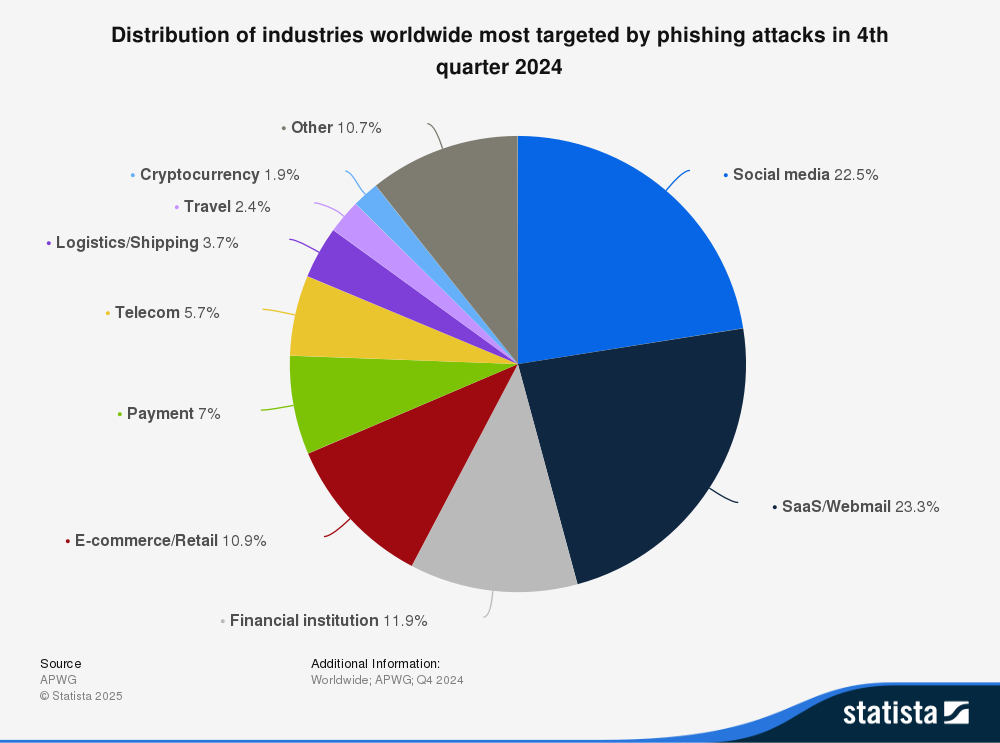
Common security dangers created by social media management tools include:
- Phishing attacks against management tool users: Malicious actors trick users into revealing login details, typically via fake emails or messages.
- Centralized login password theft: Perpetrator steals one password that can be used to open hundreds of accounts, creating risk.
- Malware propagation via hacked accounts: Malicious software can be spread by attackers via trusted accounts to infect followers or clients.
- Mass breaches affecting multiple clients: Centralized tools create one failure to secure multiple users at the same time, amplifying damage.
The 2013 Hootsuite hack demonstrated the danger of having one compromised tool impact multiple accounts simultaneously, whereas Buffer’s 2015 hack highlighted the dangers of storing passwords in attackable formats; these are learning moments that confirm the importance of having strong security measures.
Practical steps to reduce such risks include:
- Strong and unique passwords for all accounts: Reduces the threat of hackers gaining access through recycled or shared credentials.
- Enabling two-factor authentication: Adds an extra security layer, making unauthorized access more difficult.
- Monitoring account activity for suspicious logins: Helps detect breaches early and prevents potential damage.
- Considering temporary measures when trialing new tools: Protects your data and location during initial testing of unfamiliar platforms.
Cybersecurity professionals emphasize that vigilance, layered protections, and regular audits are key to preventing disasters.
5. Ethical Challenges: Manipulation of Public Opinion
It’s not only businesses who are affected by social media management tools, but also public opinion. Ethical challenges are becoming increasingly significant as AI-driven automation and bots play a larger role in our lives.
These risks show up in various ways, especially in how social media tools can be manipulated or even used against us, including:
- Content amplification or suppression by bots: Automated accounts might artificially boost some messages or conceal others, misrepresenting public opinion.
- Impersonation or fake accounts to deceive audiences: Impersonation or misleading profiles can influence narratives and disseminate misinformation.
- AI-generated content aimed at shaping public opinion: AI content can impact beliefs or opinions and often goes unnoticed.
- Subverting democratic processes: Deceptive practices have the potential to destroy trust in institutions and online discourse.
A RAND Corporation study found the potential of AI-generated profiles to subtly sway public opinion, undetected. Even (seemingly) benign information, when amplified by algorithms, can twist perceptions and create information loops.
Businesses and influencers must look beyond sheer efficiency but also at the moral implications of their automated procedures.
Managing the Many Sides of Social Media Management
Social media management software provides undeniable benefits in terms of efficiency, reach, and analytics… but there’s also clearly a dark side to them. Violations of privacy, manipulation of algorithms, security threats, burnout, and ethical concerns are just some of the complexities and possible pitfalls of these platforms.
Historical examples like the Hootsuite hack and Buffer breach have shown us that these risks aren’t just theories but realities with real consequences.
These kinds of risks can be avoided by both individuals and organizations by adopting proactive practices like:
- Data security and robust access controls: Protects confidential information and prevents unauthorized access to accounts.
- Adhering to automation and content promotion ethics: Avoids resource exploitation, without misleading audiences or manipulating interactions.
- Secure employee mental well-being and work-life balance assistance: Protects against burnout and fosters healthy production from social media workers.
- Utilizing security tools when experimenting with new platforms: Adds an added level of protection when testing new devices or environments.
By combining watchfulness, ethics-based decision-making, and content optimization, businesses can still make the most of the power of social media management tools without suffering from their intrinsic weaknesses.
As new technologies keep emerging, we’ll still need to stay alert, keep learning, and manage risks if we want to use the internet safely and responsibly in the long run.