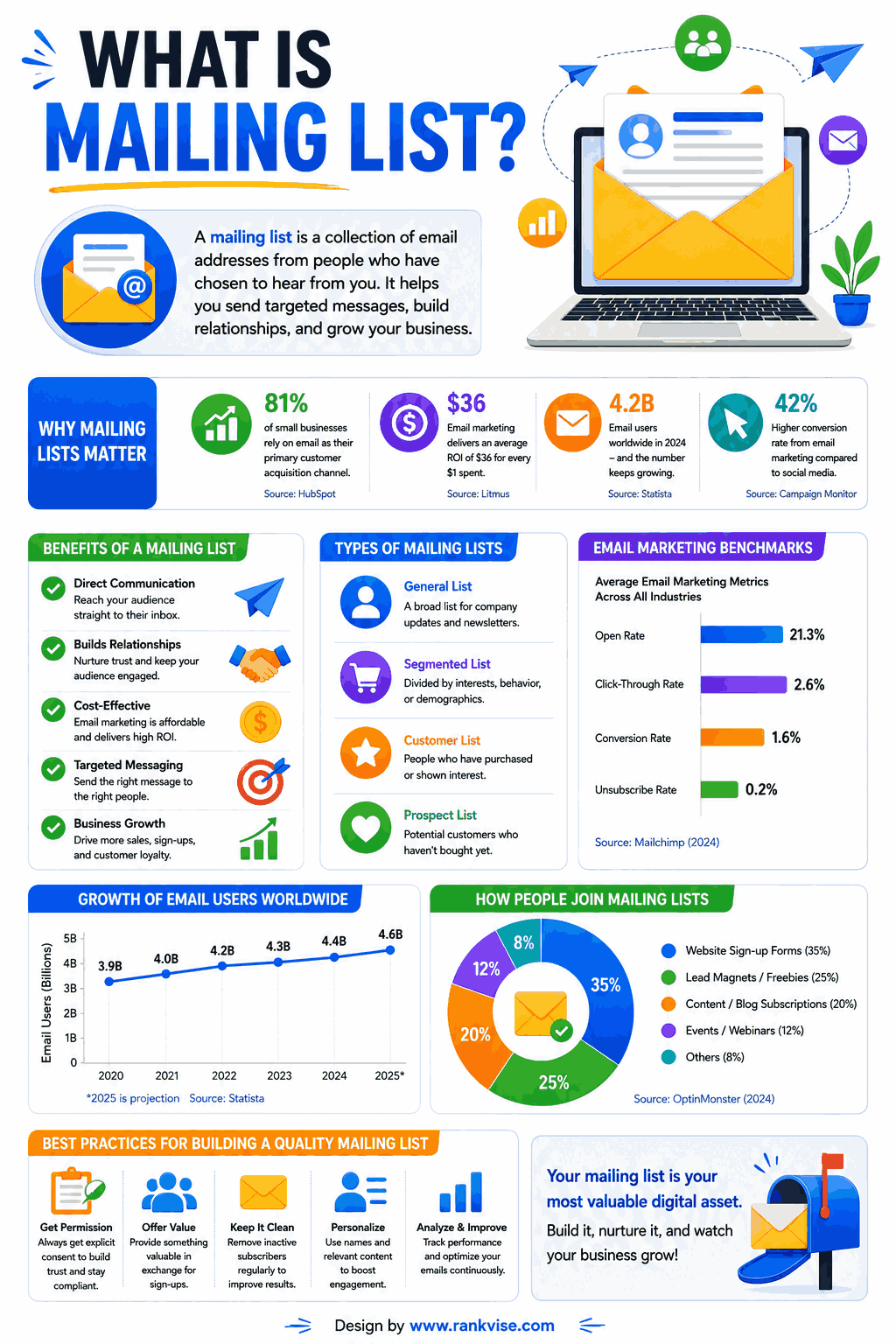
A mailing list is a collection of email addresses gathered from people who want to hear from you. These individuals have opted in to receive updates, offers, or information from your business. Think of it as your direct communication channel with an engaged audience.
- You own the list, so you control reach and audience access independent of social platform algorithms.
- Email marketing delivers high ROI and low maintenance costs, making it one of the most effective channels for conversions.
- Grow lists via clear signup forms, lead magnets, segmentation, consistent value, and regular list cleaning to increase engagement and conversions.
Unlike social media followers, a mailing list belongs entirely to you. No algorithm decides who sees your message. Every subscriber receives your email directly in their inbox. This makes it one of the most reliable marketing assets any business can own.
How Does a Mailing List Work?
The process is straightforward. A visitor lands on your website or interacts with your brand. They provide their email address through a signup form. That address gets stored in your email list database. You then send messages to everyone on that list simultaneously.
Most businesses use an email marketing platform to manage their subscriber list. These tools handle signups, organize contacts, and send bulk emails. They also track open rates, clicks, and engagement metrics. Popular platforms include Mailchimp, ConvertKit, and ActiveCampaign.
Types of Mailing Lists You Should Know
Not every mailing list serves the same purpose. Here are the main types businesses use:
- Newsletter list – Subscribers receive regular updates, tips, or curated content on a set schedule.
- Promotional list – Focused on sending deals, discounts, and product announcements.
- Transactional list – Triggered by specific actions like purchases, signups, or password resets.
- Segmented list – Divided into groups based on interests, behavior, or demographics.
- Internal list – Used within organizations for team communication and announcements.
Each type serves a distinct business goal. Choosing the right one depends on your audience and objectives.
Why Every Business Needs an Email List
Direct Access to Your Audience
Social platforms can change their rules overnight. Your reach can drop without warning. A mailing list gives you guaranteed access to people who already expressed interest in your brand. No middleman controls the relationship.
Higher Return on Investment
Email marketing delivers an average return of 36 USD for every 1 USD spent. That makes it one of the highest-performing digital marketing channels available today. The cost of maintaining a subscriber list remains low compared to paid advertising.
Better Personalization and Targeting
When someone joins your mailing list, you learn about their preferences over time. You can send personalized content based on their behavior. This targeted approach increases open rates, click-through rates, and conversions significantly.
Ownership and Control
You own your email list completely. If a social media platform shuts down tomorrow, your subscriber list remains untouched. This independence makes email marketing a long-term, sustainable strategy.
How to Build a Mailing List From Scratch
Step 1: Choose the Right Email Marketing Platform
Select a tool that fits your budget and needs. Beginners can start with free plans offered by most providers. Look for features like automation, segmentation, and analytics.
Step 2: Create a Compelling Signup Form
Your opt-in form should clearly explain what subscribers will receive. Place it prominently on your website. Keep the form simple—name and email address are usually enough.
Step 3: Offer a Lead Magnet
People need a reason to share their email address. Offer something valuable in exchange:
- A free ebook or guide
- A discount code for first-time buyers
- Exclusive access to content or tools
- A free mini-course delivered via email
- Early access to new products or features
Step 4: Promote Your Signup Opportunity
Share your signup form across all channels. Add it to your website header, footer, and blog posts. Mention it on social media profiles. Include a link in your email signature.
Step 5: Deliver Consistent Value
Once people join your mailing list, send valuable content regularly. Inconsistent communication causes subscribers to forget you. Aim for at least one email per week to stay top of mind.
Best Practices for Managing Your Subscriber List
| Practice | Why It Matters |
|---|---|
| Use double opt-in | Confirms subscriber intent and improves list quality |
| Clean your list quarterly | Removes inactive addresses and reduces bounce rates |
| Segment your contacts | Enables targeted messaging and higher engagement |
| Personalize subject lines | Increases open rates by up to 26% |
| Include an unsubscribe link | Required by law and builds trust |
| Test before sending | Catches errors and ensures proper formatting |
Common Mistakes to Avoid With Your Email List
Many businesses make avoidable errors that hurt their email marketing results. Watch out for these pitfalls:
- Buying email lists instead of building them organically
- Sending too many emails and overwhelming subscribers
- Ignoring mobile optimization for email design
- Failing to segment your audience properly
- Skipping A/B testing on subject lines and content
- Not tracking key metrics like open rates and unsubscribe rates
Purchased lists damage your sender reputation. They also violate regulations like GDPR and CAN-SPAM. Always grow your mailing list through genuine opt-ins.
Mailing List vs. Email Marketing: What Is the Difference?
A mailing list refers specifically to the collection of email addresses. Email marketing is the broader strategy of communicating with that list. Your subscriber list is the foundation. Email marketing includes the campaigns, automation, copywriting, and analytics built on top of it.
You cannot do email marketing without a mailing list. But simply having a list without a strategy delivers minimal results. Both elements work together for success.
How a Mailing List Fits Into Your 2026 Marketing Strategy
Modern marketing demands multiple touchpoints with potential customers. A mailing list connects your content marketing, social media efforts, and sales funnel. It nurtures leads who are not ready to buy immediately.
Businesses using email automation convert subscribers into customers faster. Automated welcome sequences, abandoned cart emails, and re-engagement campaigns run without manual effort. This efficiency makes email one of the most scalable marketing channels.
In 2026, privacy regulations continue tightening. Third-party cookies are disappearing. First-party data from your email list becomes increasingly valuable. Building your subscriber base now prepares you for a cookieless future.
Measuring the Success of Your Mailing List
Track these key metrics to evaluate performance:
- Open rate – Percentage of subscribers who open your email (average: 20–25%)
- Click-through rate – Percentage who click a link inside your email
- Conversion rate – Percentage who complete your desired action
- List growth rate – Speed at which new subscribers join
- Unsubscribe rate – Percentage leaving your list per campaign
- Bounce rate – Emails that fail to reach the inbox
Review these numbers monthly. They reveal what resonates with your audience and what needs improvement.
FAQs
A mailing list lets businesses communicate directly with interested audiences through email. It drives engagement, builds relationships, and generates sales without relying on third-party platforms.
Use free plans from platforms like Mailchimp or MailerLite. Add a signup form to your website, offer valuable content, and promote your list across your existing channels.
Not exactly. A mailing list is the collection of email addresses. A newsletter is one type of content you send to that list. Your list can support newsletters, promotions, and automated sequences.
Most businesses see good results with one to three emails per week. Consistency matters more than frequency. Choose a schedule you can maintain without sacrificing quality.
Absolutely. Email marketing remains one of the highest-ROI channels available. With growing privacy restrictions limiting ad targeting, owned email lists become even more valuable for reaching customers directly.