A dental clinic spends money on a beautiful website. A plumbing company prints thousands of flyers. A local gym runs Instagram ads to the whole city.
- Optimize your Google Business Profile: choose right categories, complete fields, add photos and posts, keep hours accurate to improve local visibility.
- Collect recent reviews and reply to every one: ask after service, use short review links or QR codes, never buy fake reviews.
- Respond to leads fast: enable click-to-call and WhatsApp, use simple CRM, auto-replies, and aim to contact every lead within 15 minutes.
Months later, the phones are still quiet.
Local businesses do not need more visibility everywhere. They need the right people nearby to find them, trust them, and contact them at the moment they need help.
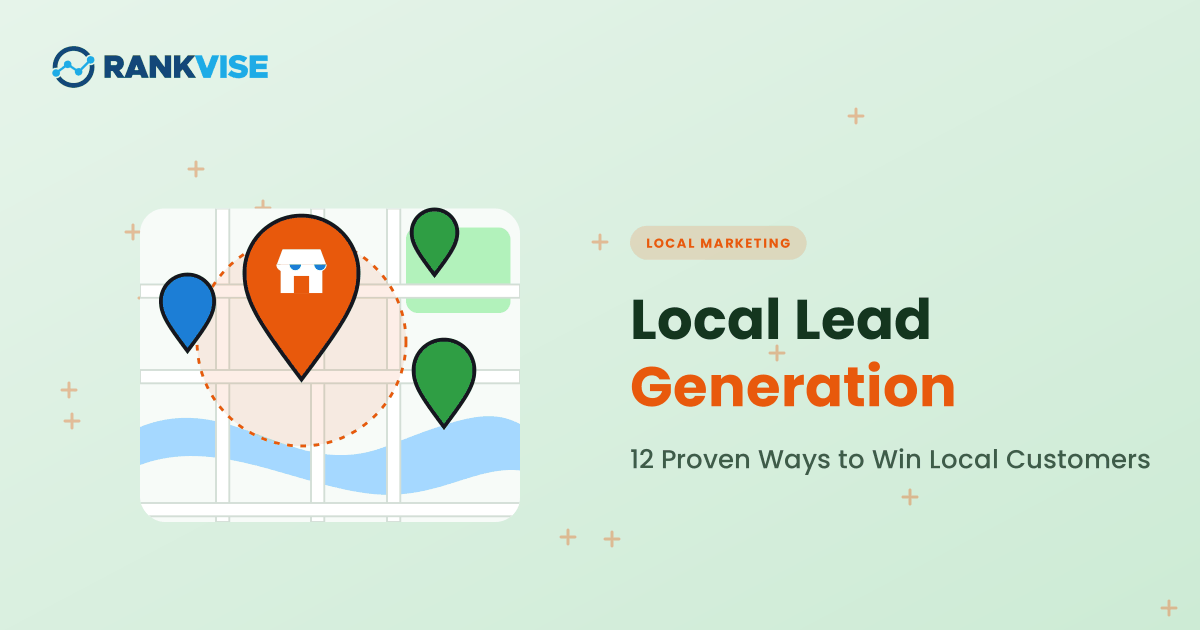
That is what local lead generation is about. This guide covers 12 proven ways to generate local leads in 2026, from Google Business Profile and reviews to local ads, SEO, and fast follow-up.
What Is Local Lead Generation?
Local lead generation means attracting potential customers within a specific geographic area and turning them into enquiries.
A local lead might be:
- A phone call from someone who found you on Google Maps.
- A booking request through your website.
- A WhatsApp message from a nearby customer.
- A form fill from a local ad.
- A walk-in who saw your reviews online.
It works best for businesses that serve customers in a defined area, such as clinics, salons, restaurants, real estate agents, home services, coaching centres, law firms, and local retail.
Why Local Lead Generation Is Different in 2026
Local buyers behave differently from national or global buyers. They often want help quickly, and they choose based on proximity, reviews, and trust.
Recent research shows how much reviews shape local decisions. BrightLocal’s Local Consumer Review Survey 2026 found:
| Finding | Statistic |
|---|---|
| Consumers who read reviews for local businesses | 97% |
| Consumers who only consider reviews from the last three months | 74% |
| Consumers who require at least a 4-star rating | 68% |
| Consumers likely to use businesses that respond to all reviews | 80% |
| Consumers who read AI-generated review summaries | 82% |
AI is also changing local search. The same survey found that ChatGPT and other AI tools have become the third most used source for local business research. Your online presence now needs to work for both people and AI assistants.
1. Optimise Your Google Business Profile
For most local businesses, Google Business Profile (GBP) is the single most important lead source. It powers your listing in Google Maps and the local results on Google Search.
Google says local rankings are mainly based on three factors:
- Relevance: How well your profile matches what someone searched for.
- Distance: How close you are to the searcher or the location in their search.
- Prominence: How well known your business is, including reviews and links.
How to Improve Your Profile
- Verify your business.
- Choose the right primary category, plus relevant secondary categories.
- Complete every field: address or service area, hours, phone, website, services, and attributes.
- Add real photos and videos of your team, premises, and work.
- Post updates about offers, events, and new services.
- Answer common questions in your description and services.
- Keep hours accurate, including holidays.
Google also states there is no way to pay for a higher position in its local results. Rankings must be earned through a strong profile and reputation.
2. Build a Steady Flow of Reviews
Reviews influence both rankings and buying decisions. And recency matters. Old reviews carry less weight with customers.
How to Get More Reviews
- Ask at the right moment, such as right after a successful job or appointment.
- Make it easy with a short review link or QR code.
- Send a follow-up message by WhatsApp, SMS, or email.
- Train staff to ask naturally, not pushily.
Never buy fake reviews or offer rewards for positive reviews only. BrightLocal found that 97% of consumers believe businesses using fake reviews should face consequences. Platforms may also remove reviews or penalise listings.
Respond to Every Review
Reply to positive and negative reviews. Keep responses personal, not template-like. For negative reviews, stay calm, apologise where appropriate, and offer to resolve the issue offline.
3. Create Location Pages on Your Website
If you serve several areas, create a helpful page for each main location or service area.
A strong location page includes:
- The services you offer in that area.
- Local details, such as landmarks, neighbourhoods, or travel times.
- Reviews or case studies from customers in that area.
- A map, address, or service area information.
- Clear calls to action: call, WhatsApp, or book.
Avoid thin pages that swap only the city name. Each page should offer real, useful information.
4. Target Local Keywords With Helpful Content
People search for local services in predictable ways:
- “[service] near me”
- “[service] in [city or neighbourhood]”
- “best [service] in [city]”
- “[service] open now”
Build content that answers local questions. For example, a home renovation company might write “How much does kitchen renovation cost in Ahmedabad?” or “Best time of year to paint your house in Mumbai.”
Helpful local content attracts searchers and builds trust before they contact you.
5. Keep Your Business Details Consistent Everywhere
Your business name, address, and phone number (often called NAP) should match across:
- Your website.
- Google Business Profile.
- Social media profiles.
- Local directories.
Inconsistent details confuse customers and search engines.
List Your Business on Relevant Directories
Choose directories that your customers actually use. Examples include:
- India: Justdial, IndiaMART, Sulekha, and Practo for healthcare.
- US: Yelp, Angi, Nextdoor, and the Better Business Bureau.
- UK: Yell, Checkatrade, and Trustpilot.
- Everywhere: Apple Maps, Bing Places, and Facebook.
Quality matters more than quantity. A few relevant directories beat dozens of low-quality ones.
6. Use Google Local Services Ads (Where Available)
Local Services Ads (LSAs) appear at the top of Google for many service searches. They are available for certain service categories and countries.
The key difference from normal Google Ads is how you pay. With LSAs, you pay for valid leads, such as calls, messages, or bookings, rather than clicks.
Google’s help pages explain that:
- Pricing varies by location, job type, and lead channel.
- Message leads usually cost less than phone leads.
- Leads judged low quality may receive credits automatically, with some exceptions.
Check eligibility in your country and category before planning a budget.
7. Run Location-Targeted Google Ads
If LSAs are not available, standard Google Search Ads with location targeting are a strong option.
Best practices:
- Target a tight radius around your service area.
- Use call assets so mobile users can call in one tap.
- Add location assets linked to your Google Business Profile.
- Write local ad copy, such as “Same-Day AC Repair in Satellite, Ahmedabad.”
- Send traffic to local landing pages, not your homepage.
- Track calls and form fills as conversions in Google Ads and GA4.
8. Run Local Social Media Ads
Meta ads on Facebook and Instagram work well for local businesses with visual offers, such as salons, gyms, restaurants, events, and real estate.
Tips:
- Target people within a set radius of your location.
- Use lead forms, WhatsApp click-to-chat, or call buttons.
- Show real local faces, places, and customer stories.
- Promote a clear offer, such as a free trial class or consultation.
9. Make It Easy to Contact You
Many local leads are lost because contacting the business is too hard.
Offer several easy options:
- Click-to-call buttons on mobile.
- WhatsApp chat, especially important in India and many other markets.
- Short forms with only essential fields.
- Online booking for appointments.
- Clear business hours and response times.
Put your phone number and main call to action at the top of every page.
10. Respond to Leads Fast
Speed is one of the biggest advantages a local business can have. Local customers often contact several businesses and choose whoever responds first.
Ways to respond faster:
- Set up instant auto-replies that confirm you received the enquiry.
- Route calls and messages to the right person immediately.
- Use a simple CRM to track every lead.
- Call back missed calls within minutes, not hours.
- Set a team rule, such as “every lead contacted within 15 minutes during business hours.”
11. Build Local Partnerships and Referrals
Some of the best local leads come from people who already trust you.
Ideas:
- Partner with complementary businesses. A wedding photographer can partner with venues, decorators, and makeup artists.
- Create a referral programme that rewards customers who refer friends.
- Sponsor local events, clubs, or school activities.
- Join local business groups and chambers of commerce.
- Host workshops or free sessions for the community.
12. Track Where Your Leads Come From
You cannot improve what you do not measure. Track every lead back to its source.
Use:
- GA4 to track form submissions and key website actions.
- Call tracking numbers for different campaigns.
- UTM tags on social and email links.
- GBP insights for calls, direction requests, and website clicks.
- A simple question at booking: “How did you hear about us?”
Review results monthly. Put more budget into channels that bring quality leads, not just the most leads.
Local Lead Generation Channels at a Glance
| Channel | Cost | Speed to results | Best for |
|---|---|---|---|
| Google Business Profile | Free | Medium | Almost every local business |
| Reviews | Free | Medium | Trust and rankings |
| Local SEO and location pages | Low to medium | Slow | Long-term, steady leads |
| Local Services Ads | Pay per lead | Fast | Eligible service businesses |
| Google Search Ads | Pay per click | Fast | Urgent, high-intent searches |
| Meta ads | Pay per result | Fast | Visual offers and events |
| Directories | Free to low | Medium | Visibility and credibility |
| Referrals and partnerships | Low | Slow to medium | High-trust, high-value leads |
Common Local Lead Generation Mistakes
- Ignoring Google Business Profile. It is often the biggest free lead source available.
- Letting reviews go stale. Customers look for recent feedback.
- Targeting too wide an area. Paying for clicks from people you cannot serve wastes budget.
- Sending ad traffic to the homepage. Use focused local landing pages.
- Slow follow-up. Many leads choose the first business to respond.
- Not tracking calls. Many local leads come by phone, so track them.
- Buying fake reviews. The risk to your reputation is not worth it.
Real-World Example: A Local Clinic Grows Its Leads
Consider a physiotherapy clinic in Ahmedabad relying mainly on walk-ins and word of mouth.
The clinic made these changes over three months:
- Completed its Google Business Profile with services, photos, and weekly posts.
- Asked every happy patient for a review using a QR code at reception.
- Replied personally to every review.
- Created pages for its main services, such as back pain and sports injury treatment.
- Ran Google Search Ads within a 5 km radius, with call assets.
- Added WhatsApp booking and a rule to reply within 15 minutes.
- Tracked calls, WhatsApp chats, and bookings by source.
Calls and direction requests from Google rose steadily, and the clinic learned which services brought in the most valuable patients. Budget moved towards the channels that worked best.
Conclusion: Win Local Leads by Being Easy to Find, Trust, and Contact
Local lead generation is not about being everywhere. It is about showing up where nearby customers are looking, earning their trust, and making it easy to take the next step.
Start with the basics: a complete Google Business Profile, a steady flow of recent reviews, and fast responses. Then add local SEO, targeted ads, and partnerships.
Track every lead, learn what works, and keep improving. Local customers are searching right now. Make sure they find you first.
FAQs
What is local lead generation?
It is the process of attracting potential customers in a specific area and turning them into calls, bookings, or enquiries.
What is the best way to generate local leads?
Start with an optimised Google Business Profile and recent reviews. Add local SEO, targeted ads, and fast follow-up.
How do Google Local Services Ads work?
You pay for valid leads, like calls or messages, instead of clicks. Availability depends on your country and business category.
How important are reviews for local businesses?
Very. BrightLocal found 97% of consumers read reviews for local businesses, and 74% only consider recent ones.
How can I get more local leads without ads?
Optimise your Google Business Profile, collect reviews, publish local content, list in relevant directories, and build referral partnerships.