Skip to content
Click fraud has become one of the most damaging problems for digital advertisers, especially as businesses rely more on automated systems and paid traffic to reach customers. In 2025, the issue has grown more complex than ever before, making strong protection essential.
- Use real-time AI-driven protection to detect and block sophisticated bot and human-driven click fraud across channels.
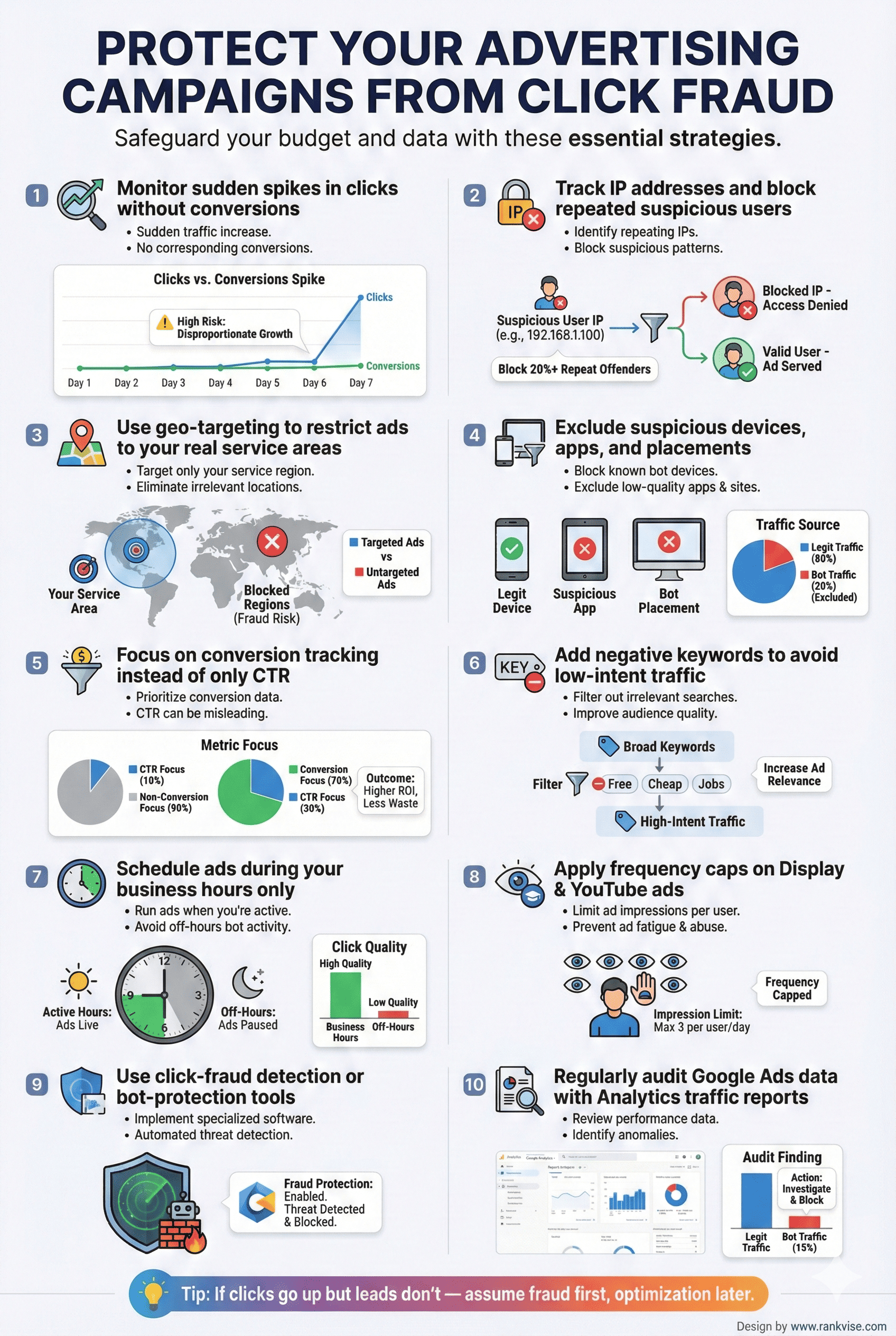
- Monitor campaign metrics closely and act on unusual spikes, poor post-click engagement, or repeated interactions from same sources.
- Limit exposure by tightening targeting, removing low-quality placements, setting frequency caps, and integrating fraud tools with accounts.
Many companies now use solutions such as TrafficGuard click fraud protection to safeguard their spending, remove fake engagement, and improve overall performance.
This guide explains how click fraud works today, why it has become such a serious concern, and the steps you can take to protect your campaigns throughout 2025.
What is Click Fraud in Today’s Digital Environment?
Click fraud involves any intentional action that triggers your ads without genuine interest from a real user. The purpose is usually to drain your budget, distort your analytics, or interfere with your advertising goals.
What makes 2025 different is the sophistication of fraudulent activity. Instead of simple bots, advertisers now deal with advanced scripts that act like humans, global click farms, and systems that use AI to imitate real behavior.
Common forms of click fraud
Bot-generated activity that simulates clicks and user actions
Human click farms are designed to create realistic engagement
Competitors repeatedly click ads to sabotage your budget
Publishers are inflating clicks on their own ad placements
Why Click Fraud Has Become Worse in 2025
Click fraud has increased for several reasons. The digital world is more crowded, and advertisers use more channels than ever before. Ads now run across streaming platforms, mobile apps, niche websites, and large programmatic networks. Each channel creates more opportunities for fraud to slip through unnoticed.
Artificial intelligence plays a part too. While marketers use advanced AI tools to optimize results, fraudsters use AI to hide their activity, making it harder to detect. This combination makes traditional defenses far less effective than they used to be.
The Real Impact Click Fraud Has on Your Campaigns
The financial damage caused by click fraud is significant, but the effects go much deeper than wasted budget.
Loss of ad spend
Many businesses lose a large portion of their advertising money each month without realizing it. Fake clicks can easily consume thousands of dollars before they are detected.
Corrupted analytics
False engagement skews your data. When clicks aren’t real, your reports no longer reflect how true customers behave, making it harder to make good decisions.
Lower performance
When fraudulent traffic mixes with real traffic, your optimization systems struggle to identify the right audience. As a result, your cost-per-click rises, conversions drop, and your campaigns become less effective.
Bad targeting decisions
If your data is polluted by fake actions, you may end up targeting the wrong users, scaling the wrong campaigns, or investing in channels that appear successful but are actually filled with invalid traffic.
How TrafficGuard Click Fraud Protection Helps
TrafficGuard click fraud protection uses real-time monitoring, machine learning, and advanced analysis to identify suspicious clicks before they affect your campaigns. Instead of simply reporting invalid activity, it actively blocks harmful clicks so your advertising budget is used only on genuine users.
How the technology works
Analysis of IP addresses, devices, and locations to filter out suspicious sources
Monitoring of user behavior to detect patterns that do not resemble real engagement
Machine learning models that adapt to new fraud techniques
Instant blocking so fraudulent clicks never reach your ads
By stopping click fraud early, you keep your budget focused on the people who actually matter.
The Role of Artificial Intelligence in Detecting Fraud
AI is now one of the most essential tools in preventing click fraud. Modern systems compare behavior across millions of interactions and identify patterns that are unlikely to come from real users.
Because fraud evolves so quickly, AI gives protection tools the ability to recognize suspicious activity before it becomes widespread. This predictive approach is necessary in 2025, when fraud tactics change almost weekly.
Best Practices to Protect Your Advertising Campaigns in 2025
Even with strong protection software, advertisers should follow good practices to keep their campaigns safe.
Review your campaign performance consistently
Unusual spikes in clicks, impressions, or bounce rates may be early warnings of fraud. Regular monitoring helps you catch these shifts quickly.
Improve your targeting strategy
Narrower, more precise targeting reduces the space fraudsters can operate in. When your audience is specific, bots and click farms are less likely to hit your ads.
Identify and remove questionable placements
Not every website or app is trustworthy. Removing low-quality sources helps filter out a large percentage of invalid traffic.
Limit how often individuals can interact with your ads
Setting frequency caps prevents repeated clicks from the same user or device, which is often a sign of fraudulent activity.
Track post-click behavior
If people click but never stay on the page or interact meaningfully, your traffic quality may be compromised. This is often one of the strongest indicators of click fraud.
Why Many Advertisers Prefer TrafficGuard in 2025
It’s stands out because it provides automated blocking, detailed insights, and wide compatibility with major advertising platforms. Its multi-layered protection approach ensures that fraud is detected and stopped across search, social media, and programmatic channels.
Notable advantages
Layers of protection built on machine learning, behavior tracking, and global threat intelligence
Real-time reporting that explains which clicks were blocked and why
Better campaign performance due to cleaner data and higher-quality traffic
Consistent protection across Google Ads, Meta Ads, app campaigns, and more
With clearer data and fewer fake interactions, advertisers have more confidence in their results and strategies.
The Way Click Fraud Shows Up on Different Platforms
Each advertising platform experiences fraud in unique ways.
Google Ads
Google’s wide targeting options and automated bidding make it a frequent target for bots and automated fraud systems.
Meta platforms such as Facebook and Instagram
These platforms often face human click farms because social ads receive high engagement and require less precision to exploit.
Programmatic advertising
Because programmatic systems buy impressions automatically across thousands of websites, fraudulent publishers can easily inject fake traffic into the mix.
Understanding these patterns helps advertisers approach each channel with a smarter, more prepared mindset.
Steps to Add Click Fraud Protection to Your Campaigns
Setting up an effective defense doesn’t have to be complicated. Integrating fraud protection into your advertising workflow usually involves a few practical steps.
Determine which channels experience the most suspicious activity
Focus your protection efforts on the platforms where you spend the most or where traffic quality is inconsistent.
Connect your accounts to your protection tool
Once linked, systems begin monitoring and filtering invalid clicks immediately.
Review the insights you receive
Fraud reports highlight risky sources, problematic placements, and unusual patterns. Use this information to refine your targeting and exclude suspicious areas.
Adjust your bidding and optimization
When fraudulent clicks disappear, your bidding algorithms automatically shift toward higher-quality traffic, improving performance naturally.
Conclusion
Click fraud is a growing challenge, and in 2026, it demands more attention than ever. It drains budgets, disrupts analytics, and weakens the performance of even the best campaigns.
By building a strong defense and improving the quality of your traffic, you give your campaigns the best chance to succeed. Protecting your budget means protecting your growth, and taking action now ensures your marketing efforts remain strong, accurate, and effective throughout the year.
Frequently Asked Questions
Most click fraud originates from automated bots, click farms, competitors, or dishonest publishers seeking to boost their revenue. These sources generate clicks that look real but have no intention of converting.
Warning signs include sudden bursts of clicks, poor engagement on your landing pages, repeated activity from the same device or region, and conversion rates that drop sharply without explanation.
It is nearly impossible to eliminate fraud, as attackers constantly adapt their tactics. However, advanced protection can block the vast majority of invalid activity and significantly reduce your losses.
More accessible tools, cheaper devices, wider device networks, and the use of AI by fraudsters make it easier than ever for scammers to operate. As digital advertising grows, so do the opportunities for exploitation.