Skip to content
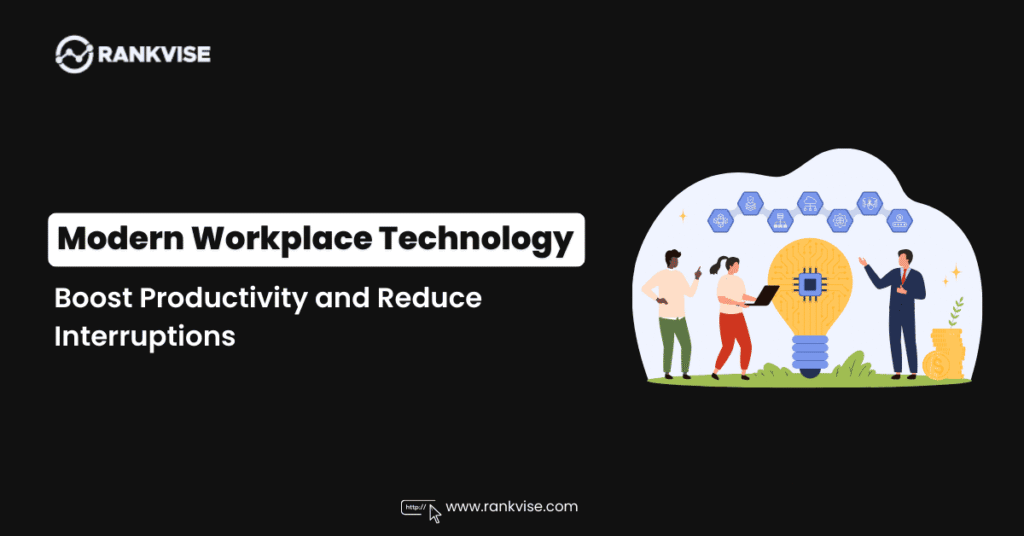
An innovative solution, Luxafor develops structured workplace technology designed to convert abstract productivity principles into operational systems. Modern work environments are defined by high information density, hybrid communication layers, and constant interruption risk. Productivity is therefore determined not only by skill, but by the quality of technological infrastructure supporting attention control.
- Technology now regulates workflows and behavior, shifting from passive tools to active focus-preserving systems.
- Automation and integration reduce administrative friction, syncing statuses and triggering routines so employees preserve attention for primary tasks.
- Visible, configurable signals like LED busy lights lower interruptions, align physical and digital presence, and stabilize deep work intervals.
Workplace technology has evolved from passive tools to active workflow regulators. Devices now influence behavioral patterns, communication timing, and environmental stability. Structured integration determines whether technology amplifies or fragments focus.
The Evolution of Productivity Tools
Productivity tools initially focused on task recording and communication acceleration. Email platforms, shared drives, and messaging systems increased speed but also introduced persistent accessibility. The next phase required regulation rather than expansion.
Uncontrolled communication channels created cognitive saturation. Organizations recognized that efficiency requires filtration mechanisms, not merely connectivity.
From Email to Smart Office Devices
Early digital tools emphasized information transmission. Contemporary smart office devices emphasize attention preservation and environmental optimization. The shift reflects a deeper understanding of cognitive limits.
| Tool Generation | Primary Function | Productivity Impact |
| Email systems | Message exchange | Increased reach, higher interruption rate |
| Instant messaging | Real-time dialogue | Accelerated response, fragmented focus |
| Smart office devices | Status signaling & automation | Reduced interruption, stabilized output |
The transition demonstrates a move from reactive communication to structured signaling. Workplace technology now shapes behavior rather than merely facilitating contact.
Luxafor contributes to this evolution by delivering configurable presence indicators, USB and Bluetooth devices, and desk-level productivity tools that align physical visibility with digital status.
Automation and Efficiency
Automation reduces manual cognitive overhead. Calendar-synchronized status lights, automated workflow triggers, and programmable buttons eliminate repetitive micro-decisions. Efficiency increases when routine actions become system-driven.
Core automation benefits include:
- Automatic meeting-based status updates
- Integration with Microsoft Teams and collaboration platforms
- Workflow triggers via Zapier connections
- Reduced manual status switching
These mechanisms decrease attentional residue caused by minor administrative actions. Employees remain engaged in primary tasks rather than managing peripheral signals.
Automation must remain transparent and predictable. Structured configuration ensures reliability across teams.
Luxafor Flag2 and Visual Productivity Signals
Visual productivity signals provide immediate availability clarity. The Luxafor Flag2 device functions as a high-visibility busy light and availability indicator within shared spaces. It translates cognitive occupancy into standardized visual communication.
In open offices and hybrid environments, physical presence no longer indicates availability. Visual signaling compensates for this ambiguity.
Why Status Visibility Matters?
Status visibility reduces interpretive errors. Colleagues can determine interaction timing without initiating conversation. This minimizes unnecessary dialogue.
| Visibility Level | Interaction Clarity | Interruption Probability |
| No indicator | Ambiguous | High |
| Informal cues | Partial clarity | Moderate |
| LED status signal | Explicit | Low |
The data structure illustrates how explicit signaling lowers interruption risk. Reduced ambiguity correlates with stabilized focus intervals.
Luxafor’s presence indicators integrate with digital platforms to synchronize meeting and call statuses. The system ensures alignment between virtual presence and physical signaling.
Reducing Interruptions Through Design
Effective interruption control requires environmental design rather than behavioral willpower alone. LED-based busy light solutions create visible cognitive boundaries without social confrontation. Design replaces negotiation.
Design-driven interruption reduction features include:
- High-contrast LED visibility
- Customizable color coding for organizational standards
- Desk and meeting room adaptability
- Compact USB-powered deployment
These characteristics enable scalable implementation across corporate infrastructures. The device integrates seamlessly into workspace optimization strategies.
Structured design lowers stress and enhances team awareness. Employees operate within a predictable interaction framework.
Choosing Tools That Support Focus
Not all workplace technology improves productivity. Tools must reduce noise, automate routine signals, and protect deep work intervals. Selection criteria should prioritize cognitive sustainability over novelty.
Luxafor’s ecosystem combines busy light indicators, focus tools, collaboration devices, and air quality monitors into a unified smart office framework. This integration supports both operational efficiency and employee well-being.
A well-designed technology stack minimizes friction. It supports time management, structured deep work cycles, and transparent availability communication.
Organizations adopting structured visual signaling report measurable reductions in spontaneous interruptions. Focus becomes enforceable rather than aspirational.
Final Thoughts on Smart Work Environments
Modern productivity is shaped by infrastructure decisions. Unregulated communication tools fragment attention, whereas structured signaling systems stabilize performance. Smart environments balance accessibility with controlled interaction.
Luxafor delivers practical, reliable workplace technology grounded in real workflow analysis. From Luxafor Flag2 presence indicators to integrated automation solutions, each device serves a defined operational purpose.
Evaluate your current technology stack. Implement structured visual productivity signals and build a smart work environment that protects focus, reduces stress, and improves measurable output.