Skip to content

Every sales team has people who hit quota. They follow the process, close deals, and earn respectable commissions. These are good salespeople. But then there are the few who consistently outperform everyone else by wide margins.
- Adopt a transformation mindset: sell business outcomes and future value, not features, to shape buyer thinking and drive loyalty.
- Practice deliberate habits: prepare deeply for every meeting, pursue continuous learning, and deliver unsolicited value that compounds over time.
- Build trust through genuine relationships: remember personal details, support clients beyond transactions, earning larger deals, referrals, and long term retention.
Research from Kurlan & Associates reveals that top-performing salespeople are 619% stronger than their bottom-tier peers. That gap is not explained by talent alone. The difference between a good sales person and a great sales person comes down to mindset, habits, and approach.
This guide explores those differences in detail. Whether you manage a team or carry a quota yourself, understanding these gaps will change how you think about sales performance.
What Makes Someone a Good Sales Person?
A good sales person delivers solid results. They understand the product, follow the sales process, and meet their targets most quarters. Organizations depend on these reliable performers to keep revenue predictable.
Good salespeople typically demonstrate these traits:
- They know their product features thoroughly and present them clearly
- They follow up with leads consistently and manage their pipeline
- They handle common objections using trained responses
- They meet or approach quota regularly throughout the year
- They maintain professional relationships with their customers
These are valuable qualities. Most companies would thrive if every rep performed at this level. But good is not great, and the gap between the two creates enormous differences in revenue.
What Elevates Someone to a Great Sales Person?
A great sales person does not just close deals. They create opportunities that did not exist before. They change how buyers think about their own problems. This shift from reactive selling to proactive value creation defines greatness.
Great salespeople operate differently at a fundamental level. They do not sell products. They sell outcomes and, ultimately, feelings. A good rep tells you what a product does. A great rep shows you how your business transforms after using it.
This distinction matters because buyers rarely make decisions based on features alone. They buy based on the future they envision. Great salespeople paint that picture vividly and make it feel achievable.
Core Differences Between Good and Great Salespeople
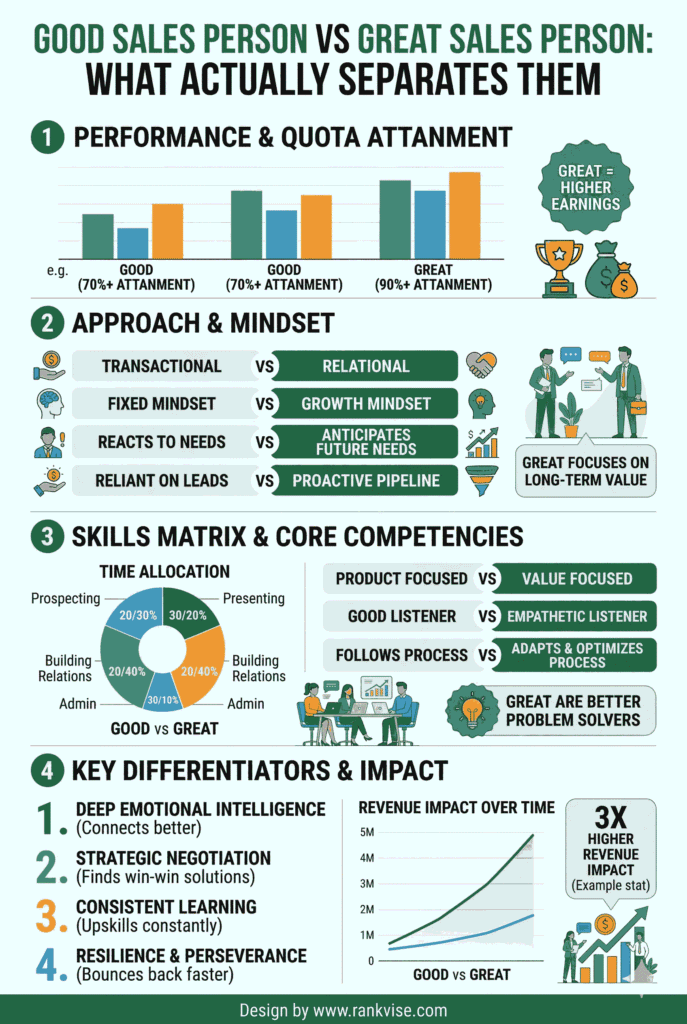
The gaps between solid performers and top performers show up across every aspect of the sales process. Here is a detailed comparison.
| Area | Good Sales Person | Great Sales Person |
|---|---|---|
| Approach | Follows the sales script and process | Adapts strategy to each unique buyer situation |
| Listening | Listens to respond | Listens to deeply understand pain points |
| Focus | Product features and pricing | Business outcomes and long-term value |
| Objection handling | Uses rehearsed responses | Anticipates objections before they surface |
| Relationships | Maintains professional rapport | Builds genuine trust that outlasts transactions |
| Mindset | Targets quota achievement | Pursues continuous personal and professional growth |
| Pipeline | Manages existing opportunities | Creates new opportunities through insight and initiative |
| Follow-up | Checks in periodically | Adds value with every single interaction |
These differences compound over time. A great sales person does not just close more deals. They close bigger deals, retain more customers, and generate more referrals.
The Mindset Gap: Why Sales Thinking Matters More Than Tactics
Skills can be taught. Mindset must be cultivated. This is where the real separation begins between good and great sales performance.
Good Salespeople Think About Transactions
A good sales person approaches each interaction with a clear goal: move the deal forward. They focus on pipeline stages, conversion rates, and closing timelines. This transactional thinking produces steady results.
However, it also limits ceiling potential. When you think deal by deal, you miss the larger patterns. You react to what buyers tell you instead of shaping the conversation proactively.
Great Salespeople Think About Transformation
Great salespeople ask a fundamentally different question. Instead of “How do I close this deal?” they ask “How do I change this person’s business for the better?” This transformation mindset shifts every conversation.
They invest time understanding the buyer’s industry, competitive pressures, and strategic goals. They connect their solution to those bigger ambitions. Buyers feel understood rather than sold to, and that feeling drives loyalty.
Sales Habits That Separate Top Performers From the Rest
Daily habits reveal priorities. Great salespeople build routines that compound their advantage over months and years.
Preparation Before Every Conversation
Good salespeople review notes before a call. Great salespeople research the buyer’s recent company news, industry trends, and personal milestones. They enter every meeting with contextual knowledge that earns immediate respect.
This preparation takes 15 to 20 minutes per meeting. Over a year, it translates to dramatically stronger relationships and higher win rates.
Continuous Learning Beyond Required Training
Good salespeople attend mandatory training sessions. Great salespeople invest personal time in books, podcasts, mentorship, and peer learning. They study psychology, negotiation, and business strategy—not just sales tactics.
The best performers in 2026 are evolving alongside their buyers. They study how purchasing decisions have changed and adapt their approach accordingly.
Proactive Value Delivery
Good salespeople share information when asked. Great salespeople send relevant articles, introduce valuable connections, and offer insights without being prompted. Every interaction adds value, whether a deal is active or not.
This habit transforms the sales relationship from vendor-client into trusted advisor-partner. Buyers start reaching out to the salesperson for advice, not the other way around.
How Great Salespeople Build Stronger Customer Relationships
Relationship selling remains a dominant methodology, but great salespeople take it further than surface-level rapport.
They remember personal details and reference them naturally. They celebrate their clients’ wins publicly. They show up during tough times when there is no deal on the table. These actions build deep trust.
Trust changes the economics of every future deal. Trusted advisors face fewer objections. They receive larger budgets. They get introduced to senior decision-makers faster.
Good salespeople maintain relationships. Great salespeople invest in them as their most valuable business asset.
Closing Skills: The Difference in How Deals Get Won
Both good and great salespeople close deals. The distinction lies in how they reach the finish line.
Good salespeople rely on proven closing techniques. They create urgency, offer incentives, and navigate the approval process skillfully. These methods work and produce reliable results quarter after quarter.
Great salespeople rarely need closing techniques at all. By the time they reach the decision point, the buyer already feels confident. The great salesperson has built such a strong case through understanding and value that the close feels like a natural next step.
This is the hallmark of consultative selling done well. The buyer does not feel pressured. They feel guided toward a decision that clearly benefits their business.
Can a Good Sales Person Become a Great One?
Absolutely. Greatness in sales is not a fixed trait. It is a choice made daily through deliberate practice and self-awareness.
The path from good to great typically involves these shifts:
- Move from product-centered pitching to buyer-centered problem solving.
- Replace scripted responses with genuine curiosity during conversations.
- Invest in understanding business strategy, not just sales methodology.
- Build a personal brand that attracts opportunities instead of chasing them.
- Seek feedback aggressively from buyers, managers, and peers.
- Study losses with the same intensity as wins to identify blind spots.
Many great salespeople were once average performers. What changed was their commitment to growth beyond what was required.
What Sales Managers Should Look for When Building Teams
Hiring and developing great salespeople requires knowing which qualities predict long-term success.
Look beyond quota attainment in interviews. Ask candidates how they have handled situations where the standard approach failed. Great salespeople share stories of adaptation, creativity, and resilience.
Evaluate emotional intelligence alongside technical sales skills. The ability to read a room, adjust tone, and connect authentically matters more than knowing every feature on a spec sheet.
Invest in coaching, not just training. Training teaches processes. Coaching develops the thinking patterns that separate good sales performance from exceptional results. The best sales managers spend more time asking questions than giving answers.
The Revenue Impact of Moving From Good to Great
The financial difference between good and great salespeople is staggering. Research consistently shows that top performers outproduce average reps by three to five times, not just 10 or 20 percent.
A team of five great salespeople often outearns a team of fifteen good ones. They also cost less in management time, generate more referrals, and retain customers longer. The compounding effect on lifetime customer value is massive.
Organizations that understand this invest heavily in developing their good performers into great ones. The return on that investment dwarfs almost any other business expenditure.
FAQs
A good sales person sells products. A great sales person sells outcomes and builds relationships that generate long-term business value beyond individual transactions.
Yes. Many top performers are introverts. Their natural listening skills and thoughtful approach often create deeper buyer trust than extroverted pitching styles.
Most professionals see significant improvement within 12 to 18 months of deliberate practice, consistent coaching, and commitment to a growth mindset.
Active listening, consultative problem solving, emotional intelligence, and the ability to connect solutions to business outcomes matter most in today’s buyer-driven market.
Great salespeople use frameworks rather than rigid scripts. They prepare structured talking points but adapt their language naturally based on each buyer’s unique situation and needs.