Skip to content
In a world shaped by constant technological change, one question continues to come up: is digital marketing still worth learning in 2026? The short answer is yes – but the reasons why are more nuanced than ever. For college learners in the United States preparing to enter a competitive job market, digital marketing remains one of the most versatile and opportunity-rich skill sets available today.
The Evolution of Digital Marketing
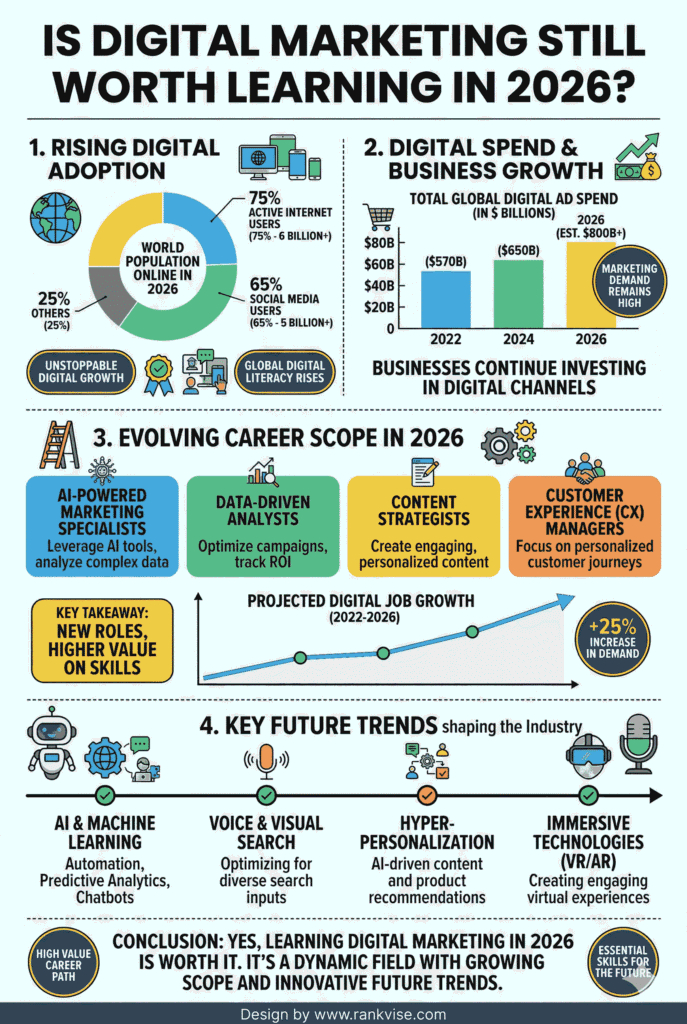
Digital marketing has changed dramatically over the past decade. What started as basic social media posting and email campaigns has evolved into a sophisticated ecosystem that includes data analytics, artificial intelligence, content strategy, influencer collaborations, and automation tools.
In 2026, businesses are no longer asking whether they need digital marketing – they are asking how to do it better. This shift means that companies are actively seeking individuals who understand not just the basics, but also how to adapt strategies in a fast-moving digital environment.
High Demand Across Industries
One of the biggest advantages of learning digital marketing is its universal demand. Nearly every industry – healthcare, finance, e-commerce, education, and even government – relies on digital channels to reach audiences.
For college graduates, this translates into flexibility. Instead of being tied to one specific field, digital marketing skills can open doors across multiple sectors. Whether someone wants to work at a startup, a large corporation, or even freelance, the opportunities are extensive.
Roles that are particularly in demand include:
- SEO specialists
- Content strategists
- Social media managers
- Paid advertising experts
- Data analysts
These roles continue to evolve, but the core skill set remains highly valuable.
Competitive Salaries and Career Growth
One of the strongest reasons digital marketing remains attractive in 2026 is its earning potential combined with fast career progression. Many entry-level roles already offer competitive salaries, but what truly sets this field apart is how quickly motivated individuals can grow.
Those who combine academic learning with real-world practice – such as internships, freelancing, or managing small projects – often secure jobs faster than their peers. Employers value proven skills and results, not just diplomas.
At the same time, balancing work and studies can be demanding, especially when deadlines overlap. Some choose to pay for essay services with time-saving features from professional writers to stay on track academically while gaining valuable hands-on experience in marketing.
This approach can help maintain strong grades without sacrificing career opportunities. As experience grows, professionals can move into higher-paying roles like campaign manager, performance marketer, or digital strategist.
Over time, many transition into leadership positions or start their own agencies. The combination of practical skills, flexible work options, and scalable income makes digital marketing one of the most dynamic and rewarding career paths available today for those willing to invest in both learning and experience.
The Role of AI and Automation
Artificial intelligence has become a major force in digital marketing. Tools can now generate content, analyze user behavior, optimize ad campaigns, and even predict trends.
At first glance, this might make it seem like learning digital marketing is less valuable. In reality, the opposite is true.
AI tools require skilled users who understand strategy, audience psychology, and brand positioning. While automation can handle repetitive tasks, it cannot replace human creativity, critical thinking, and decision-making.
In 2026, the most successful marketers are those who know how to combine human insight with advanced tools. Learning digital marketing today means learning how to work alongside AI – not compete with it.
Freelancing and Remote Opportunities
Digital marketing is one of the most flexible career paths available. Many roles can be performed remotely, making it ideal for those who value location independence.
Freelancing is also a viable option. Platforms and networks make it easier than ever to find clients, build a portfolio, and generate income while still in college.
This flexibility allows individuals to:
- Gain real-world experience before graduation
- Earn additional income
- Explore different niches and industries
For many, this hands-on experience becomes more valuable than traditional internships.
Practical Skills That Go Beyond Marketing
Learning digital marketing is not just about promoting products or services. It also teaches a range of transferable skills that are useful in almost any career.
These include:
- Communication and storytelling
- Data analysis and interpretation
- Problem-solving
- Creativity and innovation
- Project management
Even for those who do not pursue a marketing career long-term, these skills provide a strong foundation for professional success.
Challenges to Consider
While digital marketing offers many benefits, it is important to approach it with realistic expectations.
The field is competitive. Because entry barriers are relatively low, many people are trying to enter the industry. Standing out requires continuous learning, building a portfolio, and staying updated with trends.
Additionally, algorithms and platforms change frequently. What works today may not work tomorrow. This means that success in digital marketing requires adaptability and a willingness to keep learning.
However, for those who enjoy dynamic environments and continuous growth, this challenge can be a major advantage.
Is It the Right Choice for You?
Digital marketing is not a one-size-fits-all career. It tends to suit individuals who are:
- Curious about trends and consumer behavior
- Comfortable with technology
- Interested in both creative and analytical work
- Self-motivated and proactive
If these traits align with your interests, learning digital marketing in 2026 can be a smart investment.
How to Start Learning
Getting started is easier than ever. Many universities now offer courses in digital marketing, but there are also countless online resources available.
A practical approach includes:
- Learning the fundamentals (SEO, content marketing, social media)
- Practicing through personal projects (blogs, social accounts, small campaigns)
- Gaining certifications from reputable platforms
- Building a portfolio to showcase your work
Hands-on experience is key. Employers value proof of skills more than theoretical knowledge alone.
Final Thoughts
So, is digital marketing still worth learning in 2026? Absolutely – but with a modern mindset.
It is no longer just about knowing how to run ads or post on social media. It is about understanding audiences, using data effectively, leveraging AI tools, and creating meaningful digital experiences.
For college learners in the United States, digital marketing offers a powerful combination of flexibility, earning potential, and long-term relevance. While it requires effort and continuous learning, the rewards can be significant.
In a digital-first world, those who know how to communicate, connect, and convert online will always have an edge.