Skip to content
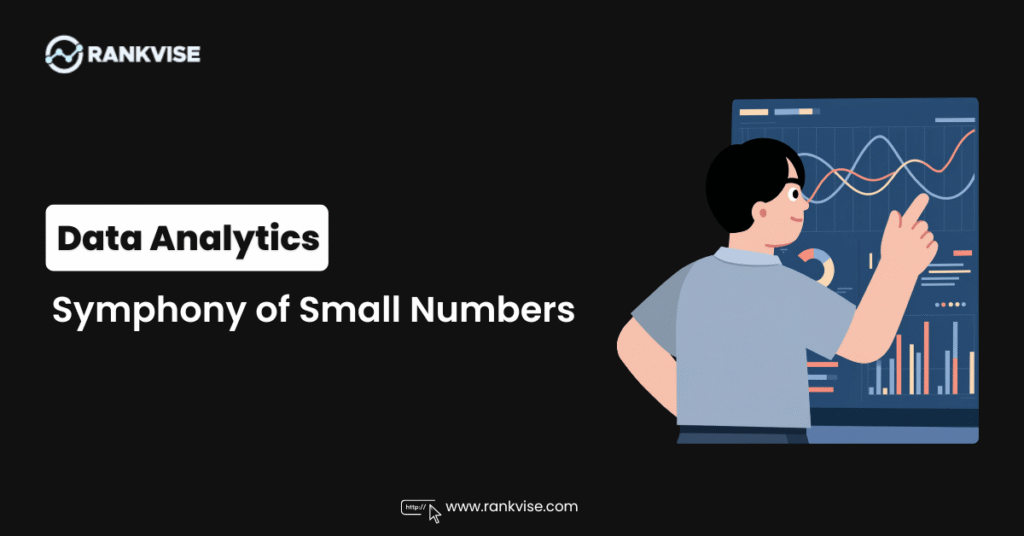
For years, leaders heard that salvation lived in “Big Data,” as if petabytes alone could guarantee clarity. Yet in most companies, the real turning points come from much smaller figures: a spike in support tickets from one region, a pattern in a handful of high-value customers leaving, a sudden drop in conversion to a single product page. When a business looks for a partner to modernize its data platform and prepare for Generative AI, the quiet discipline of small numbers is usually where the real story begins.
- Small, precise signals often reveal root causes better than massive volumes of data.
- Modern platforms prioritize consistent events, keys, and timestamps over collecting everything.
- Data analytics partners design models and pipelines that surface the few signals that matter.
- Combining trustworthy small data with GenAI yields grounded, explainable insights and actions.
- Teams shift toward targeted cohorts and specific indicators, improving decisions and operational levers.
That is why strong partnerships rarely start with a talk about volume. A partner that offers data analytics services helps a team hear how a single transaction, sensor reading, or support call fits into a wider musical line. When a company works with real experts, the aim is not to collect everything, but to build a data platform where each important note, even the faintest one, can be heard, questioned, and reused in context.
Big data is loud, small data is precise
Scale still matters. A retailer that tracks millions of customer journeys, or a manufacturer that records thousands of machine events every minute, needs strong storage and computing. Yet the difference between noise and insight rarely comes from one more terabyte. It usually comes from the decision to treat specific, well-described data points as signals instead of leftovers.
About two-thirds of organizations now use Generative AI regularly, while only a small share report clear, measurable business value, and the leaders are the ones who combine GenAI with disciplined data practices. The signal is quiet but important. Without trustworthy small data, even the smartest model behaves like a gifted musician playing in a badly tuned hall.
Consider a subscription business that wants to know why churn rose last quarter. Big data alone may present a forest of dashboards. Small data narrows the view. Which three features did churn customers stop using first? Which support themes appeared in their last few tickets? Which pricing or packaging tests were run in the weeks before they left? Each question ties a small set of records to real people and concrete decisions, and the story begins to change from abstract charts to understandable causes.
Small data also matters in daily operations. A logistics company that watches the average delivery time per city learns something. One that tracks the most frequent exception codes per route, per driver, per hour, learns far more. These details let data teams suggest targeted adjustments instead of vague calls for “efficiency,” and they give operations leaders specific levers to pull, such as retraining one depot or adjusting loading rules on a single route.
Modern data platforms that can hear quiet signals
To treat small data with respect, the data platform itself has to change. Many organizations still rely on warehouse setups designed for monthly reports, not for near-real-time learning or GenAI. They collect everything, then struggle to find the ten columns that matter for a particular question. Analysts search, copy, and reconcile the same numbers again and again, and the “Big Data” promise feels strangely distant.
Modernized platforms start with clear events and shared business concepts. Orders, sessions, tickets, shipments, inspections, and payments are captured with consistent keys and timestamps. Data engineers design simple, documented paths that carry these events from raw logs to curated tables that analysts and AI teams can work with. The focus shifts from storing every possible field to securing the integrity and accessibility of the specific signals that support decisions.
Spending patterns reflect this shift. Worldwide IT spending was expected to reach about 5.61 trillion dollars in 2025, with data, analytics, and AI among the main budget priorities for technology leaders. These funds can easily vanish into another shelf of tools if they are not tied to precise questions that small data can answer. For example:
- Which customer interactions show early signs of churn that an AI assistant should watch for and flag to sales?
- Which product attributes, locations, or weather patterns stand out when demand suddenly rises or falls?
- Which steps in a manufacturing or service process create most of the rework, complaints, or overtime?
A partner that offers strong data analytics services helps design the data models, pipelines, and rules that make these questions easy to ask and repeat. Organizations that work with modern data platforms tend to focus less on tool selection and more on which small signals need to be captured, tested, and shared across teams so that each new project starts from a stable base.
Once that groundwork is in place, Generative AI turns into a patient interpreter instead of a toy. Context windows filled with well-prepared small data let AI assistants answer questions such as “Why did this metric move yesterday?” with references to specific changes in campaigns, configurations, or customer segments. Search layers that index small, well-tagged records let models draft documents, alerts, and recommendations that stay grounded in verifiable facts instead of generic patterns.
Small data, human judgment, and GenAI
There is another quiet trend behind this symphony of small numbers. The market for data talent remains strong even as automation spreads. The US Bureau of Labor Statistics projects employment of data scientists to grow about 34% from 2024 to 2034, far faster than average, with tens of thousands of openings expected each year. Organizations are not just buying tools. They are hiring people who can listen to data and pose careful questions.
In that setting, the role of data analytics services is less about shipping ready-made dashboards and more about pairing strong platforms with human curiosity. A good partner helps business stakeholders phrase questions in a way that matches the underlying data structures. It supports analysts as they design experiments, segmentations, and metrics that reveal the effect of a change instead of hiding it inside broad averages.
Small data plays a special part in responsible AI as well. When prompts, logs, and feedback from real users are captured as structured records, teams can trace how a model reached a given answer and adjust the system accordingly. Rare events, outliers, and edge cases become solo instruments that deserve dedicated analysis instead of noise that gets smoothed away in aggregate metrics.
Over time, organizations that treat small data with care begin to see a cultural shift. Teams stop arguing about which dashboard is correct and start asking which specific slice of data fits the decision in front of them. Product managers rely on targeted cohorts instead of superficial vanity metrics. Operations leaders watch a small set of carefully chosen indicators per shift, rather than scrolling through dozens of charts that all tell roughly the same story.
In this setting, modern data analytics services act as both architect and conductor. They help design the data platform so that important notes are not lost. They guide teams on how to collect, clean, and interpret the few numbers that matter for each decision. They support GenAI adoption by confirming that the context fed into models reflects trustworthy, well-understood facts.
Conclusion
Big Data will continue to grow. Storage will keep getting cheaper, and businesses will log more events, clicks, and traces of customer behavior. The advantage, however, will belong to organizations that treat small data as music instead of background noise. With the right data platform, thoughtful use of data analytics services, and partners that respect the quiet power of precise numbers, companies can let their data play in tune and turn each important decision into a well-timed note in a larger score.