Skip to content
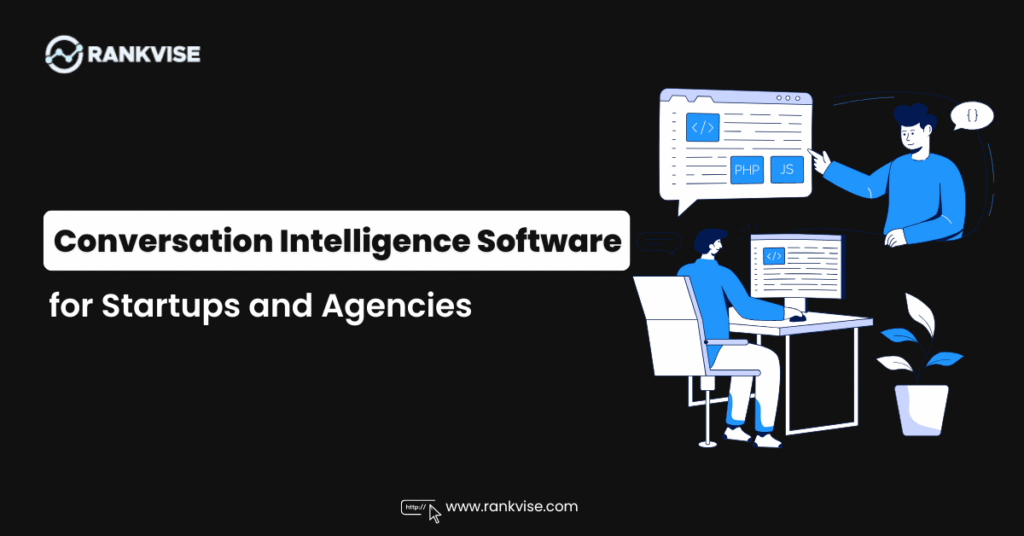
Sales conversations hold more value than most teams realize. Every call, demo, and meeting contains patterns, objections, and signals that can directly influence revenue. Yet, much of this data often goes unused or gets lost in scattered notes and fragmented systems.
- Turns recordings into actionable insights using AI for transcription, topic detection, sentiment, and deal risk.
- Speeds up learning and coaching by surfacing winning messaging, common objections, and shareable training clips.
- Integrates with CRMs, scales pricing, and offers easy setup so small teams adopt insights quickly.
- Drives measurable growth: higher conversion rates, shorter sales cycles, faster onboarding, and improved client retention.
Conversation intelligence software changes that. It captures, analyzes, and transforms conversations into actionable insights. For startups and agencies, this is not just a convenience—it’s a competitive advantage. With limited resources and high growth pressure, having clarity on what works (and what doesn’t) can significantly accelerate results.
This article explores the best conversation intelligence software options available today, what features truly matter, and how these tools can help smaller teams scale efficiently without unnecessary complexity.
What Is Conversation Intelligence Software?
Conversation intelligence software records and analyzes sales calls, meetings, and customer interactions. It uses AI to extract insights such as:
- Customer sentiment
- Key topics and objections
- Competitor mentions
- Talk-to-listen ratios
- Deal risks and opportunities
The goal is simple. Turn raw conversations into structured data that can guide better decisions.
For startups and agencies, this means fewer assumptions and more clarity. Instead of guessing why deals are lost or won, teams can rely on real evidence.
Why Startups and Agencies Need It
Large enterprises have long relied on data-heavy tools. But startups and agencies operate differently. They move faster, adapt quickly, and need tools that provide immediate value without heavy setup.
Conversation intelligence fits perfectly into this model.
1. Faster Learning Cycles
Startups can quickly identify what messaging resonates. Agencies can refine client strategies based on real interactions.
2. Improved Sales Performance
Teams can pinpoint what top performers do differently and replicate that behavior across the organization.
3. Better Client Insights
Agencies gain a deeper understanding of client pain points, improving both retention and results.
4. Scalable Training
Instead of manual coaching, teams can use real examples to train new hires efficiently.
Key Features to Look For
Not all conversation intelligence tools are built the same. Some focus heavily on enterprise use cases, while others are better suited for lean teams.
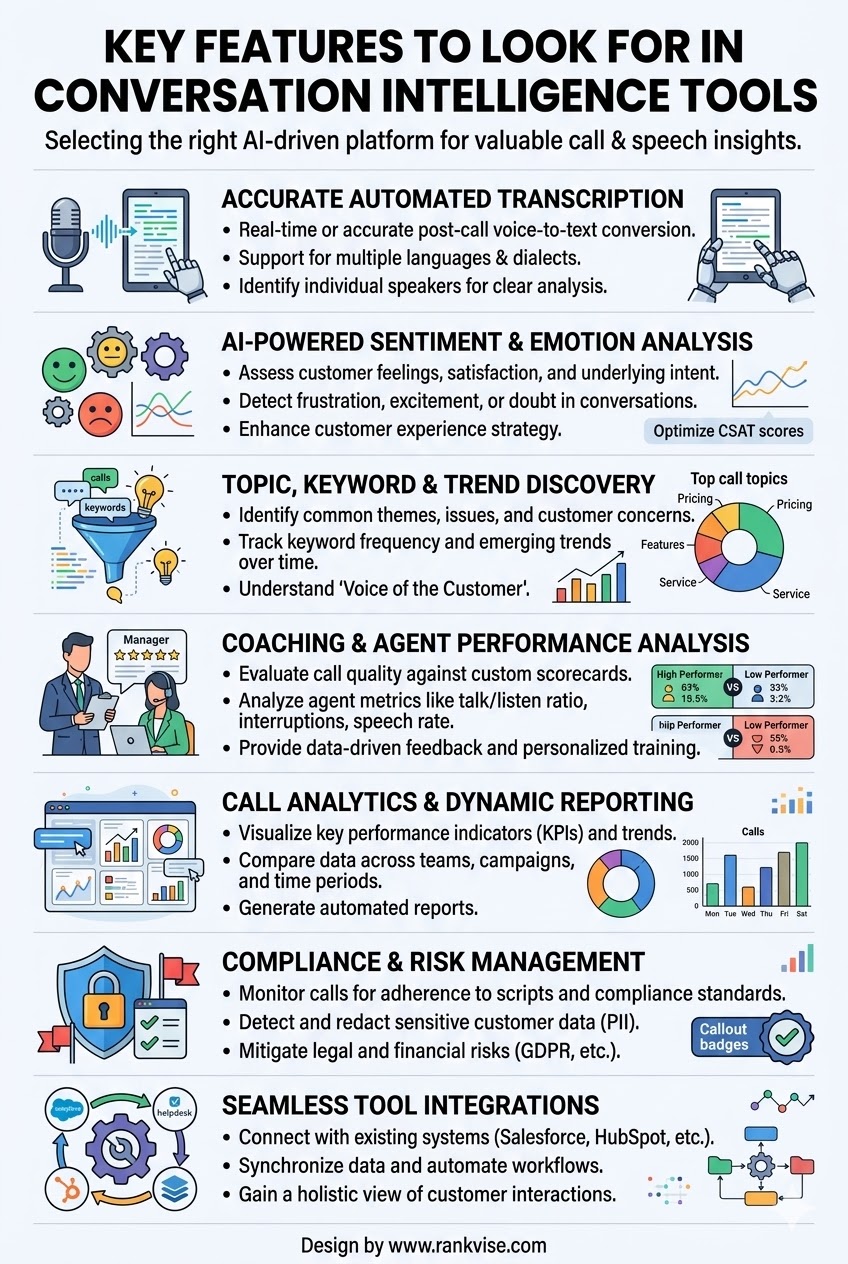
Here are the features that matter most:
AI-Powered Transcription
Accurate transcription is the foundation. Without it, insights become unreliable.
Call Analysis and Insights
Look for tools that identify patterns automatically—keywords, objections, and sentiment shifts.
CRM Integration
Seamless integration with platforms like HubSpot or Salesforce ensures data flows without friction.
Coaching and Feedback Tools
The ability to tag moments, leave comments, and create training clips is essential for growth.
Ease of Use
Startups and agencies don’t have time for complex onboarding. The tool should work almost immediately.
Pricing Flexibility
Transparent and scalable pricing is critical, especially for smaller teams.
Best Conversation Intelligence Software Options
1. Affordable, Startup-Friendly Platforms
Some tools are designed specifically for smaller teams. They focus on simplicity and fast deployment. These platforms often offer:
- Clean interfaces
- Quick setup
- Essential analytics without unnecessary features
They are ideal for early-stage startups or small agencies.
2. Mid-Tier Tools for Growing Teams
As teams expand, they need more robust insights. Mid-tier tools provide:
- Advanced analytics
- Better integrations
- Team-wide coaching features
These tools strike a balance between functionality and cost.
3. Enterprise-Level Platforms
These tools offer deep analytics and customization. However, they often come with:
- Higher costs
- Longer onboarding times
- More complexity
For startups and agencies, these may only make sense at later growth stages.
The Impact of Conversation Intelligence on Growth
The real value of conversation intelligence lies in its impact. It doesn’t just organize data—it transforms how teams operate.
Sales becomes more precise. Marketing becomes more aligned. Customer success becomes more proactive.
Instead of relying on assumptions, teams can identify patterns quickly. For example, they can see which objections appear most often or which phrases lead to higher conversion rates.
Over time, this leads to better messaging, stronger positioning, and higher win rates.
For many teams, adopting such tools also triggers a shift in how they evaluate their tech stack. As they analyze performance more closely, they often begin searching for the best alternative to Gong, especially when looking for solutions that offer similar insights but with more flexibility and cost efficiency.
This shift is not just about replacing a tool. It reflects a broader move toward smarter, more adaptable systems that align with the needs of growing businesses.
How Agencies Benefit Differently
Agencies operate in a unique environment. They manage multiple clients, industries, and strategies simultaneously.
Conversation intelligence provides them with a distinct advantage.
Multi-Client Insights
Agencies can identify patterns across different clients. This helps refine strategies and uncover new opportunities.
Improved Reporting
Instead of relying on surface-level metrics, agencies can present deeper insights backed by real conversations.
Stronger Client Relationships
Understanding client concerns in detail allows agencies to respond more effectively and build trust.
Better Campaign Alignment
Sales conversations reveal what messaging works. Agencies can use this data to optimize campaigns in real time.
Common Challenges and How to Overcome Them
While conversation intelligence tools are powerful, adoption is not always seamless.
Resistance to Change
Teams may feel uncomfortable being recorded or analyzed. Transparency and clear communication help address this.
Data Overload
Too much information can become overwhelming. Focus on key metrics that directly impact performance.
Integration Issues
Not all tools integrate smoothly with existing systems. Choosing compatible software from the start is crucial.
Cost Concerns
Startups and agencies must balance value with budget. Starting with essential features and scaling gradually is often the best approach.
Tips for Choosing the Right Tool
Selecting the right software requires careful consideration. Here are a few practical tips:
Define Your Goals
Understand what you want to achieve. Is it better coaching, improved conversions, or deeper insights?
Test Before Committing
Most tools offer free trials or demos. Use them to evaluate usability and relevance.
Prioritize Simplicity
A tool that is easy to use will always outperform a complex one that no one adopts.
Think Long-Term
Choose a platform that can grow with your team. Switching tools frequently can disrupt workflows.
How Conversation Intelligence Improves Team Collaboration
One of the less obvious benefits of conversation intelligence software is how it strengthens internal collaboration. Startups and agencies often struggle with alignment. Sales, marketing, and customer success teams may operate in silos, each relying on different data sources and assumptions.
Conversation intelligence creates a shared source of truth.
Instead of relying on second-hand information, teams can access actual customer interactions. Marketing can hear the exact language prospects use. Sales can understand which campaigns are driving qualified leads. Customer success teams can identify recurring issues early.
This alignment leads to more consistent messaging. It also reduces friction between departments.
Short feedback loops become the norm. A campaign can be adjusted quickly based on real conversations. Sales scripts can evolve based on what is actually working. Teams no longer rely on guesswork.
Over time, this creates a more cohesive organization. Everyone works toward the same goals, backed by the same data.
Measuring ROI from Conversation Intelligence Tools
Investing in new software always raises one important question: is it worth it?
For conversation intelligence, the return on investment can be measured in several practical ways.
Increased Conversion Rates
When teams understand what drives successful conversations, they can replicate those patterns. This often leads to higher close rates.
Reduced Sales Cycle Length
Clear insights help sales teams address objections faster. Deals move forward with fewer delays.
Improved Onboarding Efficiency
New hires can learn from real conversations instead of static training materials. This shortens ramp-up time significantly.
Higher Client Retention
For agencies, better understanding of client needs leads to stronger relationships and longer contracts.
Better Decision-Making
Leaders can rely on real data instead of assumptions. This reduces costly mistakes and improves strategic planning.
It’s important to track these metrics over time. The value of conversation intelligence compounds. The more data you collect, the more accurate and actionable your insights become.
In the long run, the right tool doesn’t just pay for itself—it becomes a key driver of sustainable growth.
The Future of Conversation Intelligence
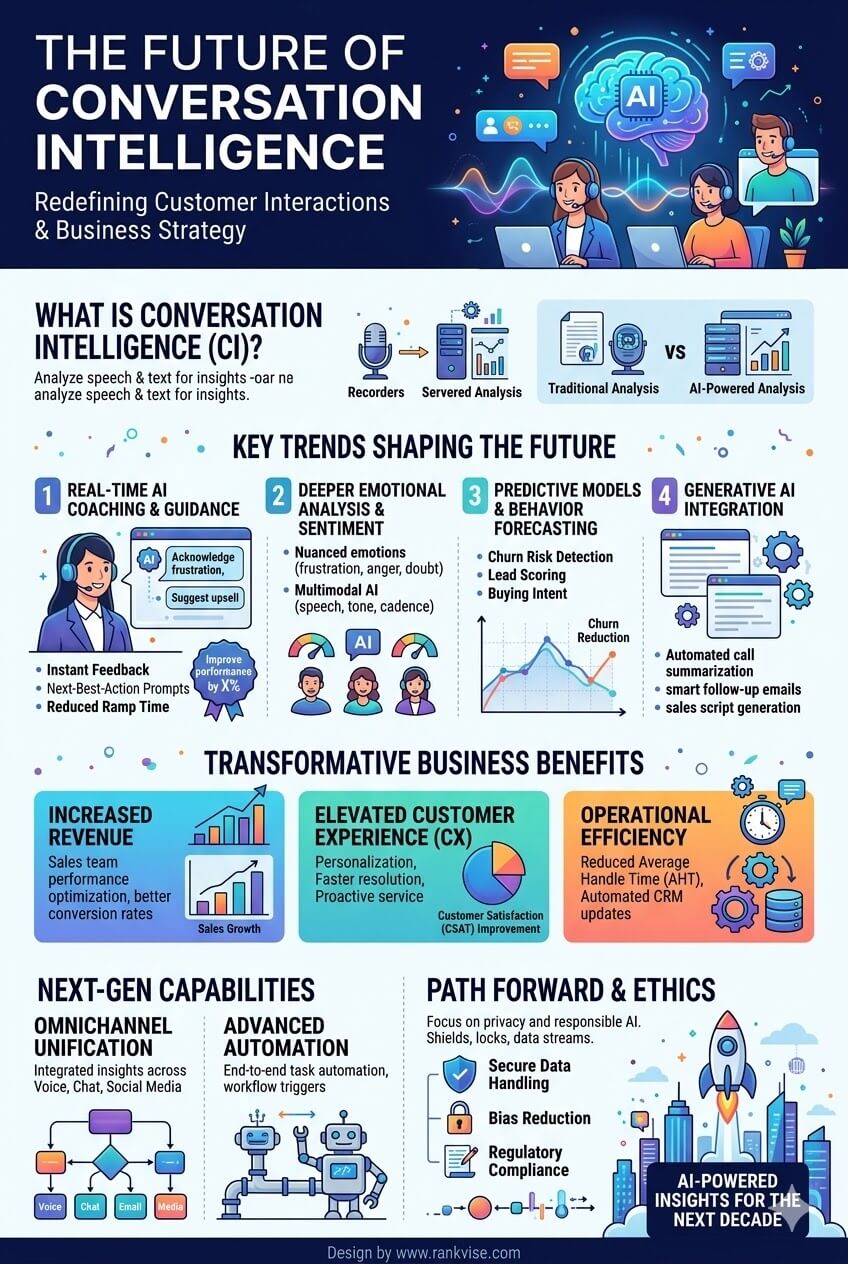
The technology is evolving rapidly. AI is becoming more accurate, and insights are becoming more predictive.
In the near future, conversation intelligence tools will not just analyze past interactions. They will guide conversations in real time. They will suggest responses, highlight risks instantly, and help teams adapt on the spot.
For startups and agencies, this means even greater efficiency. Smaller teams will be able to compete with larger organizations by leveraging smarter tools.
Conclusion
Conversation intelligence software is no longer optional for teams that want to grow efficiently. It provides clarity, improves performance, and helps organizations make better decisions based on real data.
For startups and agencies, the benefits are even more pronounced. With limited resources and high expectations, having access to actionable insights can make a significant difference.
Choosing the right tool requires understanding your needs, evaluating options carefully, and focusing on long-term value. With the right approach, conversation intelligence can become a core part of your growth strategy, enabling smarter decisions and stronger results over time.