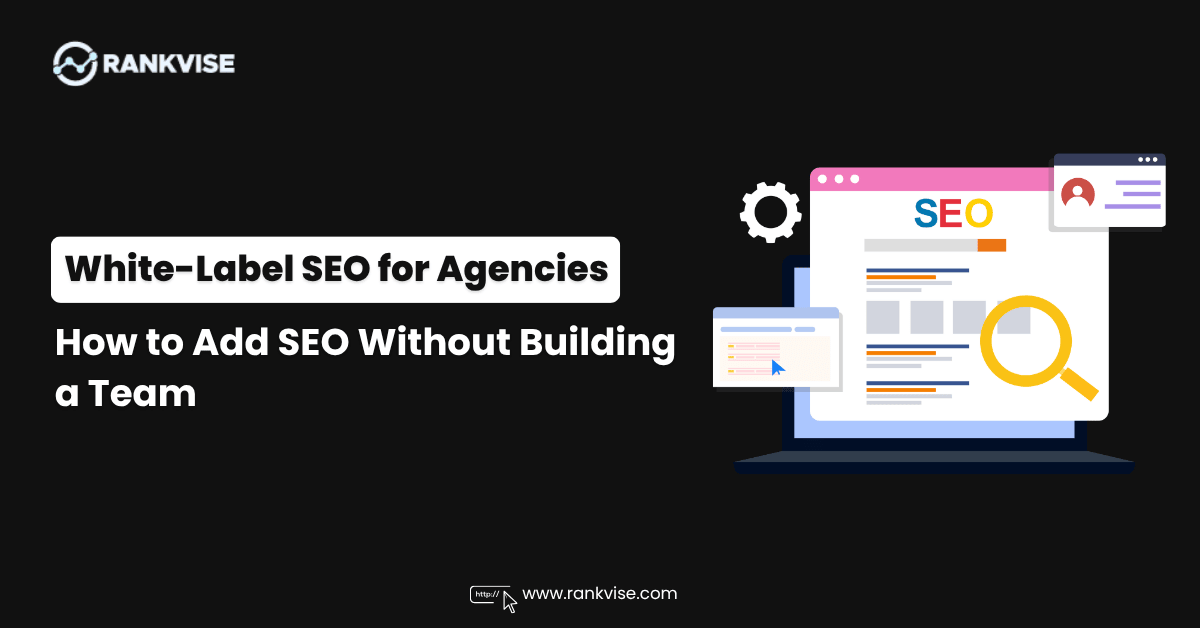
Sooner or later, every paid media or social agency hears the same question from a good client: “Can you handle our SEO too?” Saying no sends that client to another agency, which may then pitch them on ads as well. Saying yes without the people to deliver it is worse. White-label SEO sits between those two answers, and for many agencies it is the most practical way to add a service line without hiring a team first.
- Secure account and asset ownership in writing: client owns GSC, analytics, CMS; agency keeps branded reports to avoid future dependency.
- Vet providers thoroughly: request past work, adherence to Google Search Essentials, change logs, named leads, and refuse anyone promising guaranteed top rankings.
- Start small and manage expectations: trial with one audit, set realistic timelines, price after account management hours, and include matching contracts.
Why the SEO question keeps coming up
Clients rarely think about channels the way agencies do. They think about leads, sales and cost per acquisition. When paid search costs rise or a social campaign plateaus, organic search is the obvious next lever, and they would rather extend a relationship they trust than brief a new vendor from scratch.
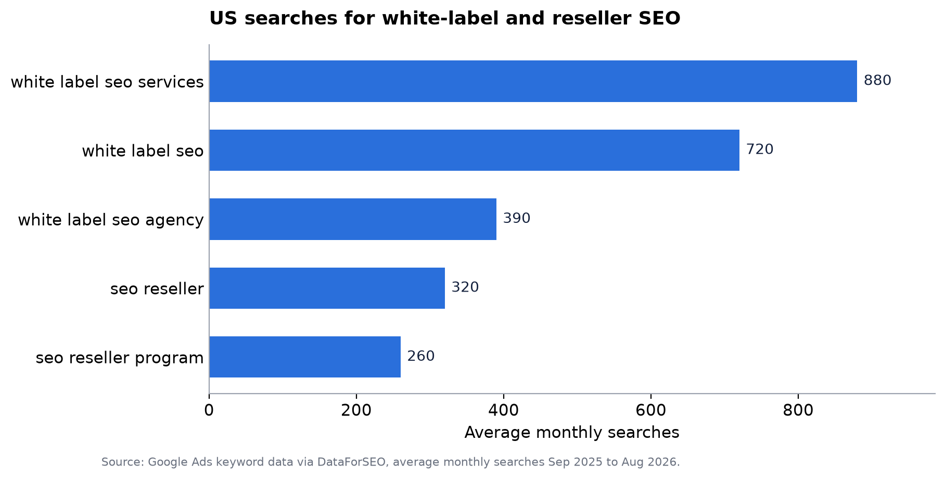
Agencies have noticed. Search demand for white-label and reseller SEO terms in the US is steady rather than huge, which tells you this is a considered business purchase, not an impulse buy. “White label SEO services” alone sees about 880 searches a month, and “white label SEO” about 720.
What white-label SEO actually means
In a white-label arrangement, a specialist provider does the SEO work and your agency presents it to the client as your own service. The client sees your brand on reports, emails and invoices. The provider stays in the background.
That is different from a referral, where you hand the client over and take a commission, and from subcontracting with full transparency, where the client knows a second company is involved. Each model can work. White-label suits agencies that want to own the relationship end to end.
Who should own what
The single most important decision is account ownership. Get it in writing before any work begins.
| Asset | Who should own it | Why |
| Google Search Console property | The client | It is their site and their data |
| Analytics account | The client | Losing history is expensive |
| CMS and hosting logins | The client, with user access granted to you | Access can be revoked cleanly |
| Content written for the site | The client, once paid for | Avoids disputes if you part ways |
| Reports and dashboards | Your agency brand | This is the white-label part |
A provider that wants to own client accounts, or asks for a single shared admin login, is creating a dependency you will regret later.
How the day-to-day works
Most arrangements follow a similar rhythm. You run the client relationship, set expectations and hold the monthly call. The provider runs the audit, builds the plan, does the technical fixes and content, and supplies the reporting data.
Reporting is where the white-label label earns its name. Expect branded PDF or dashboard reports, and agree on what they include: work completed, pages changed, rankings and traffic trends, and next month’s plan. Ask for a written change log too. When a client asks “what did you change on our site in March?”, you need a dated answer, not a guess.
Client communication needs a clear rule. Some agencies keep the provider fully hidden. Others bring the provider’s lead onto calls as a “technical SEO lead” under the agency’s banner. Decide which approach you want, then make sure the provider can work that way without slipping their own name into emails or documents.
How to vet a provider
Google publishes a page called “Do you need an SEO?”, which lists the questions any business should ask before hiring help with search. It is written for business owners, but it works just as well for agencies choosing a partner. You can read it on Google Search Central.
Several of its points translate directly to white-label vetting:
- Ask for examples of previous work, ideally in industries close to your clients’.
- Ask whether they follow Google Search Essentials, and listen for a specific answer.
- Ask what results they expect, over what timeframe, and how they measure them.
- Ask how they will communicate and whether they will share every change they make.
- Treat any guaranteed number one ranking as a reason to walk away. Google says plainly that no one can guarantee it.
Beyond those, ask how they handle a client site that runs on a platform they rarely work with, who their named lead would be, and what happens when that person is on leave.
Before any sales call, read how each provider describes its offer in writing. Comparing a published white-label SEO reseller program against the others on your shortlist gives you a baseline for scope, reporting and communication, and a list of specifics to raise on every call.
Pricing models, in general terms
White-label pricing usually falls into one of four shapes:
- Monthly retainer per client. A fixed monthly fee for an agreed scope. Predictable for both sides and the easiest to mark up.
- Tiered packages. Small, medium and large bundles with set deliverables. Simple to resell, but check what happens when a client needs something outside the tier.
- Per deliverable. Audits, content pieces or technical fixes priced individually. Useful for testing a provider before committing.
- Hourly or day rate. Flexible but hard to resell, because clients rarely want to buy hours.
Whatever the model, work out your margin after your own account management time. Agencies often price the provider’s fee plus a markup and forget that client calls, report reviews and internal QA all take hours.
The risks to plan for
Quality control. Your name is on the work. Review the first audit and the first month of changes line by line. Spot check content for accuracy, especially in regulated industries.
Client churn. SEO takes months to show results. If the client expects paid search speed, they will leave before the work pays off, and they may take their ad budget with them. Set expectations in the proposal, not after the first report.
Contracts. You need two agreements that line up: one with the client and one with the provider. Notice periods, ownership of work and confidentiality should match. If your client can leave on short notice while your provider contract locks you in for months, you carry the gap.
Dependency. If the provider disappears or changes direction, can you move to another one without losing data or history? Client-owned accounts and a written change log make that move possible.
Questions to ask before you sign
- Who is the named lead on our accounts, and who covers for them?
- Will every change be logged with a date and the page affected?
- What access do you need, and can it be read-only where possible?
- Can we see a sample report with the branding removed?
- What is the notice period, and what do we receive when we leave?
- How do you handle a client who asks to speak to “the SEO person” directly?
Where to start this quarter
Pick one existing client who has asked about SEO and who already trusts you. Run a single paid audit through a shortlisted provider before signing any retainer. Review the output as if you were the client: is it specific, is it accurate, and would you put your logo on it? If the answer is yes, write the ownership table into both contracts and roll the service out to a second client. If the answer is no, you have learned that for the price of one audit rather than one lost account.