Skip to content
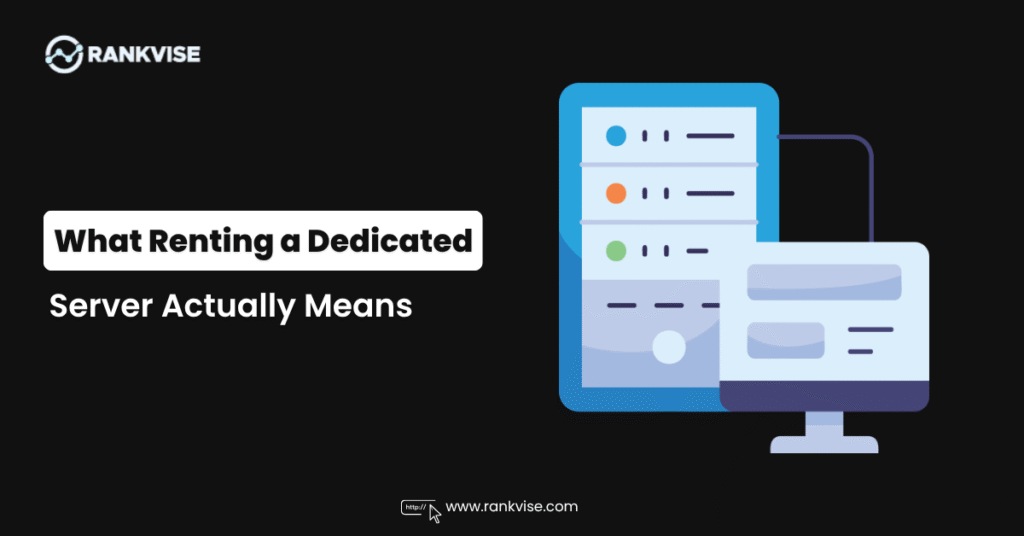
Renting a dedicated server refers to using physical hardware hosted and maintained by a provider while retaining full control over its resources. Instead of purchasing and managing infrastructure yourself, you lease it on a monthly basis — gaining performance, flexibility, and operational simplicity.
- Predictable monthly expenses eliminate large upfront hardware purchases and improve cash flow.
- Provider handles maintenance, upgrades, and hardware failures, removing lifecycle management burden from businesses.
- Renting allows fast scaling and instant upgrades of CPU, RAM, storage, or architecture without hardware investment.
- Rental includes power, cooling, data center space, and enterprise infrastructure without operational complexity.
- Renting enables rapid deployment and reduces internal IT workload so teams focus on product and growth.
Monthly Rental, Colocation, and Full Ownership Compared
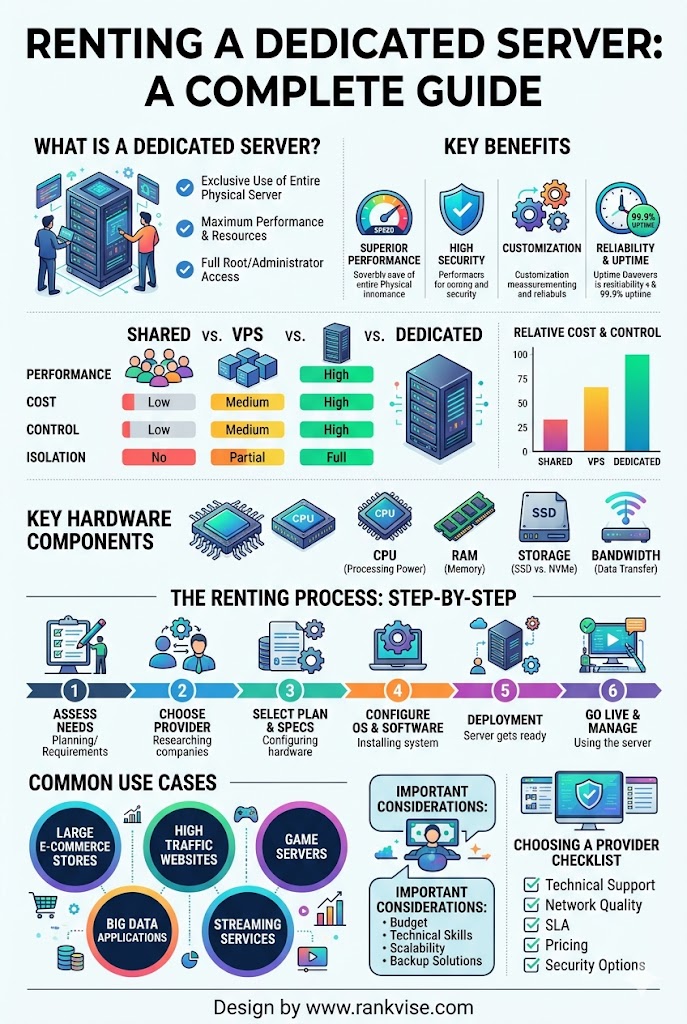
There are three primary approaches to dedicated infrastructure:
- Rental – You lease hardware from a provider who handles maintenance, uptime, and infrastructure.
- Colocation – You own the server but host it in a third-party data center.
- Full ownership (on-premises) – You buy, install, and maintain everything yourself.
While colocation and ownership provide control, they also require significant expertise and upfront investment. In contrast, dedicated server rent offers a balance between control and convenience.
What You Get — and What You Don’t — With Each Model
With rental, businesses receive:
- Fully managed infrastructure
- Immediate deployment
- Hardware replacement and upgrades handled by provider
However, you don’t physically own the hardware. For most modern companies, this trade-off is not only acceptable but beneficial.
The Financial Case for Renting
Zero Capital Expenditure and Predictable Monthly Costs
One of the strongest arguments for dedicated server rent is financial efficiency. Instead of large upfront investments, businesses operate on a predictable monthly expense model. This improves cash flow and allows better budgeting.
Key financial advantages include:
- No upfront hardware purchase
- Fixed, transparent pricing with no hidden fees
- Easy scaling without financial risk
No Depreciation, Refresh Cycles, or Hardware Replacement
When you own servers, they begin to depreciate immediately. Within 3–5 years, most hardware becomes outdated and requires replacement.
With rental:
- No depreciation concerns
- No need to plan costly refresh cycles
- Provider handles upgrades and failures
This shifts the burden of lifecycle management entirely away from your business.
When Buying Your Own Hardware Makes Sense
Stable, High-Volume Workloads Over Many Years
Ownership can be justified when workloads are extremely stable and predictable over long periods. In such cases, the total cost of ownership (TCO) may eventually become lower than rental.
However, this scenario is becoming less common due to rapid technological change.
Regulatory Requirements That Demand On-Premises Equipment
Certain industries require physical control over infrastructure due to compliance rules. In these cases, owning servers may be unavoidable.
Still, many providers now offer compliant environments, reducing the need for on-premises setups.
Total Cost of Ownership Analysis: 3-Year Comparison
Over a three-year period, rental often proves more cost-effective when factoring in hidden expenses.
Consider the full cost of ownership:
- Hardware purchase
- Maintenance and repairs
- Staff and expertise
- Downtime risks
- Energy consumption
Factoring in Power, Cooling, and Data Center Space
Running your own servers means paying for:
- Electricity and cooling systems
- Physical space and security
- Network infrastructure
With dedicated server rent, all of this is included. Businesses gain access to enterprise-grade environments without operational complexity.
Flexibility and Scalability: Where Rental Wins
Modern businesses need infrastructure that evolves quickly. Rental models excel in this area.
Upgrading Configurations Without Hardware Investment
With rental, you can:
- Upgrade CPU, RAM, or storage instantly
- Switch architectures (AMD, Intel, ARM, even Mac mini)
- Scale up or down based on demand
This flexibility is critical for growing companies and dynamic workloads.
A strong provider typically offers:
- 400+ dedicated server configurations
- Tailored setups based on real workloads
- Ready-to-use and fully custom solutions
Dedicated Server Rental in the USA: Regional Considerations
The USA remains one of the most strategic locations for hosting due to its advanced infrastructure and global connectivity.
When choosing a provider, businesses should prioritize:
- Global infrastructure with low latency
- Reliable network performance
- Strong DDoS protection at the network level
Additionally, leading providers offer:
- 24/7 human support with ~30-second response times
- Free project and server migration with minimal downtime
- 100–500 GB of free backup storage per server
- Secure and user-friendly control panels
A provider with a long track record (since 2013, serving clients in 100+ countries) ensures stability and trust.
Conclusion: Renting Is the Default Smart Choice for Most Modern Businesses
For most companies today, dedicated server rent is the smarter, more efficient option. It eliminates capital expenditure, reduces operational burden, and provides unmatched flexibility.
While ownership still has niche use cases, the modern business environment favors agility, scalability, and cost control — all of which are inherent advantages of renting.
In a world where technology evolves rapidly, renting dedicated servers allows businesses to stay competitive without being tied to outdated infrastructure.
Beyond cost and flexibility, another major advantage of dedicated server rent is speed of deployment. Businesses can launch new environments in minutes instead of waiting weeks for procurement, delivery, and setup of physical hardware. This rapid provisioning is especially valuable for startups, seasonal projects, and companies entering new markets.
Moreover, rental solutions reduce internal IT workload. Teams can focus on product development and business growth rather than infrastructure maintenance. Combined with enterprise-grade reliability and continuous support, renting becomes not just a technical decision, but a strategic one that enables faster innovation and long-term efficiency.