Skip to content
Ownership used to be the gold standard for success. If you wanted something, you saved up and bought it. Today, the script has flipped for both people and big companies. Most folks now prefer to pay for access instead of owning a physical item forever.
- Rentals replace ownership as consumers prefer access, reducing long-term costs and maintenance burdens.
- Subscription models give businesses predictable revenue, incentivizing durable, repairable product design.
- Industries from fashion to heavy machinery adopt Equipment-as-a-Service, enabling rapid tech upgrades and scalability.
- Rental economies boost local tourism and sustainability by reusing products, cutting manufacturing and waste.
This shift is changing how stores run and how products are designed. It is not just about small items like movies or music anymore. Massive industries like construction, fashion, and even heavy shipping are moving toward rental models to stay competitive and keep customers happy.
The Rise of the Access Economy
Buying a house or a car was once the primary goal for most adults. Now, the high cost of living and a desire for freedom have changed those goals. Many people find that owning things feels like a burden. Repairs, storage, and losing value over time make buying less attractive.
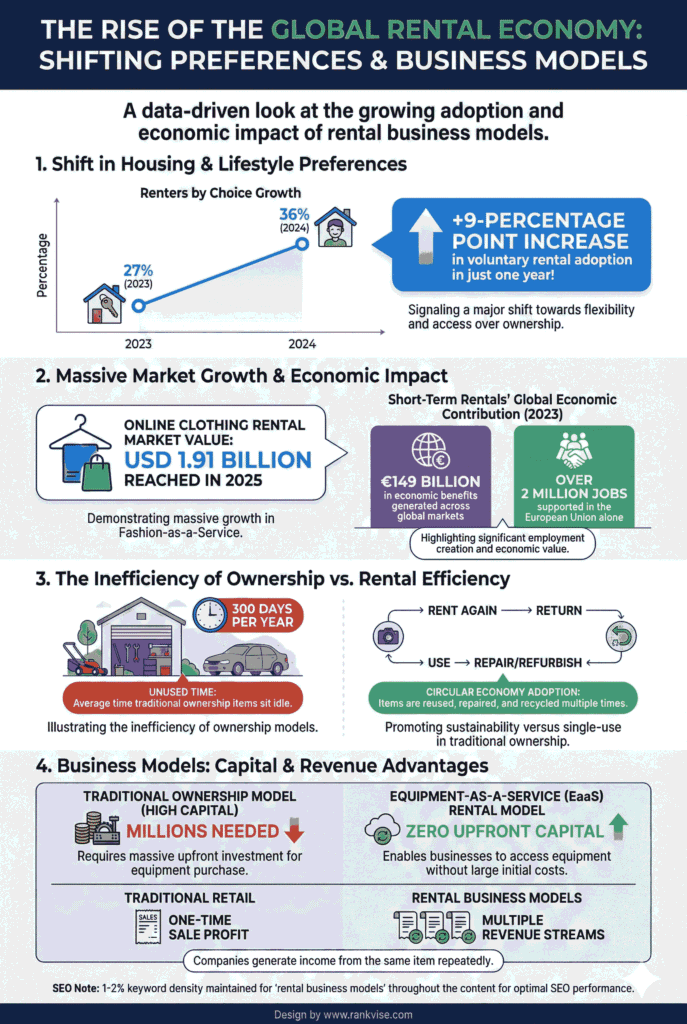
One report on housing trends showed that 36% of people in 2024 said they are renters by choice. This number is up from 27% just one year before. For many, renting has become the new purchase because it offers a lifestyle without the long-term debt of a mortgage. This trend is not limited to where people live.
New Ways to Dress and Shop
The fashion world is seeing a huge shift in how people get their clothes. Instead of buying a gown or a suit for one event, shoppers are looking at digital closets. This allows people to wear luxury brands for a fraction of the cost.
Recent data shows the online clothing rental market reached $1.91 billion in 2025. Businesses are moving away from the “fast fashion” model of selling cheap clothes that end up in landfills. By renting out high-quality pieces, brands can make money from the same item many times. This helps the environment and gives customers more variety in their wardrobes.
Heavy Industry and Machinery Rentals
It is not just clothes and houses moving to this model. Big construction and shipping companies are also changing how they get their gear. Buying a massive crane or a fleet of trucks requires millions of dollars in cash.
- Maintenance costs are handled by the owner.
- Companies can get the latest technology faster.
- Storage space is no longer a problem for the user.
- Projects can scale up or down based on current needs.
Equipment-as-a-Service models are starting to pop up in several sectors. Big names like Caterpillar and Rolls-Royce are now offering machinery on subscription terms. Instead of owning the engine, a company might just pay for the hours the engine is actually running.
Boosting Local Economies
When people think of rentals, they often think of travel. Short-term rentals for vacations have a massive impact on the world economy. They bring tourists to neighborhoods that do not have big hotels.
A study on travel impacts found that short-term rentals generated €149 billion in economic benefits in 2023. This activity supported over 2 million jobs across the European Union. These rentals help small businesses like cafes and local shops by bringing in new customers who stay longer in the area.
Why Businesses Love Subscriptions
For a business, selling a product once is risky. They have to find a new customer every single day to keep making money. Subscriptions and rentals provide a steady stream of cash that is easier to predict.
This steady income allows companies to plan for the future. They can invest more in making their products last longer. If a company owns the item they rent out, they want it to stay in good shape for years. This is the opposite of the old way, where companies wanted things to break so you would buy a new one.
Flexibility for Startups
New businesses often have very little cash to start with. Renting office space and equipment keeps their costs low. This lets them spend their money on hiring people or marketing their brand.
Technology and Updates
Software was one of the first things to move to a rental model. Now, hardware is following the same path. When a better version of a tool comes out, a renter can simply swap their old unit for the new one. This keeps businesses at the top of their game without wasting money on outdated gear.
The Environmental Impact
The rental model is a big win for the planet. When items are shared, fewer things need to be manufactured. This saves energy and raw materials that would normally go into making new products.
Many companies are looking at this as a way to meet their green goals. Instead of a linear path where items are made and then thrown away, the rental model is circular. Items are repaired, reused, and eventually recycled by the company that knows the product best.
Looking Toward the Future
The way we think about value is moving away from the “stuff” we have in our garage. Value is now found in the experiences we have and the tasks we can complete. For many people, renting has become a way to access high quality goods without the stress of upkeep. Whether it is a high-end camera for a weekend or a tractor for a farm, access is king.
This shift signals a major change in how society views success and wealth. Younger generations do not want to be tied down by heavy assets that lose value every year. They would rather spend their money on a trip or a new skill than on a lawnmower that sits in a shed for 300 days a year.
Businesses are noticing this change and moving fast to keep up. They are learning that providing a service is often more profitable than selling a physical box.
Conclusion
Businesses that do not adapt to this desire for flexibility may struggle. The most successful brands will be the ones that make it easy for customers to get what they need, exactly when they need it, without the strings of ownership. This shift is not just a fad – it is a total rewrite of how the global economy functions. As more industries jump on board, the line between “mine” and “ours” will continue to fade.