Skip to content
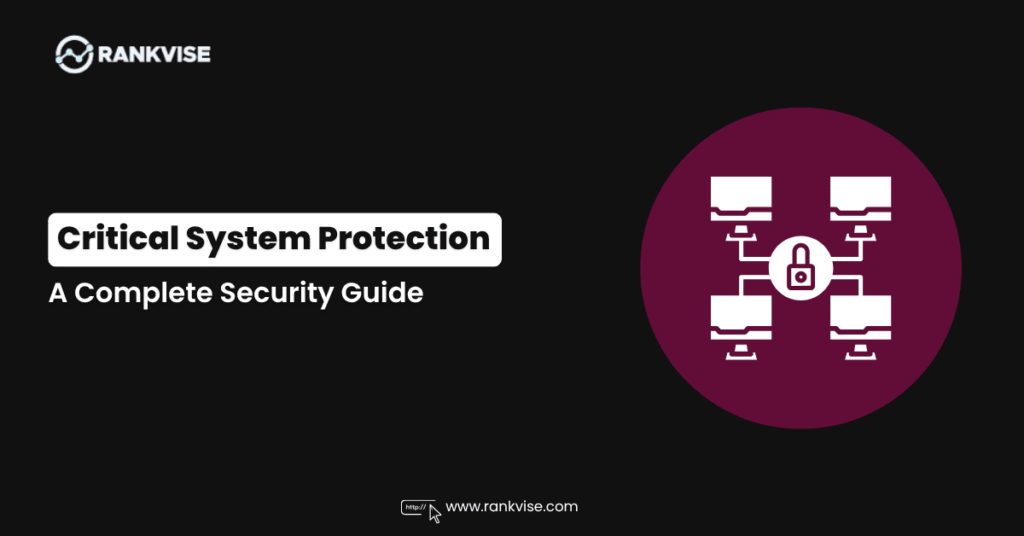
Every organization runs on systems it simply cannot afford to lose. Payment servers, healthcare databases, industrial controllers, and financial platforms form the backbone of modern enterprise. When these systems go down, operations halt, revenue vanishes, and trust evaporates overnight.
- Implement deny-by-default policy enforcement to block unapproved actions and stop zero-day exploits.
- Use behavior-based detection and real-time automated response to detect anomalies, contain compromises, and minimize detection-to-containment time.
- Deploy carefully: discover and classify assets, define granular policies, test in monitoring mode, and integrate with existing security stack.
Critical system protection is the practice of securing these essential assets against threats. It goes far beyond standard antivirus. It combines policy enforcement, behavior monitoring, and real-time response into one unified defense strategy.
This guide breaks down what critical system protection looks like in 2026. You will learn how it works, why it matters, and how to deploy it effectively.
What Is Critical System Protection and Why Does It Matter?
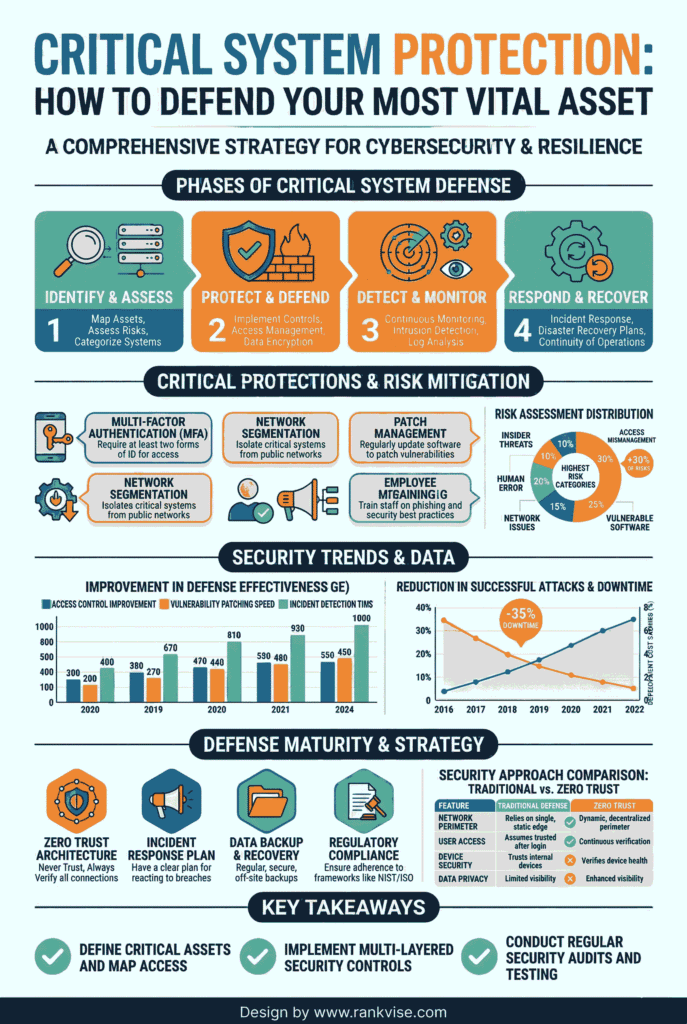
Critical system protection refers to the tools and strategies that safeguard vital IT infrastructure. These systems often include servers handling sensitive transactions, embedded devices, and legacy platforms that cannot be easily patched or replaced.
Traditional security tools focus on known threats using signature databases. Critical system protection takes a fundamentally different approach. It assumes that unknown threats exist and blocks anything that deviates from approved behavior.
This matters because modern attackers increasingly target high-value systems. IBM’s 2024 Cost of a Data Breach Report pegged the global average breach cost at 4.88 million USD. Attacks on critical infrastructure often cost significantly more. Organizations that lack dedicated protection for their core systems face disproportionate financial and operational risk.
How Does Critical System Protection Actually Work?
Understanding the mechanics helps you evaluate whether your current defenses are adequate. Critical system protection relies on several interlocking layers.
Deny-by-Default Policy Enforcement
This is the foundation. Instead of trying to identify every possible threat, the system only allows pre-approved actions. Everything else gets blocked automatically.
Think of it like a guest list at a secure facility. If your name is not on the list, you do not get in. This approach stops zero-day exploits, unknown malware, and unauthorized changes before they execute.
Behavior-Based Threat Detection
Even approved applications can behave unexpectedly. Behavior-based detection monitors how programs act in real time. If an approved process suddenly tries to access restricted files or modify system configurations, the tool flags and contains it immediately.
This layer catches insider threats and compromised legitimate software. It works alongside deny-by-default policies to close gaps that either approach alone would miss.
Real-Time Monitoring and Response
Modern critical system protection platforms continuously monitor system activity. They generate alerts, log events, and can trigger automated responses when anomalies appear. This reduces the window between detection and containment from hours to seconds.
Automated response capabilities are especially valuable for organizations with limited security staff. The system acts first, then notifies the team for review.
The 2026 Threat Landscape: What Are You Defending Against?
The threat environment has shifted dramatically. Understanding current attack trends helps you prioritize your protection strategy.
Ransomware Continues to Evolve
Ransomware attacks have grown roughly 12% year over year. Modern variants use double extortion, encrypting data while threatening to leak it publicly. Critical systems like hospital databases and payment platforms are prime targets because downtime pressure forces faster payouts.
IoT and Embedded Device Exploits Are Surging
IoT-related exploits have increased by approximately 22%. Many connected devices run lightweight operating systems with minimal built-in security. Attackers use them as entry points to reach more valuable systems deeper in the network.
Cloud Breaches Are Accelerating
Cloud infrastructure breaches have risen around 18%. Misconfigurations, weak access controls, and poorly managed APIs create openings. Organizations running hybrid environments face compounded risk across on-premise and cloud boundaries.
AI-Powered Attacks Are Emerging
Attackers now use artificial intelligence to craft convincing phishing campaigns and automate vulnerability scanning. AI-driven attacks adapt faster than manual techniques, making traditional defenses less effective over time.
Key Features to Look for in a Critical System Protection Platform
Not all solutions offer the same capabilities. Here are the features that separate effective platforms from basic tools:
| Feature | Why It Matters |
|---|---|
| Deny-by-default enforcement | Blocks unknown threats without relying on signature updates |
| Behavior monitoring | Detects abnormal activity from approved applications |
| Multi-platform support | Protects Windows, Linux, RTOS, and embedded systems |
| Automated incident response | Reduces response time from hours to seconds |
| Compliance reporting | Simplifies audits for PCI DSS, HIPAA, and SOX |
| Centralized management console | Provides unified visibility across all protected assets |
| Lightweight agents | Minimizes performance impact on protected systems |
Symantec Critical System Protection remains one of the most recognized platforms in this space. It offers modular agents, unified policy management, and support for legacy and modern operating systems. However, several newer entrants now offer cloud-native alternatives with API-led architectures.
Deployment Best Practices for Critical System Protection
Buying the right tool is only half the battle. How you deploy it determines whether it actually protects your organization.
Start With Asset Discovery and Classification
You cannot protect what you do not know about. Begin by identifying every system that qualifies as critical. Classify assets by business impact, data sensitivity, and regulatory requirements.
This step prevents blind spots. Many breaches exploit forgotten or unmanaged systems that never received proper security controls.
Define Granular Security Policies
Generic policies leave gaps. Tailor your deny-by-default rules to each system’s specific role. A database server needs different permissions than a point-of-sale terminal.
Work with system owners to define what normal behavior looks like. Document approved processes, network connections, and file access patterns. The more precise your policies, the fewer false positives you will encounter.
Address Legacy and Unpatchable Systems
Many critical environments include systems that cannot receive software updates. Industrial controllers, older financial platforms, and embedded medical devices often fall into this category.
For these systems, use virtualization wrappers and application-level controls to enforce security externally. This approach protects the system without modifying its underlying software, which is essential when vendor support has ended.
Test Before You Enforce
Deploy policies in monitoring mode first. Observe the alerts generated and refine your rules before switching to active enforcement. This phased approach prevents accidental disruptions to business operations.
Integrate With Your Existing Security Stack
Critical system protection works best as part of a layered defense. Connect it with your SIEM, vulnerability scanner, and incident response workflows. Shared telemetry improves detection accuracy and speeds up investigation.
How AI and Automation Are Transforming System Protection
Artificial intelligence is reshaping how organizations defend critical infrastructure. Here is what that looks like in practice.
Predictive threat modeling uses machine learning to analyze historical attack patterns. It identifies systems most likely to be targeted next, allowing teams to strengthen defenses proactively rather than reactively.
Autonomous policy updates allow platforms to adjust security rules based on observed behavior changes. If a new application deployment alters normal system activity, the platform adapts without requiring manual intervention.
Real-time risk scoring assigns dynamic risk levels to each protected system. Security teams can prioritize their attention on the highest-risk assets at any given moment. This is especially valuable for organizations managing hundreds or thousands of endpoints.
These capabilities are still maturing. Human oversight remains essential. But AI-assisted protection dramatically increases the speed and scale at which security teams can operate.
Regulatory Compliance and Critical System Protection
Compliance is not optional for organizations handling sensitive data. Critical system protection platforms simplify adherence to major standards.
PCI DSS requires strict access controls and integrity monitoring for systems that process payment data. A well-configured protection platform automates these controls and generates audit-ready reports.
HIPAA mandates safeguards for electronic health information. Behavior-based detection and access logging directly support these requirements.
SOX focuses on financial data integrity. Deny-by-default policies and change monitoring ensure that unauthorized modifications to financial systems are prevented and documented.
Automated compliance reporting saves significant time during audits. Instead of manually gathering evidence, security teams export logs and policy configurations directly from the platform.
What Does the Future Hold for Critical System Protection?
Several trends will shape this space over the next few years.
Cloud-native protection platforms will become the default for new deployments. Organizations will manage policies through centralized cloud consoles, even for on-premise systems.
Niche-specific solutions will emerge for industries like healthcare, manufacturing, and finance. These purpose-built tools will address sector-specific threats and compliance requirements more effectively than general platforms.
Blockchain-based digital identity systems may eventually play a role in authenticating devices and users across critical infrastructure. While still early, pilot programs are underway in several industries.
Biometric authentication will increasingly supplement traditional access controls. Fingerprint, iris, and facial recognition add a physical verification layer that is difficult for remote attackers to bypass.
The organizations that invest in critical system protection today will be best positioned to adapt as these technologies mature.
FAQs
Critical system protection secures your most important IT systems using policy enforcement, behavior monitoring, and automated threat response to block both known and unknown attacks.
Traditional antivirus relies on known threat signatures. Critical system protection uses deny-by-default policies and behavior analysis to stop threats that have never been seen before.
Healthcare, finance, manufacturing, energy, and government sectors benefit most because they operate high-value systems with strict regulatory and uptime requirements.
Yes. Platforms use virtualization wrappers and application-level controls to protect legacy and embedded systems without modifying their underlying software.
AI enables predictive threat modeling, autonomous policy adjustments, and real-time risk scoring, helping security teams detect and respond to threats faster and at greater scale.