A strong B2B email marketing campaign does more than land in an inbox. It starts relevant conversations, builds trust over time, and moves buyers closer to action. That matters because business buyers rarely make fast decisions. They compare options, involve multiple stakeholders, and expect every message to feel useful.
- Start with audience clarity: define company traits, buyer role, and journey stage before writing any email.
- Use meaningful personalization that reflects role, industry, past behavior, and relevant needs, not just names.
- Build a staged email sequence that adds value, matches intent, and guides one clear next action per message.
- Measure business impact beyond opens: track CTA clicks, reply rate, demo bookings, conversions, and pipeline contribution.
Too many brands still treat email like a digital flyer. They send broad messages, push offers too early, and wonder why open rates stall. The real issue is not email itself. It is the lack of connection between the message, the buyer’s needs, and the stage of the customer journey.
If you want better results, your campaign needs to feel timely, specific, and helpful. That means understanding who you are targeting, why they should care, and what action makes sense next.
What makes a B2B email marketing campaign effective?
An effective B2B email marketing campaign speaks to business problems, not just product features. It helps readers make progress. Instead of shouting for attention, it earns attention by being relevant.
The best campaigns usually share a few common traits:
- They target a clearly defined audience instead of a broad contact list.
- They match content to buying stage, role, and level of urgency.
- They use email personalization in ways that feel useful, not forced.
- They guide leads toward one logical next step.
- They measure performance beyond opens, focusing on clicks, replies, and conversion rates.
That last point matters more than many marketers realize. A high open rate means very little if the campaign produces no meaningful business outcome. Good email marketing supports pipeline growth, stronger lead nurturing, and better sales conversations.
Learning From What Works
If you’re feeling stuck on how to strike this balance, it helps to look at what’s already working in the wild. Reviewing other successful B2B email campaign examples can give you a clear blueprint of how real brands blend professional value with a casual, relatable tone. Have you taken the time to study your own inbox lately? You can see firsthand how they structure their pitches and catch attention without sounding like a robot. You know, sometimes the best inspiration comes from the emails you actually enjoyed reading yourself.
Start with audience clarity before writing a single email
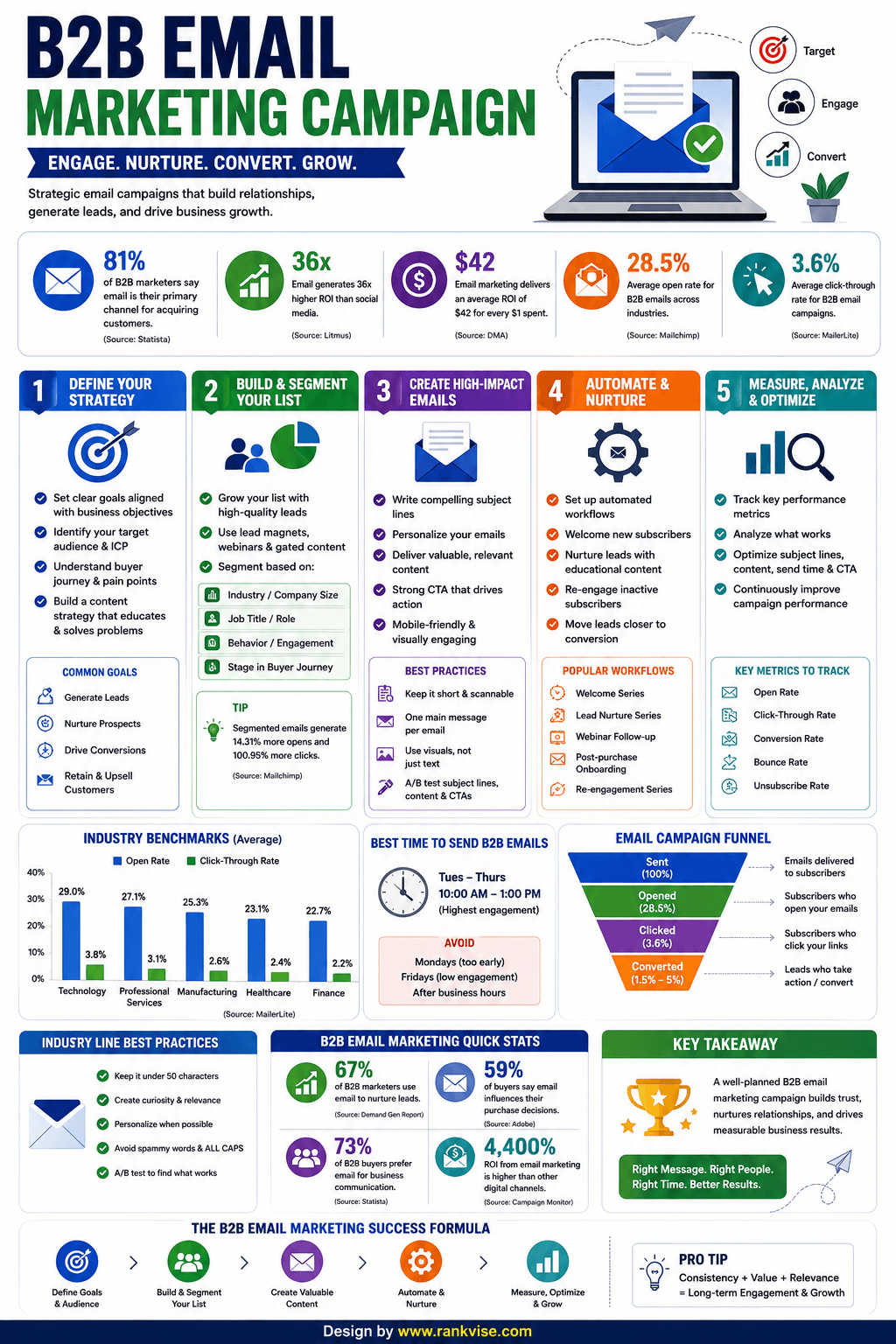
Before you build the sequence, define exactly who the campaign is for. Many weak campaigns fail because they try to appeal to everyone. A message for a marketing director at a mid-sized SaaS company should not sound like a message for an operations lead at an enterprise manufacturer.
Start by identifying the audience through three lenses. First, look at company characteristics such as industry, size, and maturity. Second, define the buyer role, including priorities and objections. Third, map where that person sits in the customer journey.
For example, a new lead may need educational content that clarifies the problem. A sales-qualified lead may need proof, ROI context, or implementation detail. When you align messaging with audience context, every email becomes easier to write and more likely to perform.
How do you build the right message for each stage?
The simplest way to improve engagement is to stop sending the same message to every contact. Email segmentation creates relevance. Relevance drives trust. Trust improves response.
Here is a practical way to think about stage-based messaging:
Awareness stage
At this point, the reader may only be starting to define the problem. Your email should teach, not push. Focus on trends, common mistakes, and useful frameworks. A short guide, benchmark report, or expert insight works well here.
Consideration stage
Now the reader is comparing approaches. This is where stronger educational content helps. Case studies, process breakdowns, comparison content, and strategic advice can move the conversation forward.
Decision stage
This is where clarity matters most. The reader may want proof, confidence, and a reason to act now. Product-focused emails can work here, especially when supported by testimonials, outcomes, or a clear implementation path.
A B2B content strategy becomes much stronger when every email answers one question the buyer is already asking.
Why email personalization matters more than first names
Many marketers still confuse personalization with inserting a first name into the subject line. That is not enough. Real email personalization means the message reflects the recipient’s role, needs, and likely priorities.
Useful personalization can include:
- Referencing the recipient’s industry challenge
- Matching examples to company size or business model
- Offering resources based on previous content engagement
- Adjusting the call to action by funnel stage
- Tailoring messaging to decision-maker versus end user
This approach feels smarter because it is smarter. It shows the reader that you understand the context behind their interest. That is what makes a B2B email marketing campaign feel relevant instead of automated.
Structure every email around one clear outcome
Each email should do one job well. If it tries to educate, sell, explain features, promote an event, and request a meeting at once, it will likely do none of those things effectively.
A simple structure works best:
- Start with a business challenge or recognizable situation.
- Offer a useful insight, example, or recommendation.
- Connect that value to your solution only when relevant.
- End with one clear call to action.
That call to action should match the commitment level of the audience. A cold lead may respond better to a practical guide than a demo request. A warmer lead may be ready for a meeting, a case study, or a pricing conversation.
The goal is not to maximize clicks at any cost. It is to create the right next step for the right reader.
What kind of email sequence actually works?
Most successful campaigns are not built around one email. They are built around a sequence with a clear narrative. Each email adds a layer of value and moves the reader closer to action.
A simple B2B sequence might look like this:
- Email 1: Introduce the problem and share one useful insight.
- Email 2: Expand with practical advice or a short framework.
- Email 3: Provide a relevant case study or customer example.
- Email 4: Address a common objection or implementation concern.
- Email 5: Invite the reader to take a specific next step.
This kind of lead nurturing works because it respects how B2B decisions happen. Buyers need repeated, relevant exposure before they respond. A thoughtful sequence builds familiarity without becoming repetitive.
How should you write subject lines that earn opens?
Subject lines matter, but they are not magic. If the audience is wrong or the message is weak, no subject line will save the campaign. Still, a good subject line can improve performance by creating immediate relevance.
Strong B2B subject lines often do one of three things well. They name a real business problem. They promise a useful takeaway. Or they create curiosity without becoming vague.
Examples include:
- Reduce customer churn with smarter onboarding emails
- A simpler way to improve lead handoff between sales and marketing
- What high-performing SaaS teams do before launching email automation
Keep subject lines clear, specific, and aligned with the body content. If the email feels like a bait-and-switch, trust drops fast.
Where email automation helps and where it hurts
Email automation is powerful when it supports relevance. It becomes harmful when it scales bad messaging. Automation should help you deliver timely emails based on behavior, stage, and interest.
For example, automation works well when someone downloads a resource, visits a pricing page, or stops engaging for a set period. Those triggers create natural moments to follow up. The next email feels earned because it matches a real action.
Automation fails when every lead enters the same generic sequence. That usually leads to lower engagement, more unsubscribes, and weaker conversion rates. The answer is not less automation. It is smarter automation tied to context.
What should you measure beyond opens and clicks?
Open rates can still offer directional value, but they should not be the main scorecard. Privacy changes and inbox filtering have made opens less reliable over time. More important, they do not show business impact clearly.
A stronger reporting view includes:
- Click-through rate on the main call to action
- Reply rate from high-intent contacts
- Demo bookings or qualified meetings generated
- Content downloads by segment
- Conversion rates from campaign to opportunity
- Unsubscribe rate and spam complaint trends
When you measure these outcomes, you get a clearer view of what is actually connecting. That helps you refine messaging, improve email segmentation, and invest in what moves pipeline.
Common mistakes that weaken B2B email performance
Even experienced teams make avoidable mistakes. Most come down to poor targeting, weak clarity, or rushed execution.
Watch for these issues:
- Sending product-heavy emails too early
- Writing from your company’s perspective instead of the buyer’s
- Using one campaign for every audience segment
- Adding too many links or calls to action
- Ignoring the full customer journey
- Failing to test messaging, timing, and offer type
The strongest campaigns are usually simple, focused, and consistent. They do not try to impress readers with complexity. They help readers make a confident next decision.
How to make your B2B email marketing campaign feel human
Connection comes from relevance, but it also comes from tone. Business buyers are still people. They can tell when an email sounds stiff, generic, or overloaded with jargon.
Write the way a trusted advisor would speak in a real conversation. Be direct. Be useful. Respect the reader’s time. If a sentence sounds complicated, simplify it. If a claim feels broad, make it concrete.
Real-world examples help too. A short scenario about how a company improved lead nurturing or shortened sales cycles can make abstract advice feel immediate. That is how campaigns earn trust over time.
Final takeaway
A B2B email marketing campaign connects when it stops acting like a blast and starts acting like a conversation. The best campaigns understand the audience, match message to intent, and guide each reader toward a sensible next step.
If you focus on audience clarity, email personalization, thoughtful sequencing, and meaningful measurement, your campaigns will become more useful and more effective. Better emails do not just increase engagement. They create better business relationships.
FAQs
A B2B email marketing campaign is a planned series of emails designed to engage business buyers and drive action.
Most effective campaigns use 4 to 6 emails, depending on buyer stage and offer complexity.
Email segmentation improves relevance by matching messages to audience role, behavior, and stage.
The best CTA depends on intent, but useful next steps usually outperform hard sales asks.
Improve targeting, strengthen messaging, personalize content, and align each email with buyer intent.