Trade shows require a significant investment in booth space, travel, staffing, and preparation. Yet a long list of badge scans does not necessarily translate into a healthy sales pipeline. Without clear qualification criteria and timely follow-up, your team can spend weeks chasing contacts who were never a good fit.
To improve lead quality after a trade show, capture more than contact details. Record each prospect’s needs, buying role, and timeline, then use that information to prioritize outreach. The process starts at the booth and continues through lead scoring, routing, and personalized follow-up.
Here’s how to turn trade show contacts into qualified leads your sales team can act on.
Capture Better Trade Show Lead Data
Accurate contact information makes follow-up easier, but it tells you little about whether someone is likely to buy. A badge scan may identify an attendee’s name and company without explaining why they visited your booth.
An event badge scanner, such as Wave Connect, can support your lead capture workflow. Before choosing a platform, check its compatibility with the event’s badges, the information it captures, and its CRM integration options.
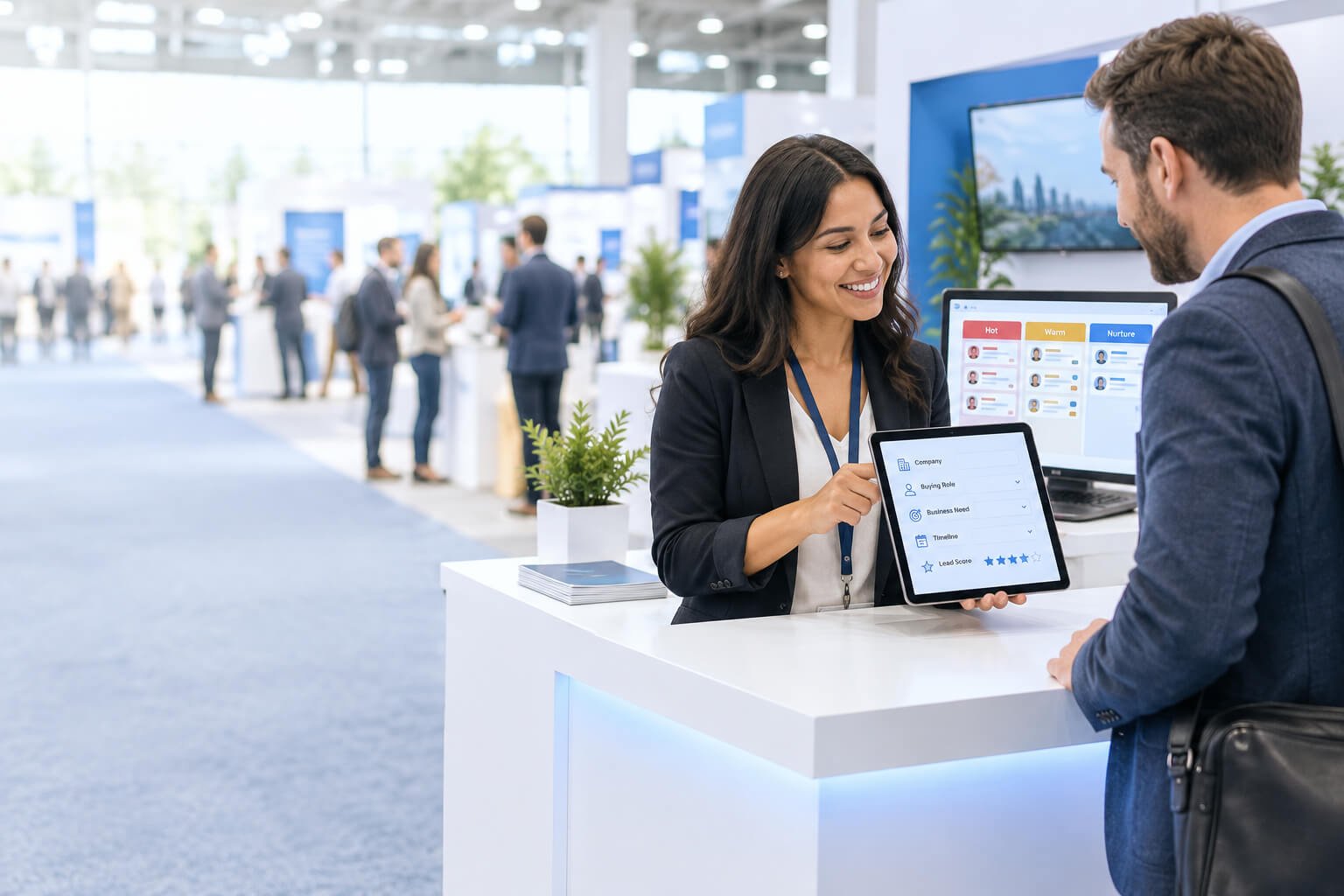
Alongside contact details, record a few useful qualification fields:
- Company name, industry, and size
- Job title and role in the buying process
- Main challenge or business need
- Product or service discussed
- Purchase timeline
- Agreed next step
These details help distinguish a prospect evaluating solutions from an attendee who stopped by out of curiosity. Keep the capture process short enough that staff can complete it without interrupting the conversation.
Qualify Prospects During Booth Conversations
Post-event lead qualification works best when it begins on the trade show floor. Give your booth team a consistent set of questions so everyone captures comparable information.
Three questions offer a practical starting point:
- What brought you to our booth? This reveals whether the attendee has a relevant need or is simply exploring.
- How are you involved in evaluating or purchasing a solution? This helps identify decision-makers, influencers, and potential internal champions.
- When are you hoping to address this challenge? This gives your team a sense of urgency and buying readiness.
Use these as conversation prompts rather than a rigid script. Staff should listen for a specific problem, a relevant use case, and interest in a next step.
Avoid dismissing someone solely because they lack purchasing authority. An end user with a clear need may become a valuable internal advocate. Similarly, a qualified prospect with a longer timeline may belong in a nurture program rather than an immediate sales queue.
Add Conversation Notes While Details Are Fresh
Even a strong booth conversation loses value if nobody records what was discussed. By the time your team returns to the office, similar conversations can blur together.
Add brief notes immediately after each interaction whenever possible. A useful note might read:
“Operations manager at a mid-sized manufacturer. Wants to reduce manual reporting across three locations. Evaluating options this quarter. Requested a demo focused on CRM integration.”
That gives the sales rep a clear starting point for outreach.
Schedule a 15-minute debrief at the end of each event day to fill gaps, review priority prospects, and confirm promised next steps. If your lead capture system supports shared CRM notes, keep the information there. Otherwise, use a consistent template and assign someone to consolidate the records.
Pay particular attention to commitments. If a prospect requested pricing, a technical discussion, or a product demonstration, record the request and name the person responsible for delivering it.
Score Leads Based on Fit and Buying Intent
Before launching your trade show follow-up campaign, separate leads by customer fit and buying intent.
Fit measures how closely a prospect matches your ideal customer profile. Relevant factors might include industry, company size, location, use case, and technical requirements.
Intent measures evidence that the prospect is considering a purchase. Signals include a specific business problem, an active evaluation, a stated timeline, or a request for a demo or proposal.
Keep these dimensions distinct. A highly interested attendee whose company cannot use your solution should not outrank a suitable prospect simply because they asked more questions.
A simple segmentation model is enough to get started:
| Lead segment | Qualification signals | Recommended next step |
|---|---|---|
| Hot | Strong customer fit, clear need, and an agreed sales next step | Assign to a sales rep for prompt, personalized outreach |
| Warm | Relevant fit and some interest, but timing or buying process remains unclear | Send tailored follow-up and continue qualification |
| Nurture | Relevant fit, but no active project or near-term buying intent | Share useful content through a permission-based nurture program |
| Disqualified | Clear mismatch, invalid details, or no relevant use case | Remove from active sales outreach |
Aim to complete the initial review within 24 hours of the event ending. For prospects who request a meeting during the show, arrange it immediately rather than waiting for the full list to be processed.
Build a Consistent Lead-Scoring Framework
A basic scoring model makes qualification more consistent across your team. Start with signals you can reliably capture, then refine the model using actual sales outcomes.
For example, you could assign intent points as follows:
- Specific business need identified: 3 points
- Active solution evaluation underway: 3 points
- Purchase timeline within six months: 4 points
- Follow-up meeting or demo requested: 5 points
Assess customer fit separately using your essential criteria. A lead should meet those criteria before a high intent score triggers priority sales routing.
Treat the initial weights and thresholds as a starting hypothesis. After each event, compare scores with meetings held, opportunities created, and deals won. Adjust signals that prove misleading, and strengthen those that consistently predict progress.
The goal is a repeatable system that helps your team choose the next action—not a complicated score that creates more administrative work.
Route Qualified Leads to a Named Owner
Lead scoring only helps when someone acts on it. Every sales-ready trade show lead should have an owner, a clear task, and a follow-up deadline.
Set routing rules before the event:
- Hot leads: Assign to a named sales rep and create a follow-up task.
- Warm leads: Assign to the appropriate sales or marketing workflow for further qualification.
- Nurture leads: Add to a relevant, permission-based marketing program.
- Disqualified leads: Exclude from active outreach and record the reason.
Where your CRM supports it, automate assignments using territory, account ownership, product interest, or lead segment. Check for existing contacts and open opportunities before creating new records, so current customers and active prospects reach the right account team.
Keep follow-up commitments realistic. A promised call the next morning matters more than a generic internal deadline.
Personalize Your Trade Show Follow-Up
A generic “Thanks for visiting our booth” email gives prospects little reason to respond. Effective follow-up connects directly to the conversation and makes the next step easy.
Include the event name, the challenge discussed, and the resource or action you promised. For example:
Subject: Following up on your reporting workflow at [Event Name]
Hi [First Name],
It was good speaking with you at [Event Name] about reducing manual reporting across your locations.
You mentioned that CRM integration is an important part of your evaluation. I’m sharing the integration overview we discussed.
Would a 20-minute demo focused on that workflow be useful next week?
Best,
[Sales Rep Name]
Match the message to the lead’s readiness. A prospect who requested a proposal should receive proposal-related follow-up. Someone researching a future project may benefit more from a relevant guide or case study.
Respect communication preferences and applicable privacy requirements. A badge scan should not automatically be treated as consent for every marketing campaign.
Measure Lead Quality Beyond Badge Scans
To improve trade show ROI, measure what happens after capture. Scan volume shows booth activity; it does not show whether the event produced meaningful sales opportunities.
Track these metrics consistently:
- Qualified lead rate: The percentage of captured leads meeting your qualification criteria
- Time to first follow-up: How quickly your team contacts priority prospects
- Meeting completion rate: How many scheduled post-show meetings actually take place
- Opportunity conversion rate: The percentage of leads that become sales opportunities
- Cost per qualified lead: Total event cost divided by the number of qualified leads
- Pipeline and revenue generated: Opportunities and closed business associated with the event
Use a defined reporting window and consistent attribution method when comparing events. Review results with both sales and marketing to identify which audiences, conversations, and follow-up tactics produced the strongest outcomes.
Turn Trade Show Contacts Into Qualified Opportunities
Improving lead quality after a trade show starts with better conversations and clearer records. Capture each prospect’s needs, assess fit and intent, and give every qualified lead an owner and a relevant next step.
Start with a short qualification checklist, a practical scoring model, and personalized follow-up. Then refine the process using conversion data from each event. That gives your team a stronger basis for deciding which contacts deserve immediate attention—and where your next trade show investment will have the most value.