Skip to content
Every year, governments across the world spend billions on public infrastructure. Roads, bridges, hospitals, and railways shape how communities grow. But who ensures these massive projects meet quality standards and deliver real value?
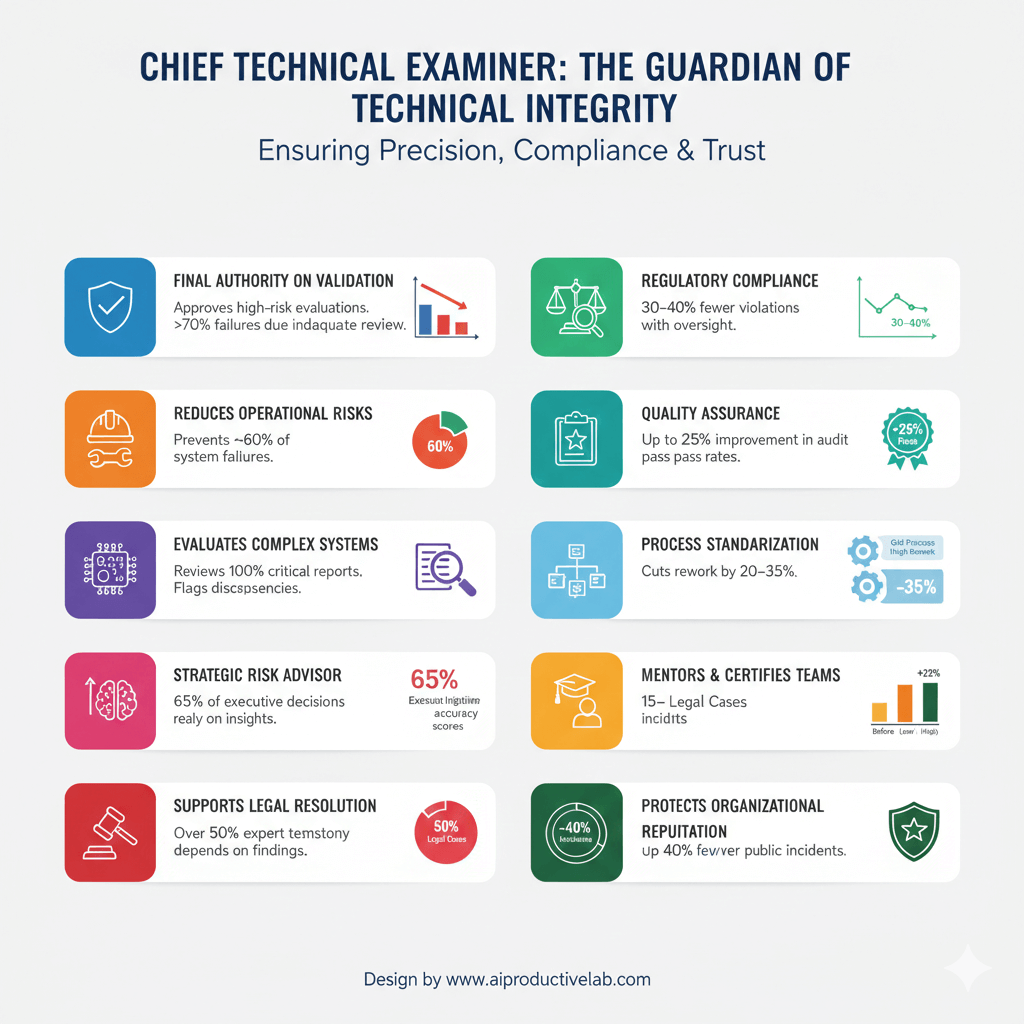
- Independent watchdog auditing public infrastructure projects to prevent waste, fraud, and ensure technical compliance.
- Conducts stagewise audits: pre-tender, tender evaluation, construction inspections, and post-completion verification.
- Uses structured checklists and digital tools like e-MBs, geo-tagging, and AI for accurate, transparent audits.
- Focuses on prevention and predictive oversight, evolving toward ML models and immutable record-keeping technologies.
That responsibility falls on the chief technical examiner. This role serves as an independent watchdog, auditing government-funded projects to prevent waste, fraud, and substandard construction. Despite its importance, most professionals outside public administration know very little about it.
This guide breaks down the role, responsibilities, audit process, and future of technical examination in public works. Whether you are a contractor, a government official, or simply curious, this is your definitive resource.
What Is a Chief Technical Examiner?
A chief technical examiner, commonly called a CTE, is an independent authority responsible for conducting technical audits of government infrastructure projects. The role exists primarily within India’s Central Vigilance Commission (CVC) framework, though similar audit functions exist globally.
The CTE operates outside the executing agency. This separation is intentional. It ensures that audits remain unbiased and free from internal pressure. According to the CVC’s guidelines, the chief technical examiner’s office conducts intensive examinations of public works at every stage, from planning through completion.
The position is typically held by senior engineers with deep project management experience. They bring practical field knowledge, not just theoretical expertise. Their independence gives the role credibility that internal auditors often lack.
Why Does the CTE Role Exist?
Public infrastructure spending is vulnerable to corruption and inefficiency. The World Bank estimates that up to 30% of construction costs in developing economies are lost to fraud, waste, or mismanagement. The CTE role directly addresses this challenge.
The chief technical examiner ensures three things. First, that projects follow approved technical standards. Second, that public funds are spent responsibly. Third, that the final deliverable matches what was promised.
Without independent technical examination, agencies essentially audit themselves. That creates obvious conflicts of interest. The CTE breaks this cycle by bringing external, expert-level scrutiny to every phase of a project.
Core Responsibilities of a Chief Technical Examiner
The CTE’s work covers the entire project lifecycle. Here is what the role involves at each stage.
Pre-Tender Review
Before any contract is awarded, the CTE examines project estimates and design documents. This includes verifying that cost estimates align with prevailing market rates and approved schedule of rates. The examiner checks whether the scope of work is clearly defined and technically sound.
A thorough pre-tender review prevents inflated estimates and vague specifications. These are two of the most common entry points for financial irregularities in public works.
Tender Evaluation Scrutiny
During the tendering phase, the CTE reviews bidding processes for fairness and transparency. This includes examining whether tender conditions favor specific contractors unfairly. The examiner also verifies compliance with General Financial Rules (GFR) and relevant procurement guidelines.
Proper tender scrutiny protects competitive bidding. It ensures that the most capable contractor, not the most connected one, wins the project.
Construction-Phase Inspection
This is where the CTE’s field expertise matters most. During construction, the examiner conducts surprise site inspections. These visits verify that actual work matches approved drawings and specifications.
Key areas of focus during site audits include material quality, adherence to BIS and IRC standards, proper record-keeping in measurement books, and workmanship quality. The CTE also checks whether contractors are following approved methodologies and timelines.
Post-Completion Verification
After a project is finished, the chief technical examiner reviews final bills, completion reports, and quality certificates. This stage catches discrepancies between reported work and actual deliverables. It also ensures that all contractual obligations have been met before final payments are released.
The CTE Audit Checklist: What Gets Examined
A structured checklist drives every CTE inspection. This ensures consistency and thoroughness. The checklist typically covers these areas:
- Project approvals: Administrative and financial sanctions, environmental clearances, and land acquisition status
- Standard compliance: Adherence to BIS, IRC, CPWD, and state-specific technical manuals
- Material testing: Verification of test reports for cement, steel, aggregates, and other critical materials
- Quality control: Site lab availability, frequency of testing, and corrective actions for failed tests
- Financial discipline: Bill verification, rate analysis, and reconciliation of quantities with measurement records
- Documentation: Maintenance of site registers, inspection notes, hindrance registers, and deviation statements
This checklist approach leaves little room for oversight gaps. It transforms complex projects into auditable, trackable processes.
How Technology Is Transforming Technical Examinations
The chief technical examiner’s role is evolving rapidly. Traditional paper-based audits are giving way to digital tools that improve speed, accuracy, and transparency.
Digital Measurement Books
Electronic measurement books, known as e-MBs, have replaced manual registers in many jurisdictions. These digital records reduce tampering risks. They also enable real-time verification of quantities and payments, making audits faster and more reliable.
Geo-Tagging and GIS Integration
Geo-tagged photographs now document site conditions with precise location and timestamp data. Geographic Information Systems help CTEs verify project boundaries, land use, and spatial compliance without relying solely on contractor-provided maps.
According to India’s Ministry of Road Transport, geo-tagging has been mandated for all National Highway projects since 2020. This single change has significantly improved audit trail integrity.
AI-Powered Document Analysis
Artificial intelligence tools now assist in analyzing large volumes of project documents. AI can flag anomalies in billing patterns, detect duplicate entries, and compare actual expenditure against benchmarks. This technology helps the chief technical examiner focus attention where it matters most.
Real-Time Project Dashboards
Modern project management platforms offer dashboards that track progress, expenditure, and milestones in real time. These dashboards give CTEs visibility into project health without waiting for periodic reports. Early warning indicators help prevent issues instead of merely documenting them after the fact.
Common Issues Identified in CTE Audits
Understanding what goes wrong helps organizations prepare better. Here are the most frequently flagged issues in CTE examinations:
| Issue Category | Examples | Impact |
|---|---|---|
| Inflated estimates | Rates exceeding schedule of rates without justification | Financial loss to public exchequer |
| Material substitution | Using lower-grade materials than specified | Compromised structural integrity |
| Measurement discrepancies | Recorded quantities exceeding actual work done | Overpayment to contractors |
| Documentation gaps | Missing test reports, unsigned inspection notes | Audit trail failure |
| Deviation from specs | Unauthorized design changes during construction | Quality and safety risks |
Organizations that proactively address these areas before a CTE visit dramatically reduce adverse findings.
How Organizations Can Prepare for CTE Inspections
Preparation is not about hiding flaws. It is about building systems that prevent them. Here are practical steps every project team should follow.
Maintain all records in real time. Do not backfill documentation before an audit. Conduct regular internal technical audits using the same CTE checklist framework. Ensure that material testing follows prescribed frequencies and standards. Train site engineers on documentation requirements and quality protocols. Use digital tools like e-MBs and geo-tagging to strengthen your audit trail.
Organizations that treat CTE standards as their daily operating baseline, rather than an external threat, consistently perform better in examinations.
The Future of the Chief Technical Examiner Role
The CTE function is moving toward predictive oversight. Instead of identifying problems after they occur, future technical examination will focus on prevention.
Machine learning models trained on historical audit data can predict which projects are most likely to face quality or financial issues. Automated compliance tracking will flag deviations the moment they happen, not months later during a scheduled inspection.
Blockchain-based record-keeping is another emerging trend. Immutable digital logs would make document tampering virtually impossible. This technology aligns perfectly with the CTE’s core mission of ensuring transparency and accountability.
The role itself may also expand beyond traditional infrastructure. As governments invest in smart cities, renewable energy, and digital infrastructure, the need for independent technical examination will grow across new sectors.
FAQs
CTE stands for chief technical examiner, an independent audit authority under India’s Central Vigilance Commission that inspects public infrastructure projects for quality and financial compliance.
The Central Vigilance Commission appoints the chief technical examiner. The CTE operates independently from the executing agencies to ensure unbiased technical audits of government-funded works.
A CTE typically audits large public infrastructure projects such as highways, bridges, government buildings, railways, and water supply systems where significant public funds are involved.
CTE inspections occur on a risk-based schedule, often quarterly or as triggered by project value thresholds. Surprise visits during construction are common to verify real-time site conditions.
Contractors should maintain up-to-date documentation, follow prescribed material testing schedules, adhere to approved designs, and use digital tools like e-MBs and geo-tagging to ensure a transparent audit trail.